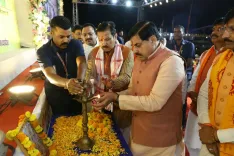
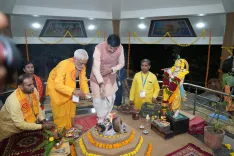
Shekhawat backs 'Catch the Rain' drive, urges water body adoption
Synopsis
Union Culture and Tourism Minister Gajendra Singh Shekhawat has backed the ongoing 'Catch the Rain' campaign, urging Indians to adopt a pond, well, or stepwell near them and save every drop of water, calling it the greatest asset for future generations.
Key Takeaways
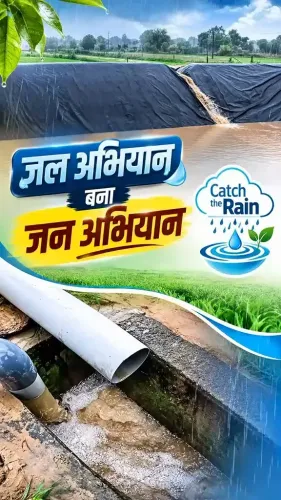
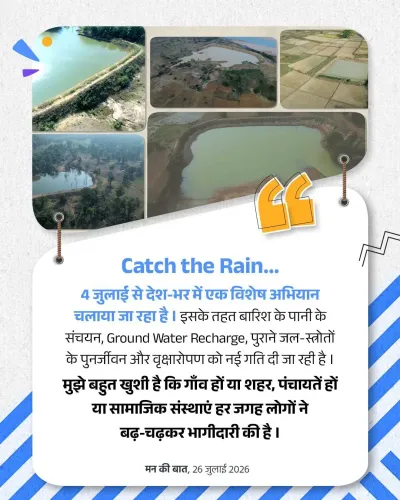
A special 'Catch the Rain' campaign has been running nationwide since 4 July 2026 , covering rainwater harvesting, groundwater recharge, revival of water bodies, and plantation.
Union Minister Gajendra Singh Shekhawat called on every citizen to take responsibility for at least one local pond, well, or stepwell.
The campaign sees participation from panchayats , urban local bodies, and civil society organisations across villages and cities.
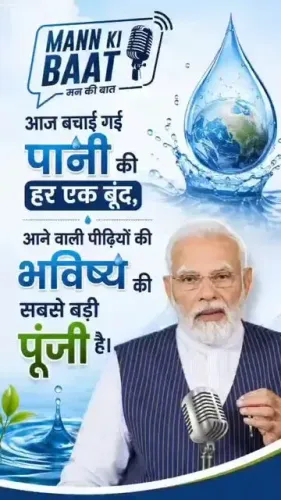
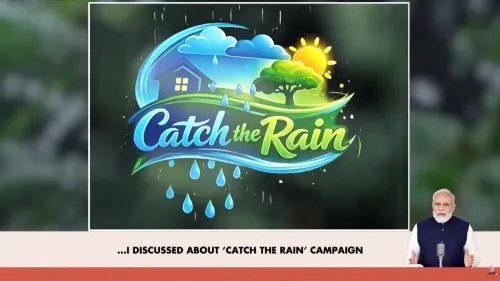
The drive is linked to Mann Ki Baat , Prime Minister Modi's monthly public-engagement radio address.
The 'Catch the Rain' campaign was originally launched in 2021 under the Ministry of Jal Shakti as part of the Jal Shakti Abhiyan.
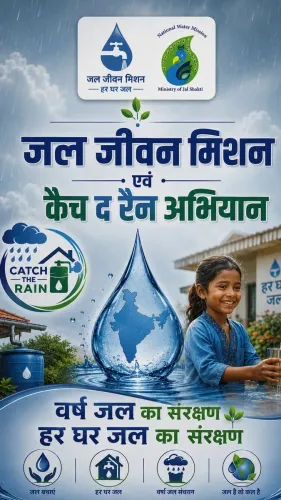
The initiative complements the Jal Jeevan Mission (launched 2019 ), which aims to provide tap water to every rural household.
Union Culture and Tourism Minister Gajendra Singh Shekhawat on Sunday, 26 July 2026, threw his weight behind the ongoing 'Catch the Rain' campaign, calling on citizens to personally adopt and protect a pond, well, or stepwell near their homes and conserve every drop of water.
Context
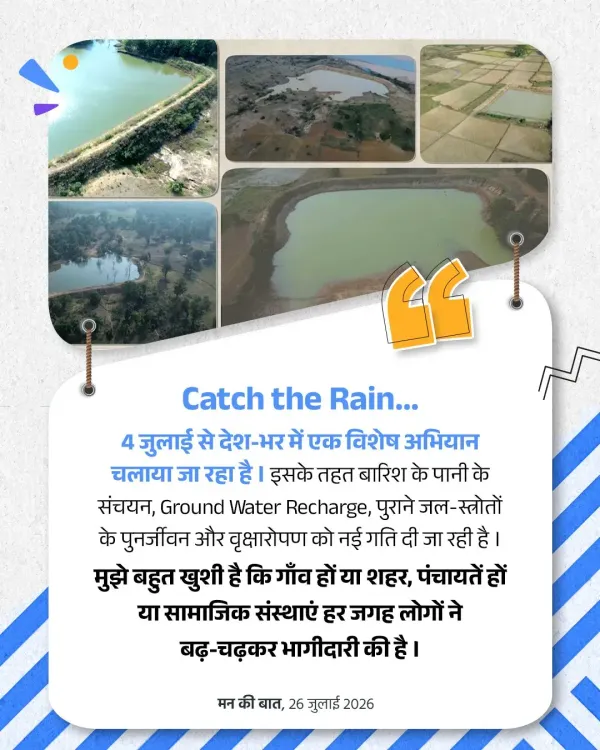
Posting on X with the hashtag #MannKiBaat, Shekhawat highlighted that a special nationwide drive has been under way since 4 July, focusing on rainwater harvesting, groundwater recharge, revival of old water sources, and plantation. He wrote: 'पानी की हर बूंद बचाएं' ('Save every drop of water'), adding that 'every drop saved today is the greatest asset for the future of coming generations.'
The minister expressed satisfaction at the scale of public participation, noting that villages and cities, panchayats and civil society organisations alike have joined the effort enthusiastically. The post's reference to Mann Ki Baat signals the campaign's alignment with Prime Minister Narendra Modi's monthly radio address, which frequently amplifies community-driven governance initiatives.
Policy Backdrop
The 'Catch the Rain' campaign was first launched in 2021 under the Ministry of Jal Shakti as part of the broader Jal Shakti Abhiyan, with the aim of encouraging local-level rainwater harvesting before the monsoon season peaks. It operates alongside the Jal Jeevan Mission, launched in 2019, which targets functional tap water connections for every rural household in the country.
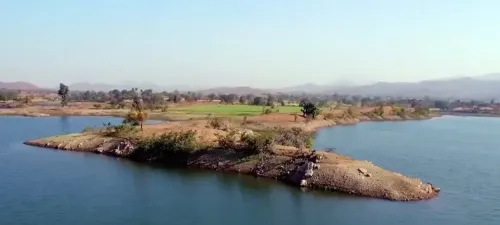
The campaign specifically promotes the revival of traditional water structures — including baolis (stepwells), talab (ponds), and kuan (wells) — that have historically sustained rural communities but have fallen into disuse or disrepair in many regions. Groundwater depletion has been documented across multiple Indian states, making augmentation efforts a sustained policy priority for successive central governments.
Stakeholders and Impact
Panchayati raj institutions, urban local bodies, and civil society groups are the primary on-ground actors in the campaign. Shekhawat's post underscores their active participation, framing community ownership of local water bodies as the campaign's defining feature.
The call to adopt 'one pond, one well, or one stepwell' positions individual citizens and institutions as stewards of water infrastructure — a decentralised model intended to complement top-down government investment. This approach is particularly significant in water-stressed states like Rajasthan, where traditional water-harvesting structures have deep historical roots.
What's Next
The campaign's momentum through the 2026 monsoon season will be closely watched, with the annual groundwater assessment reports expected to provide a measurable benchmark for its impact on aquifer levels. Any parliamentary updates or ministerial statements on the campaign's physical progress — including the number of water bodies revived or recharge structures created — will offer a clearer picture of outcomes on the ground.
Shekhawat's public endorsement, amplified through the Mann Ki Baat platform, suggests the campaign is being positioned as a flagship community-engagement initiative ahead of further policy announcements on water security.
Point of View
Reflecting the BJP government's strategy of cross-ministerial mobilisation around flagship schemes. Tying the appeal to Mann Ki Baat elevates it from routine departmental communication to a prime-ministerial narrative, reinforcing the administration's framing of water conservation as a citizen-duty rather than a state obligation alone. The emphasis on traditional structures like stepwells and ponds also taps into a cultural-heritage register that aligns with Shekhawat's own portfolio, blurring the line between conservation and civilisational pride. As groundwater stress intensifies in several states, this community-ownership model will face scrutiny on whether it translates into measurable aquifer recovery.
NationPress
26 Oct 2026
Frequently Asked Questions
What is the 'Catch the Rain' campaign in India?
'Catch the Rain' is a nationwide water conservation campaign run under the Ministry of Jal Shakti, first launched in 2021, that promotes rainwater harvesting, groundwater recharge, and the revival of traditional water bodies like ponds, wells, and stepwells.
When did the 2026 Catch the Rain special drive start?
According to Minister Gajendra Singh Shekhawat's post, the special 2026 drive began on 4 July and has been running across the country since then.
What is Mann Ki Baat and why is it connected to this campaign?
Mann Ki Baat is Prime Minister Narendra Modi's monthly radio address that highlights public policy and community initiatives. The campaign's association with the hashtag #MannKiBaat indicates it was discussed or promoted through this platform, lending it national visibility.
What is the Jal Jeevan Mission and how does it relate to Catch the Rain?
The Jal Jeevan Mission, launched in 2019, aims to provide functional tap water connections to every rural household in India. The Catch the Rain campaign complements it by focusing on the supply side — replenishing groundwater and reviving local water sources.
How can citizens participate in the Catch the Rain campaign?
Minister Shekhawat has urged citizens to take personal responsibility for at least one nearby pond, well, or stepwell, and to participate in rainwater harvesting and plantation activities organised by panchayats and local civil society groups.