CR Paatil joins 'Save Democracy' padyatra in Surat
Synopsis
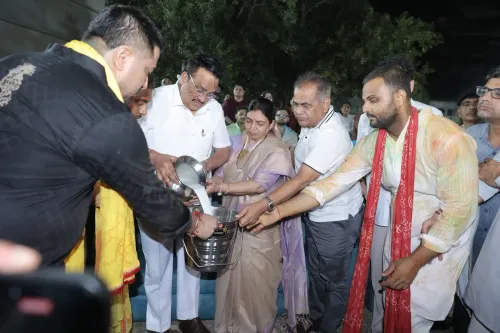
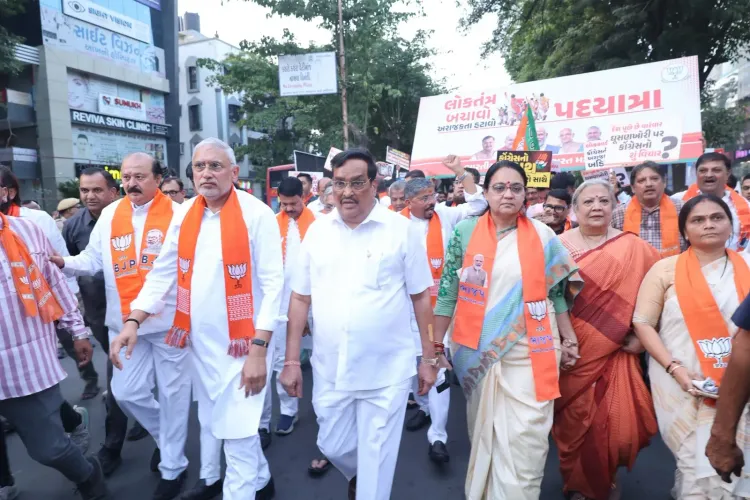
Union Jal Shakti Minister C. R. Paatil participated in a 'Save Democracy, Remove Anarchy' padyatra in Surat on October 26, 2026, joining a large gathering of citizens to reaffirm constitutional values, democratic traditions, and social harmony.
Key Takeaways
Paatil , Union Minister of Jal Shakti and former BJP Gujarat president, participated in a padyatra in Surat on October 26, 2026 .
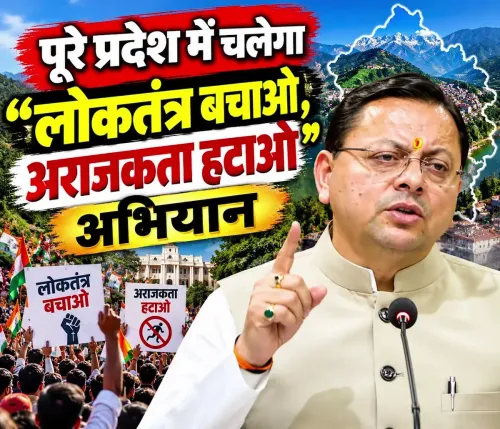
The march was held under the 'Loktantra Bachao, Arajkata Hatao' ('Save Democracy, Remove Anarchy') campaign.
Paatil described citizen turnout as 'very large,' calling it a reflection of 'unwavering faith in democracy.' The campaign's message centred on three pillars: respect for the Constitution, protection of democratic traditions, and preservation of social peace and harmony.
Surat is a BJP stronghold and major commercial city in Gujarat, lending the event organisational and symbolic significance.
BJP has governed Gujarat for over two decades and regularly uses padyatras for ground-level political mobilisation.
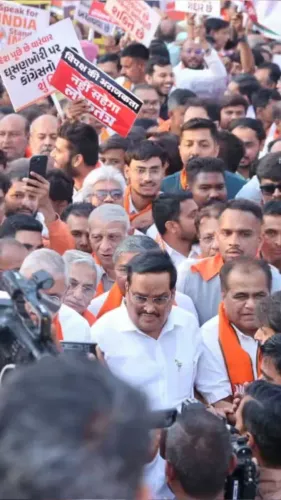
The streets of Surat filled with a large crowd on Monday, October 26, 2026, as Union Jal Shakti Minister C. R. Paatil walked alongside citizens in a padyatra organised under the 'Loktantra Bachao, Arajkata Hatao' — 'Save Democracy, Remove Anarchy' — campaign, pledging to uphold democratic values and constitutional respect.
'Save Democracy, Remove Anarchy' — the campaign's message on the streets
Paatil, posting in Gujarati, described the padyatra as a moment where citizens turned out in 'very large numbers,' calling their presence a reflection of 'unwavering faith in democracy.' The march carried a three-part message: respect for the Constitution, protection of democratic traditions, and the preservation of peace and harmony in society.
The choice of Surat — Gujarat's commercial powerhouse and a city long regarded as a BJP stronghold — was no coincidence. As one of India's fastest-growing urban centres, known globally for its diamond-cutting industry and textile trade, Surat commands both symbolic and organisational weight for the party.
Padyatras as BJP's political grammar in Gujarat
BJP leaders in Gujarat have long deployed padyatras as a tool of street-level political engagement — a format that bypasses media filters and places party leaders directly among voters. The party has governed Gujarat for over two decades, and such outreach events form a core part of its organisational rhythm, particularly when it seeks to frame a narrative around constitutional values versus opposition 'anarchy.'
Paatil himself carries considerable institutional weight in the state. A former BJP Gujarat state president, he transformed the party's organisational machinery before moving to the Union Cabinet as Minister of Jal Shakti. His participation in a Surat march signals that the campaign carries weight beyond routine local mobilisation.
What the padyatra is pushing back against
The campaign name — 'Remove Anarchy' — is pointed, framing BJP's political opponents as forces of disorder threatening democratic institutions. Whether directed at a specific opposition movement or serving as a broader electoral positioning exercise ahead of future state or national polls, the march places constitutional language at the centre of BJP's mobilisation in urban Gujarat.
The mass participation Paatil described, if borne out, underscores how effectively the party converts civic symbolism — a walk, a pledge, a constitutional invocation — into visible political energy on the ground.
For a city that has repeatedly delivered decisive mandates, Surat's streets on Monday sent a message that Gujarat's most powerful political machine is already warming up.
Point of View
Remove Anarchy' framing is a deliberate rhetorical move by BJP to occupy the constitutional high ground — a space the opposition has aggressively contested since 2024. By deploying a senior Union minister on Surat's streets, the party signals that urban Gujarat, despite its reliable electoral loyalty, still requires active narrative management. Padyatras of this kind serve a dual function: they generate visible street energy and anchor the party's identity in civic language — Constitution, democracy, harmony — that is harder to attack than conventional political messaging. With state and national electoral cycles always on the horizon in India's perpetual campaign mode, the march is as much about keeping the organisational machine tuned as it is about the message it carries.
NationPress
26 Oct 2026
Frequently Asked Questions
What is the 'Loktantra Bachao, Arajkata Hatao' campaign?
'Loktantra Bachao, Arajkata Hatao' translates to 'Save Democracy, Remove Anarchy' — a BJP-organised campaign in Gujarat aimed at reaffirming constitutional values and democratic traditions while countering what the party frames as opposition-driven disorder.
Why did CR Paatil participate in the Surat padyatra?
As a senior BJP leader and former Gujarat state president, C. R. Paatil joined the Surat march to publicly pledge commitment to democratic values and lend central leadership weight to the party's ground-level campaign in Gujarat.
What is CR Paatil's current position?
C. R. Paatil is currently the Union Minister of Jal Shakti in India's central government and is a senior leader of the Bharatiya Janata Party, having previously served as BJP Gujarat state president.
What is the significance of holding this padyatra in Surat?
Surat is Gujarat's commercial hub — a major diamond and textile trading city — and a long-standing BJP stronghold, making it a high-visibility location that amplifies the political and organisational impact of such campaigns.
Does BJP regularly organise padyatras in Gujarat?
Yes. Padyatras are a core part of BJP's organisational strategy in Gujarat, where the party has held power for over two decades. These street marches are used to engage citizens directly, reinforce party narratives, and maintain grassroots mobilisation between elections.