Jal Shakti Minister Paatil hails PM Modi's Mann Ki Baat push for Catch The Rain
Synopsis
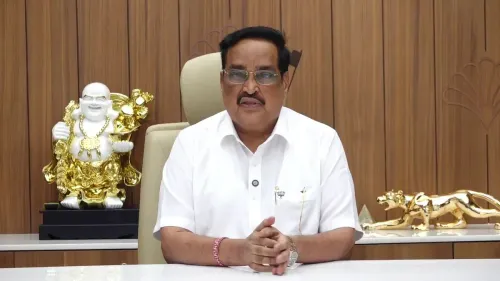
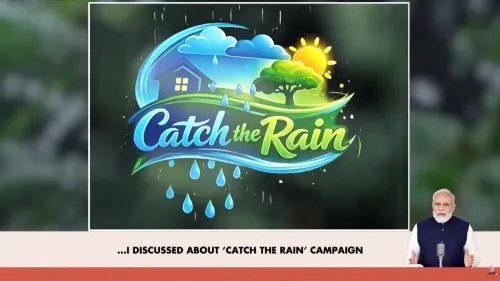
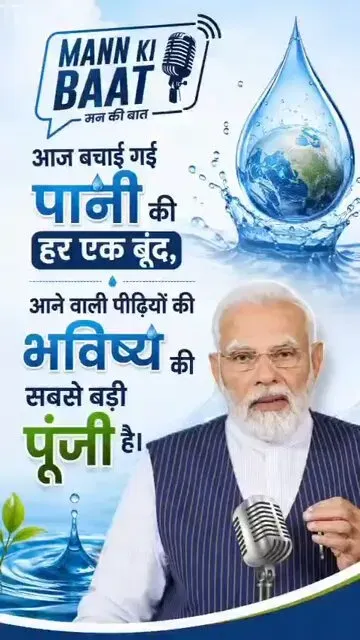
Union Jal Shakti Minister C. R. Paatil on 27 July 2026 praised Prime Minister Narendra Modi for spotlighting the Catch The Rain rainwater harvesting campaign in his latest Mann Ki Baat address, reinforcing the government's push for decentralised water conservation ahead of the monsoon season.
Key Takeaways
Paatil , Union Minister of Jal Shakti, publicly welcomed PM Modi 's mention of Catch The Rain in the July 2026 edition of Mann Ki Baat .
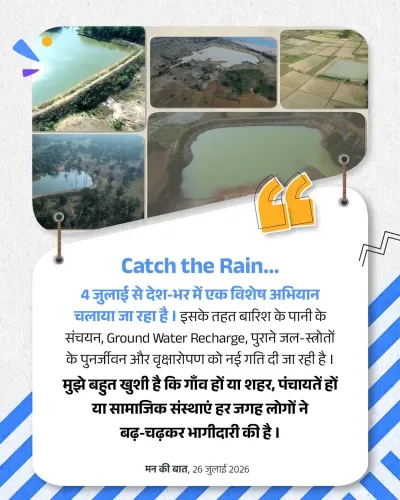
The Catch The Rain campaign, launched in 2020 , promotes creation of rainwater harvesting structures before and during the monsoon season.
The campaign is part of a broader policy framework including the Jal Shakti Abhiyan (launched 2019 , covering 1,592 water-stressed blocks ) and the Jal Jeevan Mission .
Convergence with MGNREGA and the Atal Bhujal Yojana enables community-level rainwater harvesting infrastructure at scale.
Prime ministerial mentions in Mann Ki Baat historically drive heightened administrative focus at the state and district level.
State-level progress on new harvesting structures during the 2026 monsoon will be the key measure of on-ground impact.
Union Jal Shakti Minister C. R. Paatil on Sunday, 27 July 2026 welcomed Prime Minister Narendra Modi's reference to the Catch The Rain campaign during the latest edition of Mann Ki Baat, describing the mention as a renewed resolve to conserve every drop of rainfall before it is lost to the sea.
Context
In his post on X, Minister Paatil wrote that the Prime Minister, in today's Mann Ki Baat, 'mentioned the Catch The Rain campaign and further strengthened the resolve to save every drop of rain.' The statement signals the ministry's intent to keep rainwater harvesting at the forefront of public discourse as India moves through the 2026 monsoon season.
Mann Ki Baat is Prime Minister Modi's monthly radio address to the nation, used consistently to spotlight citizen-centric government programmes and encourage public participation. A prime ministerial mention in the programme typically amplifies administrative attention at the state and district level.
Policy Backdrop
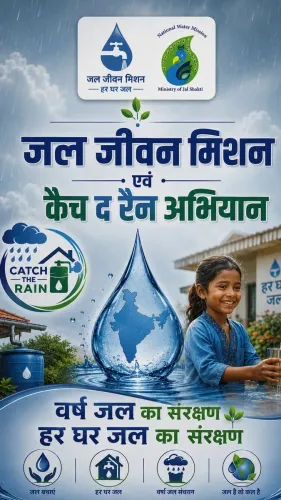
The Catch The Rain campaign was formally launched under the Ministry of Jal Shakti in 2020 with the core objective of creating rainwater harvesting structures — from rooftop collectors to village ponds — before the monsoon arrives. Its guiding principle, 'Catch the rain where it falls, when it falls,' reflects a shift in national water policy away from large centralised irrigation projects toward decentralised groundwater recharge.
The campaign draws on the broader architecture of the Jal Shakti Abhiyan, launched in 2019 across 1,592 water-stressed blocks, which mobilised district administrations, gram panchayats, and civil society to revive traditional water bodies and build new recharge structures. Convergence with schemes such as MGNREGA and the Atal Bhujal Yojana has allowed the programme to fund community-level construction at scale. The Jal Jeevan Mission, also announced in 2019, incorporates source sustainability measures that directly complement Catch The Rain's objectives.
Stakeholders and Impact
The campaign's primary beneficiaries are rural households and farmers in water-stressed districts who depend on groundwater for drinking and irrigation. State water resource departments are the principal implementing agencies, responsible for coordinating structure creation and monitoring recharge levels.
Sustained prime ministerial attention through platforms like Mann Ki Baat has historically translated into heightened compliance from state governments, which must submit progress reports on new structures created each monsoon cycle. Community ownership of local water bodies remains a critical variable in whether harvested rainwater is maintained beyond the construction phase.
What's Next
Observers will watch for state-level progress data on rainwater harvesting structures built under Catch The Rain during the 2026 monsoon season, as well as any budgetary announcements for Jal Shakti schemes in the next Union Budget. The ministry's ability to translate renewed political visibility into measurable increases in groundwater recharge will be the key indicator of whether this fresh emphasis produces tangible outcomes on the ground.
Point of View
The renewed visibility serves a dual purpose: political messaging and administrative signalling to state governments. The pattern of using Mann Ki Baat as a policy accelerator is well-established, but the real test lies in whether district-level structure creation numbers improve in the weeks that follow. If state governments respond with measurable action, the episode will validate the programme's communication model; if not, the gap between messaging and implementation will come under scrutiny.
NationPress
25 Oct 2026
Frequently Asked Questions
What is the Catch The Rain campaign in India?
Catch The Rain is a nationwide water conservation campaign launched by the Ministry of Jal Shakti in 2020 to encourage creation of rainwater harvesting structures — such as rooftop collectors, check dams, and village ponds — before and during the monsoon season, with the goal of recharging groundwater and reducing dependence on over-exploited aquifers.
What did PM Modi say about Catch The Rain in Mann Ki Baat?
In the July 2026 edition of Mann Ki Baat, Prime Minister Narendra Modi mentioned the Catch The Rain campaign, reinforcing the national resolve to conserve every drop of rainfall. The specific remarks were highlighted by Union Jal Shakti Minister C. R. Paatil on social media.
What is Mann Ki Baat and why does it matter for government schemes?
Mann Ki Baat is Prime Minister Modi's monthly radio address to the nation, broadcast on All India Radio. A mention of any government scheme in the programme typically signals high political priority and prompts state administrations to accelerate implementation and reporting.
What is the Jal Shakti Abhiyan and how does it relate to Catch The Rain?
The Jal Shakti Abhiyan is a central government water conservation drive launched in 2019 across 1,592 water-stressed blocks to promote groundwater recharge and source sustainability. Catch The Rain operates within this broader framework, with both campaigns sharing the goal of decentralised rainwater harvesting.
Who is C. R. Paatil and what ministry does he head?
C. R. Paatil is a senior BJP leader and former Gujarat BJP state president who currently serves as Union Minister of Jal Shakti, the ministry responsible for drinking water, sanitation, and water resource management in India.