CM Dhami Holds Public Hearing in Khatima, Orders Fast Grievance Redress
Synopsis
Chief Minister Pushkar Singh Dhami visited Khatima on 24 October 2026, held a public hearing at Lohiyahead Helipad and his camp office, and directed officials to resolve citizen grievances on a priority basis under his administration's 'simplification, resolution, satisfaction' framework.
Key Takeaways
CM Pushkar Singh Dhami visited Khatima, Udham Singh Nagar on 24 October 2026 for a direct public hearing.
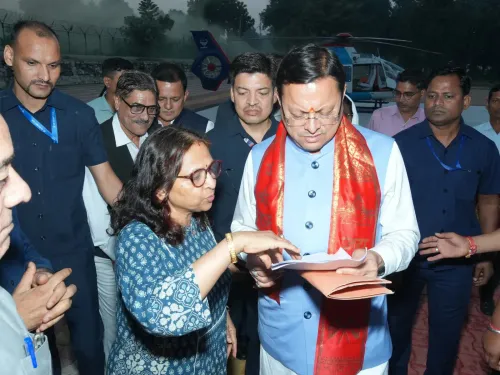
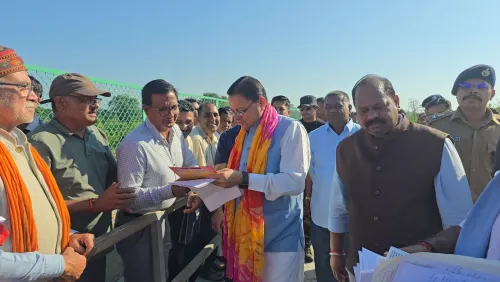
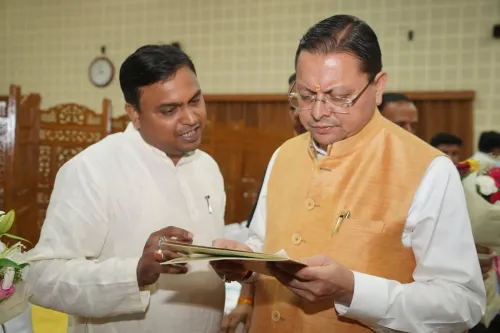
Meetings were held at the Lohiyahead Helipad and the camp office , with residents and elected representatives.
Dhami directed officials to resolve all complaints on a priority basis , with speed and transparency.
The CM stressed that citizens must not be forced to make repeated visits to government offices for resolution.
His governance mantra — saraleekar, samadhan, santushti (simplification, resolution, satisfaction) — was reaffirmed as the administration's guiding principle.
Dhami also discussed local development needs with public representatives and renewed his commitment to strengthen civic amenities in Khatima.
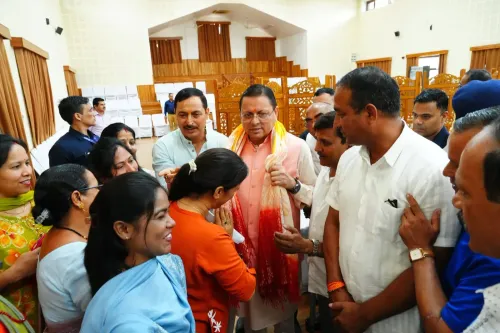
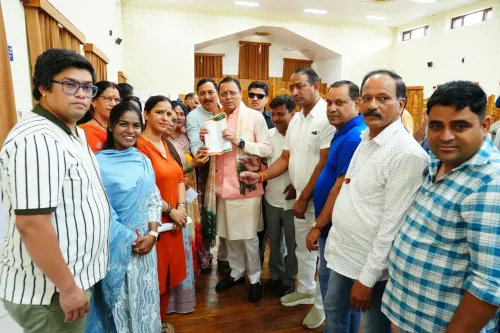
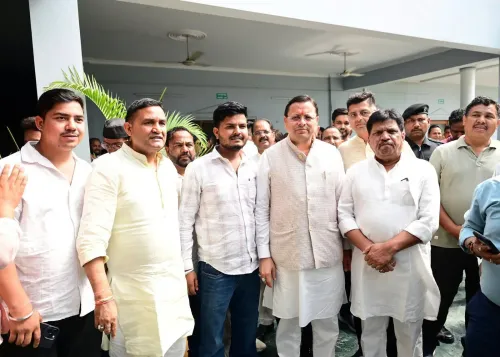
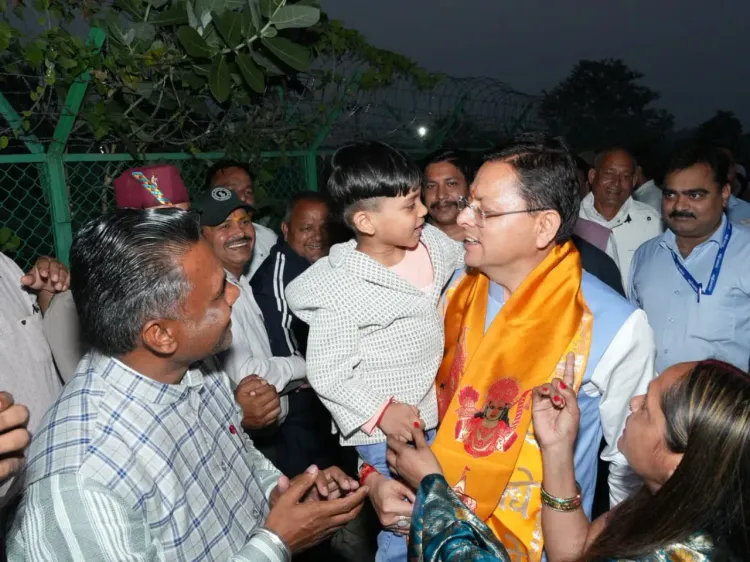
Governance came to the doorstep on Saturday, 24 October 2026, when Uttarakhand Chief Minister Pushkar Singh Dhami arrived in Khatima — a border town in Udham Singh Nagar district — to sit down with ordinary residents and elected representatives at the Lohiyahead Helipad and his camp office, listening directly to their grievances.
The Chief Minister's Office shared that Dhami met citizens and public representatives (janpratinidhiyon), heard their complaints, and immediately directed officials to resolve each grievance on a priority basis — with speed and transparency. No file-shuffling, no runarounds. His instruction was explicit: people should not be forced to make repeated trips to government offices chasing solutions that should come to them.
The 'Saraleekar, Samadhan, Santushti' Mantra in Action
Dhami framed his administration's approach around three Hindi words: saraleekar (simplification), samadhan (resolution), and santushti (satisfaction). He declared that time-bound resolution of public problems is the government's top priority, and that administrative accountability sits at the heart of that commitment. It is a compact, three-word governance philosophy — and visits like this are the test of whether it holds.
He also held discussions with local elected representatives about development priorities in the Khatima region, reaffirming a commitment to strengthen civic amenities in line with citizens' expectations. Khatima, sitting near the Nepal border, has long carried the dual weight of a frontier town: strategic location, but often at the back of the infrastructure queue.
Khatima's Place in Dhami's Political and Administrative Map
Khatima is not an incidental stop for the Chief Minister — it is his home constituency. Pushkar Singh Dhami has represented the Khatima assembly seat and has spoken repeatedly about ensuring that his political base does not merely receive symbolic attention but sees measurable delivery. A direct public hearing here carries both governance weight and political symbolism: the chief minister accountable to his own voters, face to face.
District-level public hearings of this kind are a standard tool in Indian state governance — but their value depends entirely on the follow-through. The instruction to officials to resolve complaints with transparency and priority sets a benchmark against which outcomes in the weeks ahead will be measured.
The real verdict on Saturday's visit will not come from the helipad — it will come from whether the complaints registered there are closed, not just filed.
Point of View
His own constituency, sharpens both the political and policy message: delivery at home is non-negotiable. The 'saraleekar-samadhan-santushti' framing also signals an attempt to build a recognisable, replicable service-delivery philosophy ahead of future electoral cycles. Whether the bureaucratic machinery translates these directives into measurable closure rates will determine whether the visit is remembered as governance or theatre.
NationPress
24 Oct 2026
Frequently Asked Questions
Why did CM Dhami visit Khatima on 24 October 2026?
Chief Minister Pushkar Singh Dhami visited Khatima to hold a direct public hearing at the Lohiyahead Helipad and his camp office, where he met residents and elected representatives to hear and address their grievances.
What is Khatima's significance to CM Dhami?
Khatima is CM Dhami's home assembly constituency in Udham Singh Nagar district, near the Nepal border, making it a politically and personally significant location for him.
What instructions did Dhami give to officials at Khatima?
Dhami directed officials to resolve all received complaints and problems on a priority basis with speed and transparency, ensuring citizens do not need to make repeated trips to government offices.
What does 'saraleekar, samadhan, santushti' mean in Dhami's governance framework?
It translates to 'simplification, resolution, satisfaction' — a three-word philosophy the Dhami government has adopted as its core approach to citizen service delivery, emphasising streamlined processes, resolved complaints, and satisfied citizens.
What is a janta darbar or public hearing in Indian state governance?
A janta darbar is a public hearing where a chief minister or senior official meets citizens directly to receive and address grievances, bypassing multiple bureaucratic layers. It is a widely-used accountability mechanism across Indian state governments.