CM Bhajan Lal Pledges to Protect Shekhawati's Painted Havelis
Synopsis
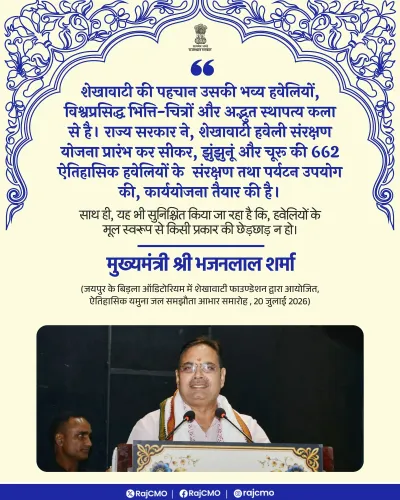
Rajasthan Chief Minister Bhajan Lal Sharma reaffirmed his government's resolve to preserve the historic painted havelis of Shekhawati and ensure all-round development of the semi-arid region spanning Sikar, Jhunjhunu, and Churu districts.
Key Takeaways
CM Bhajan Lal Sharma declared on 24 October 2026 that the Rajasthan government is firmly committed to conserving Shekhawati's historic havelis.
Shekhawati havelis, built primarily in the 18th and 19th centuries , are famous for elaborate frescoes and are spread across Sikar, Jhunjhunu, and Churu districts.
The announcement links cultural heritage preservation with all-round regional development in a semi-arid belt that relies heavily on tourism for economic activity.
Rajasthan has promoted Shekhawati heritage tourism since the 2000s , but consistent restoration funding has historically been uneven.
Concrete measures — budget provisions or heritage-authority notifications — are expected to emerge in the next Rajasthan assembly session .
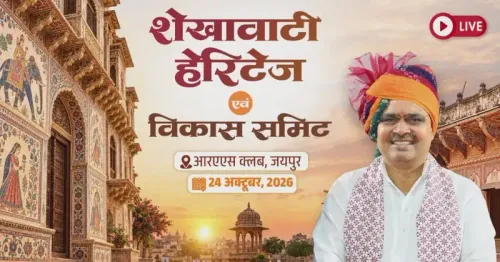
The painted havelis of Shekhawati — those frescoed mansions rising from the desert districts of Sikar, Jhunjhunu, and Churu — have watched merchants come and go for nearly three centuries. On Saturday, 24 October 2026, Rajasthan Chief Minister Bhajan Lal Sharma declared his government's firm resolve to protect them and drive all-round development in the region.
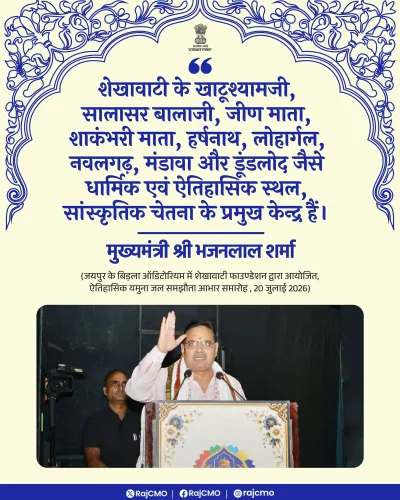
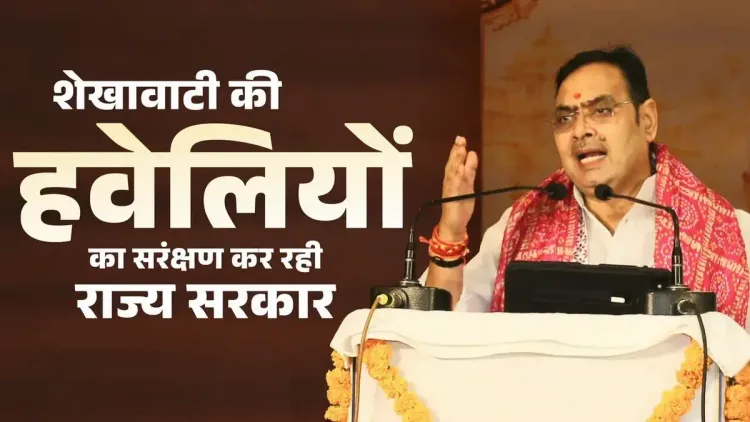
Posting on X, CM Sharma wrote in Hindi: 'शेखावाटी की ऐतिहासिक हवेलियाँ हमारी समृद्ध सांस्कृतिक विरासत की अनमोल पहचान हैं।' — 'The historic havelis of Shekhawati are the priceless identity of our rich cultural heritage. Our government is firmly committed to the preservation of this glorious heritage and the all-round development of the region.'What makes Shekhawati's havelis irreplaceable
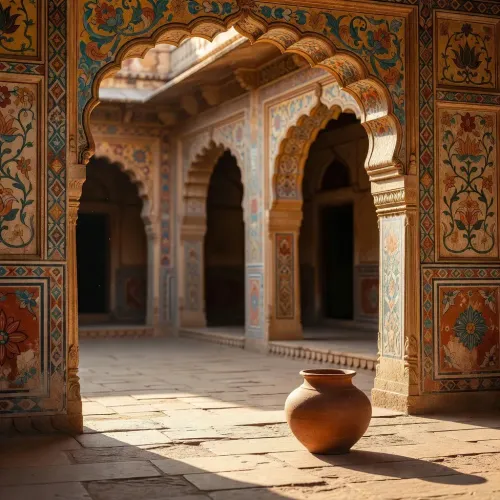
Built largely between the 18th and 19th centuries by wealthy Marwari trading families, the havelis of Shekhawati are blanketed in elaborate frescoes depicting mythology, daily life, and even early encounters with colonial-era technology — locomotives, gramophones, bicycles. No other cluster of vernacular painted architecture in India matches their density or variety. Conservationists have long described the region as an 'open-air art gallery', and its three districts draw heritage tourists from across the world.
Yet the galleries are ageing. Decades of neglect, seasonal sandstorms, and outward migration from this semi-arid belt have left many structures crumbling. Rajasthan's state tourism apparatus has promoted Shekhawati havelis since the 2000s, but sustained restoration funding has remained uneven.
Heritage conservation as a development lever
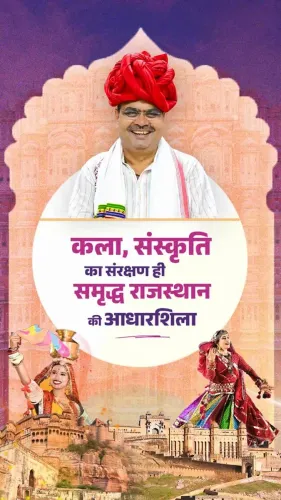
The BJP-led Rajasthan government, which took office in December 2023 under CM Sharma, has framed cultural preservation as inseparable from economic uplift in semi-arid districts. The logic is straightforward: a restored haveli draws tourists; tourists create demand for homestays, guides, handicrafts, and transport — all of which generate local livelihoods in communities where agriculture alone cannot sustain growth.
This framing mirrors a broader pattern visible across Indian states, where built heritage is increasingly positioned as an anchor for tourism-led regional economies. The Shekhawati belt, sitting outside Rajasthan's better-connected 'Golden Triangle' circuit of Jaipur, Jodhpur, and Udaipur, has the most to gain from a dedicated push.
What the next assembly session may reveal
Policy watchers will look to the next Rajasthan assembly session for concrete follow-through — specifically, whether budget provisions or heritage-authority notifications materialise for haveli restoration projects. The Chief Minister's statement signals political intent; the specifics of funding timelines and implementing agencies are yet to be publicly announced.
For the residents of Nawalgarh, Mandawa, Fatehpur, and Ramgarh — Shekhawati's most haveli-rich towns — the real measure of commitment will be scaffolding on walls, not words on a screen. The frescoes have survived this long. Whether they make it through the next decade depends on what happens next in Jaipur.
Point of View
The post reads as a political signal rather than a policy action, but it does keep Shekhawati on the state's agenda ahead of the next budget cycle. The broader pattern — state governments wrapping built-heritage conservation inside regional development narratives — has accelerated across India since 2014, and Rajasthan's large inventory of vernacular architecture makes it a natural testing ground. The real test for this government will be whether haveli restoration projects appear as line items in the next state budget.
NationPress
24 Oct 2026
Frequently Asked Questions
What are the Shekhawati havelis and why are they famous?
The Shekhawati havelis are grand merchant mansions built mainly in the 18th and 19th centuries across the Sikar, Jhunjhunu, and Churu districts of Rajasthan. They are celebrated for their intricate frescoes depicting mythology, everyday life, and early colonial-era technology, making the region one of the densest open-air painted-architecture galleries in the world.
What did CM Bhajan Lal Sharma say about Shekhawati's heritage?
On 24 October 2026, CM Sharma posted on X that the historic havelis of Shekhawati are 'the priceless identity of our rich cultural heritage' and that his government is 'firmly committed' to their preservation and to the all-round development of the region.
Which districts fall in the Shekhawati region of Rajasthan?
The Shekhawati region primarily covers three districts: Sikar, Jhunjhunu, and Churu, all located in the northern part of Rajasthan.
Has the Rajasthan government taken steps earlier to promote Shekhawati tourism?
Yes. Rajasthan's state tourism policies since the early 2000s have promoted Shekhawati havelis as heritage sites to drive regional tourism, though sustained restoration funding has historically been inconsistent.
When did Bhajan Lal Sharma become Chief Minister of Rajasthan?
Bhajan Lal Sharma assumed office as Chief Minister of Rajasthan in December 2023, after the BJP's victory in the state assembly elections.