CM Bhajanlal Highlights Shekhawati's Heritage Identity
Synopsis
The Chief Minister's Office of Rajasthan amplified the cultural identity of Shekhawati on 21 July 2026, spotlighting its grand havelis and world-famous frescoes under CM Bhajanlal Sharma's 'Our Pioneering Rajasthan' branding campaign, signalling possible policy moves on heritage tourism.
Key Takeaways
The Chief Minister's Office of Rajasthan posted on 21 July 2026 highlighting Shekhawati's grand havelis, world-famous frescoes, and architectural heritage.
Chief Minister Bhajanlal Sharma has led the BJP government in Rajasthan since December 2023 .
Shekhawati spans parts of Jhunjhunu, Sikar, and Churu districts and is home to 18th-19th century painted havelis considered a global open-air fresco gallery.
The post was tagged under #आपणो_अग्रणी_राजस्थान ('Our Pioneering Rajasthan'), the government's broader state-identity branding theme.
Rajasthan's tourism policy has long identified the Shekhawati heritage circuit as a priority zone for promotion.
Stakeholders including heritage tourists, local artisans, and haveli owners could benefit if the messaging leads to concrete restoration or tourism infrastructure announcements.
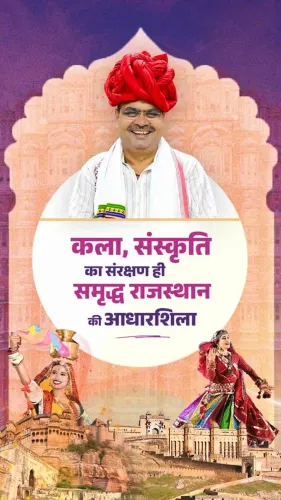
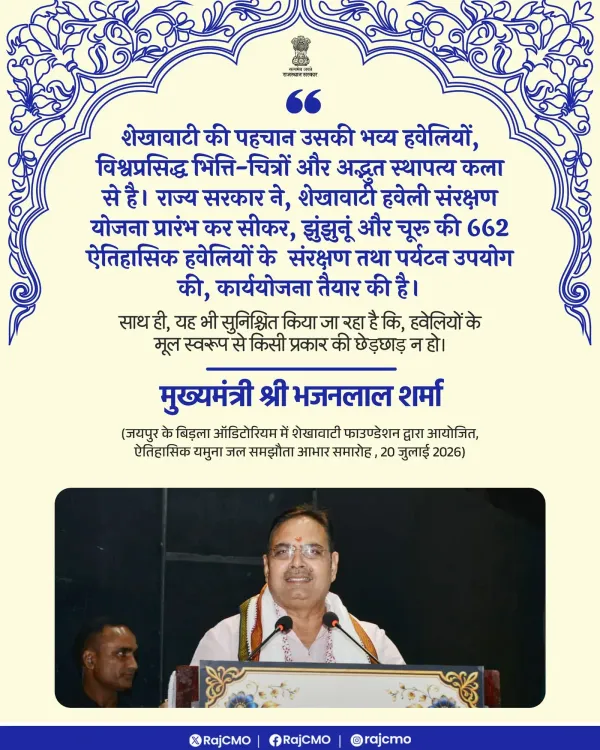
The Chief Minister's Office of Rajasthan on Tuesday, 21 July 2026, spotlighted the cultural legacy of Shekhawati, describing the region as defined by its grand havelis, world-famous frescoes, and extraordinary architectural tradition. The post, attributed to Chief Minister Bhajanlal Sharma, was shared under the campaign hashtag #आपणो_अग्रणी_राजस्थान ('Our Pioneering Rajasthan'), signalling a broader state branding effort.
Context
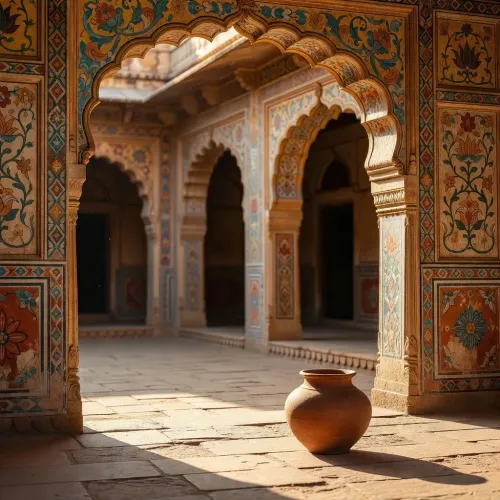
The post states in Hindi: 'शेखावाटी की पहचान उसकी भव्य हवेलियों, विश्वप्रसिद्ध भित्ति-चित्रों और अद्भुत स्थापत्य कला से है' — 'Shekhawati's identity lies in its grand havelis, world-famous frescoes, and extraordinary architectural art.' The message positions the region's living heritage as a cornerstone of Rajasthan's cultural and developmental narrative under the current administration.
Shekhawati is a semi-arid belt spanning parts of Jhunjhunu, Sikar, and Churu districts in northern Rajasthan. Its painted havelis, built largely between the 18th and 19th centuries by prosperous Marwari merchant families, are considered among the finest open-air fresco galleries in the world.
Policy Backdrop
Rajasthan's tourism policy frameworks over the past decade have consistently identified the Shekhawati heritage circuit as a priority zone for promotion and investment. The region's havelis — many privately owned or in varying states of upkeep — have been central to state-level conversations about heritage tourism as an economic driver.
The hashtag #आपणो_अग्रणी_राजस्थान ('Our Pioneering Rajasthan') has been used by the Bhajanlal Sharma government as an umbrella branding theme, linking cultural pride with the administration's development agenda since it assumed office in December 2023. Highlighting Shekhawati fits squarely within this pattern of tying regional cultural assets to a larger state-identity narrative.
Stakeholders and Impact
The communities most directly affected by official attention to Shekhawati include heritage tourists — both domestic and international — as well as local artisans who practice fresco and traditional craft techniques passed down through generations. Haveli owners, many of whom manage restoration costs privately, also stand to benefit if state messaging translates into policy support or increased footfall.
Cultural heritage advocates have long argued that sustained government investment in documentation, restoration, and tourism infrastructure is essential to preserving Shekhawati's frescoes, which face weathering, neglect, and unregulated construction in their vicinity. Official social media amplification, while symbolic, can raise the region's profile among planners and travellers alike.
What's Next
The post's timing and the 'Pioneering Rajasthan' framing suggest the state government may be building a communications foundation for upcoming announcements — potentially including haveli restoration schemes, new tourism circuits, or heritage-linked budget allocations. Observers will watch the Rajasthan Tourism Department's forthcoming policy calendar for concrete follow-through on the cultural branding signal sent by the Chief Minister's Office. Sustained institutional backing, rather than periodic messaging, will determine whether Shekhawati's global heritage status translates into tangible economic and conservation gains for the region.
Point of View
Making it a low-risk, high-visibility talking point. The post alone moves no policy needle, but it signals that the administration is building a narrative architecture — likely ahead of budget or tourism policy announcements. The real test will be whether this messaging cycle is followed by measurable restoration funding or infrastructure investment in the region.
NationPress
20 Oct 2026
Frequently Asked Questions
What is Shekhawati famous for?
Shekhawati, spanning parts of Jhunjhunu, Sikar, and Churu districts in northern Rajasthan, is world-famous for its ornately painted havelis featuring frescoes built by Marwari merchant families in the 18th and 19th centuries, often called the 'open-air art gallery of Rajasthan.'
Who is the Chief Minister of Rajasthan in 2026?
Bhajanlal Sharma of the BJP has served as Chief Minister of Rajasthan since December 2023 and continues in office as of July 2026.
What is the 'Aapno Agrani Rajasthan' campaign?
'Aapno Agrani Rajasthan' — meaning 'Our Pioneering Rajasthan' — is a branding hashtag used by the Bhajanlal Sharma government to promote Rajasthan's development and cultural identity across official communications.
What is the government doing to protect Shekhawati havelis?
Rajasthan's tourism policy frameworks have identified the Shekhawati heritage circuit as a priority zone for promotion, though specific new restoration schemes announced by the current administration have not yet been confirmed publicly.
Why are Shekhawati frescoes significant?
The frescoes of Shekhawati are considered among the finest examples of traditional Indian mural art, depicting mythology, daily life, and historical scenes, and attract heritage tourists from across India and abroad, making them a key cultural and economic asset for the state.