Rajasthan CMO Hails Shekhawati as Land of Heroes and Saints

Synopsis
The Chief Minister's Office of Rajasthan on 21 July 2026 paid tribute to Shekhawati, calling it the birthplace of warriors, saints, martyrs and great philanthropists, in a post tagging CM Bhajan Lal Sharma under the hashtag #AapnoAgraniRajasthan.
Key Takeaways
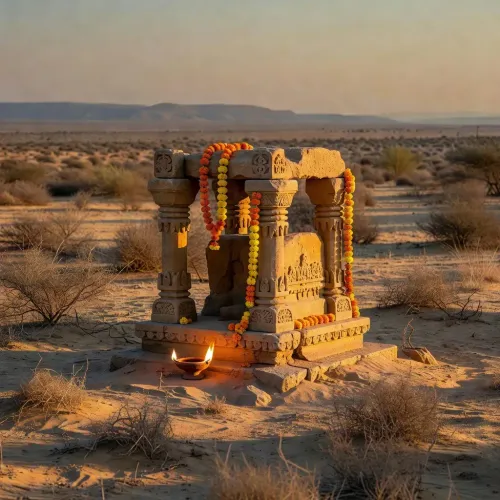
The Rajasthan CMO on 21 July 2026 described Shekhawati as a 'heroic birthplace of warriors, sand dunes, saints, martyrs, and Bhama Shahs.' Shekhawati spans the districts of Sikar , Jhunjhunu , and Churu in northern Rajasthan.
The post referenced the legacy of Bhama Shah , the 16th-century merchant who funded Maharana Pratap's army after the Battle of Haldighati .
The hashtag #AapnoAgraniRajasthan ('Our Leading Rajasthan') has been a recurring part of the current BJP government's official communication.
Chief Minister Bhajan Lal Sharma was tagged in the post, indicating the tribute aligns with the CM's cultural outreach agenda.
Shekhawati has been a designated heritage tourism circuit in state policy since the 2000s .
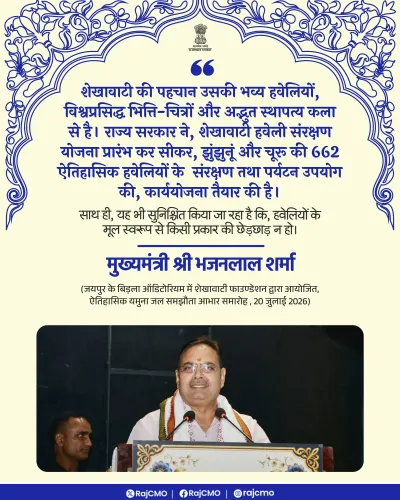
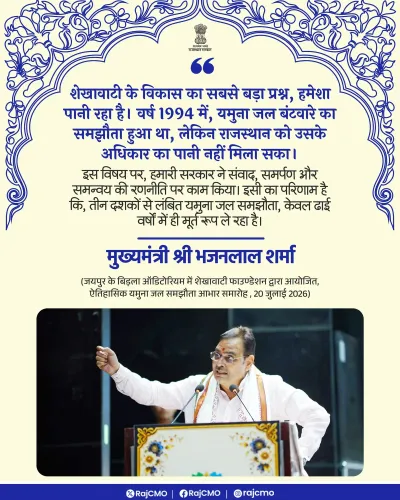
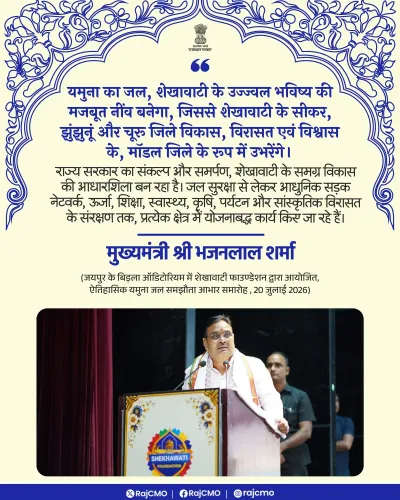
The Chief Minister's Office of Rajasthan on Tuesday, 21 July 2026, paid tribute to the Shekhawati region, calling it a land that has given birth to warriors, saints, martyrs, and great philanthropists, in a post addressed to Chief Minister Bhajan Lal Sharma.
The post, shared on the official CMO account, stated in Hindi: 'Shekhawati veeron, dhoron, santon, shaheedon evam Bhamashaon ki veer prasuta bhoomi hai' — meaning, 'Shekhawati is the heroic birthplace of warriors, sand dunes, saints, martyrs, and Bhama Shahs (great philanthropists).' The hashtag #AapnoAgraniRajasthan ('Our Leading Rajasthan') accompanied the message, a phrase the state government has used to frame its development and cultural identity push.
Context
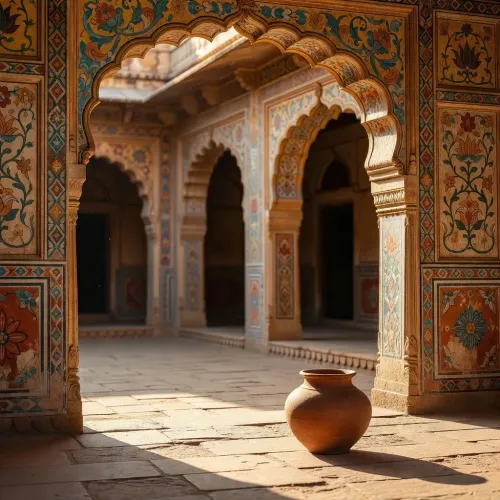
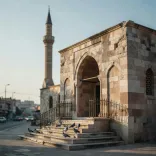
Shekhawati is a semi-arid region in northern Rajasthan, spanning the districts of Sikar, Jhunjhunu, and Churu. It is historically celebrated for its elaborately painted havelis, its martial Rajput clans, and its tradition of producing merchants who became major patrons of art, education, and public causes across India. The region's name derives from the Shekhawat Rajput clan that once ruled it.
The reference to Bhama Shah in the post is significant. The 16th-century merchant-minister from this region is remembered for donating his personal wealth to Maharana Pratap after the Battle of Haldighati, enabling the Mewar ruler to rebuild his army and continue resistance. Bhama Shah remains a symbol of selfless patriotic philanthropy in Rajasthani cultural memory.
Policy Backdrop
Rajasthan's state governments have, since the 2000s, formally identified Shekhawati as a dedicated heritage tourism circuit, seeking to leverage its concentration of frescoed havelis and historical landmarks. Official cultural messaging around the region has consistently linked its martial and philanthropic legacies to broader narratives of Rajasthani pride and identity.
The current BJP government under Chief Minister Bhajan Lal Sharma, who took office in December 2023, has continued this tradition of using official channels to amplify the cultural and historical significance of specific regions. The hashtag campaign #AapnoAgraniRajasthan has been a recurring feature of the CMO's communication, positioning Rajasthan as a state leading in both heritage preservation and development.
Stakeholders and Impact
Residents of Sikar, Jhunjhunu, and Churu districts stand as the most direct audience for such messaging, which reinforces local cultural pride. The heritage tourism sector, which depends on footfall to Shekhawati's famous painted havelis and historical sites, also benefits from sustained official attention to the region's legacy.
The invocation of warriors, saints, and philanthropists in a single official statement reflects a deliberate attempt to unite multiple strands of community identity — martial, spiritual, and mercantile — under a single regional narrative. This kind of messaging has historically bolstered community engagement in state-run heritage and tourism initiatives.
What's Next
The post is likely to be followed by broader state-level announcements on heritage site development, tourism circuit expansion, or cultural events centred on the Shekhawati belt. The government's continued use of the #AapnoAgraniRajasthan branding suggests an active campaign to link cultural storytelling with the state's development image ahead of future policy milestones. Observers will watch for concrete allocations toward the restoration of Shekhawati's frescoed havelis and the development of memorials honouring the region's historical figures.
Point of View
A strategy that serves both electoral and tourism-promotion goals. By invoking warriors, saints, and the Bhama Shah philanthropic tradition in a single post, the BJP government signals its intent to consolidate diverse community loyalties across the Sikar-Jhunjhunu-Churu belt. The hashtag #AapnoAgraniRajasthan frames this cultural messaging within a broader development narrative, suggesting the government is building a cohesive brand for Rajasthan ahead of future policy announcements. Such posts, while ceremonial in tone, often precede concrete heritage or tourism sector announcements.
NationPress
20 Oct 2026
Frequently Asked Questions
What is Shekhawati known for in Rajasthan?
Shekhawati is a semi-arid region spanning Sikar, Jhunjhunu and Churu districts, renowned for its elaborately painted havelis, Rajput martial history, and its tradition of producing major merchants and philanthropists who supported causes across India.
Who is Bhama Shah and why is he important to Shekhawati?
Bhama Shah was a 16th-century merchant-minister from the Shekhawati region who donated his personal wealth to Maharana Pratap after the Battle of Haldighati, enabling the Mewar ruler to rebuild his forces. He is celebrated as a symbol of selfless patriotic philanthropy.
Who is the Chief Minister of Rajasthan in 2026?
Bhajan Lal Sharma of the BJP has been the Chief Minister of Rajasthan since December 2023, following the party's victory in the state assembly elections.
What does #AapnoAgraniRajasthan mean?
The hashtag translates from Rajasthani-Hindi as 'Our Leading Rajasthan' and has been used by the current state government to frame Rajasthan's cultural heritage and development agenda under a single brand identity.
Is Shekhawati a heritage tourism destination?
Yes. Rajasthan's state government has formally identified Shekhawati as a heritage tourism circuit since the 2000s, with its concentration of frescoed havelis, historical forts, and sites linked to figures like Bhama Shah drawing domestic and international visitors.