Shekhawat opens 'Raj se Swaraj Tak' exhibition on World Tourism Day
Synopsis
Union Culture and Tourism Minister Gajendra Singh Shekhawat inaugurated the 'Raj se Swaraj Tak' exhibition at India Habitat Centre on World Tourism Day, using Shekhawati's historic frescoes and havelis to trace India's journey to independence while pledging jobs for local artists, women and youth.
Key Takeaways
Gajendra Singh Shekhawat , Union Minister of Culture and Tourism, inaugurated the 'Raj se Swaraj Tak' exhibition on 27 September 2026 — World Tourism Day.
The event was held at India Habitat Centre, New Delhi , and centres on the heritage of the Shekhawati region of Rajasthan.
The exhibition uses 18th- and 19th-century havelis and frescoes to narrate India's cultural and national journey from princely rule to self-rule.
The minister pledged to generate employment and entrepreneurship for local artists, craftsmen, women and youth through tourism linked to heritage conservation.
The initiative connects to the broader Swadesh Darshan scheme framework that has promoted thematic heritage tourism circuits since 2014–15 .
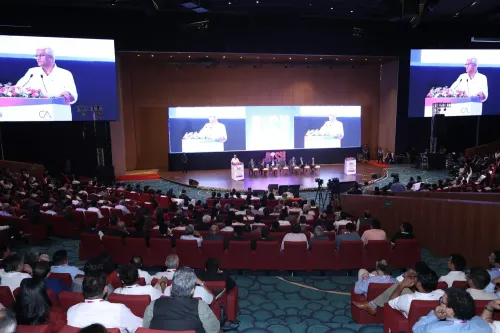
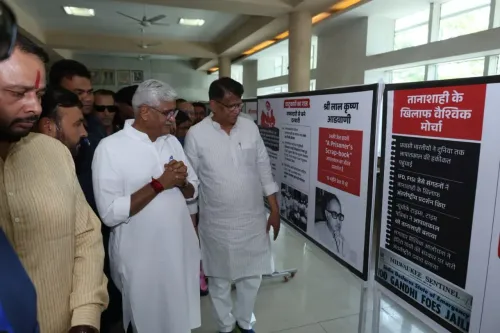
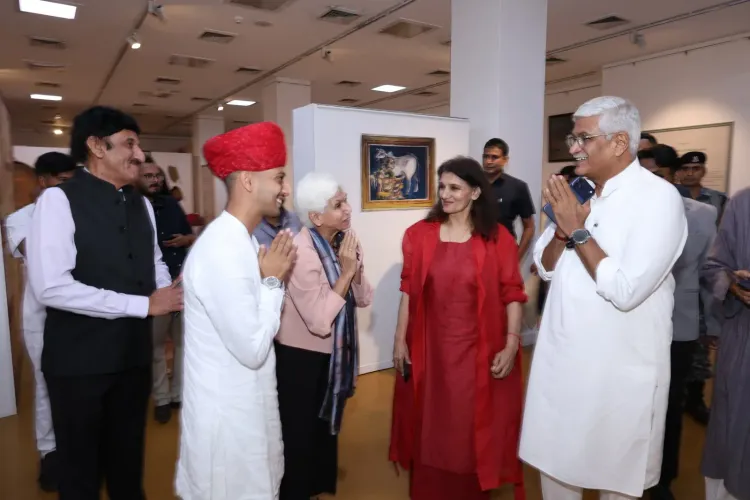
On World Tourism Day, 27 September 2026, a region famous for its century-old painted walls and ornate havelis stepped into the heart of India's capital — and Union Culture and Tourism Minister Gajendra Singh Shekhawat was there to open the door. The minister inaugurated the exhibition 'Raj se Swaraj Tak' ('From Princely Rule to Self-Rule') at India Habitat Centre, New Delhi, framing Shekhawati's rich visual heritage as a lens through which India's journey from colonial rule to independence can be understood.
'Raj se Swaraj Tak' — what Shekhawati's walls are saying
The exhibition draws on the Shekhawati region of northern Rajasthan — a semi-arid stretch whose 18th- and 19th-century havelis are covered floor to ceiling with frescoes depicting mythological stories, historical events and everyday social life. These murals, once commissioned by prosperous merchant families, have long been recognised as an open-air gallery unlike anything else in South Asia. Shekhawat described the showcase as 'a distinctive effort to understand India's cultural and national journey through Shekhawati's rich heritage, frescoes and historic havelis.'
The timing — on the UN World Tourism Organization's annual observance day — was deliberate. World Tourism Day is designed precisely to spotlight the nexus between cultural assets and economic opportunity, and the choice of Shekhawati as its centerpiece signals where the ministry sees untapped potential.
Heritage as livelihood — the policy pledge behind the exhibit
Shekhawat went beyond ceremony. In his post, the minister committed to 'creating new opportunities for employment and entrepreneurship for local artists, craftsmen, mahila shakti (women's empowerment) and youth through tourism, while preserving our heritage.' The language maps closely onto a policy lineage stretching back to the Swadesh Darshan scheme, launched in 2014–15, which built thematic heritage tourism circuits specifically to generate rural livelihoods.
Rajasthan's painted havelis have appeared repeatedly in such frameworks — as anchor sites for circuit tourism, as training grounds for fresco conservation artisans, and as platforms for women-led craft enterprises. The convergence of the Culture and Tourism ministries under a single cabinet portfolio gives Shekhawat unusual reach to push both conservation mandates and economic development in tandem.
Why this moment matters for Rajasthan's artisan economy
The stakeholders most directly in the frame are the artists, muralists and craftspeople of the Shekhawati belt — communities whose traditional skills are commercially viable but chronically under-resourced. By anchoring a national tourism-day event around their heritage, the ministry is, at minimum, putting Shekhawati back on the policy map. Whether that translates into formal circuit announcements or artisan skill programmes will become clearer at upcoming tourism ministry review meetings.
For now, the fresco-covered walls of Rajasthan have their moment in New Delhi — and a minister who shares the region's name is making the case that preserving them is inseparable from powering the livelihoods of the people who live among them.
Point of View
But Shekhawat's dual Culture-Tourism portfolio gives the initiative unusual institutional coherence. By foregrounding women and youth employment alongside fresco conservation, the ministry is trying to reframe heritage sites as economic assets rather than fiscal liabilities. The Shekhawati belt — neglected relative to Rajasthan's Jaipur-Jodhpur-Udaipur golden triangle — could see fresh policy attention if these pledges translate into formal circuit designations. The World Tourism Day timing maximises international visibility for what is otherwise a domestic cultural agenda.
NationPress
28 Sept 2026
Frequently Asked Questions
What is the 'Raj se Swaraj Tak' exhibition about?
'Raj se Swaraj Tak' ('From Princely Rule to Self-Rule') is an exhibition inaugurated at India Habitat Centre, New Delhi, on World Tourism Day 2026. It uses the frescoes and historic havelis of Rajasthan's Shekhawati region to trace India's cultural and political journey from the era of princely states to independence.
Where is the Shekhawati region and why is it famous?
Shekhawati is a semi-arid region in northern Rajasthan known for its elaborately painted havelis and frescoes dating from the 18th and 19th centuries. These murals, commissioned by merchant families, depict mythological, historical and social themes and are considered among the finest open-air art collections in South Asia.
What did Gajendra Singh Shekhawat announce at the event?
Minister Shekhawat pledged that the government would create new employment and entrepreneurship opportunities for local artists, craftsmen, women and youth through tourism, while simultaneously preserving India's heritage. He described the exhibition as 'a distinctive effort' to communicate India's cultural journey.
What is World Tourism Day and when is it observed?
World Tourism Day is an annual global observance on 27 September , promoted by the UN World Tourism Organization. It highlights the social, cultural and economic role of tourism and provides governments a platform to showcase heritage and tourism initiatives.
What is the Swadesh Darshan scheme and how does it relate to Shekhawati?
The Swadesh Darshan scheme, launched in 2014–15 , funds thematic heritage tourism circuits across India to develop sites and generate local employment. Rajasthan's painted havelis, including those in Shekhawati, have been part of such circuit-based planning, which the current ministry is continuing to build upon.