CM Bhajan Lal Sharma hosts Shekhawati Heritage & Dev Summit
Synopsis
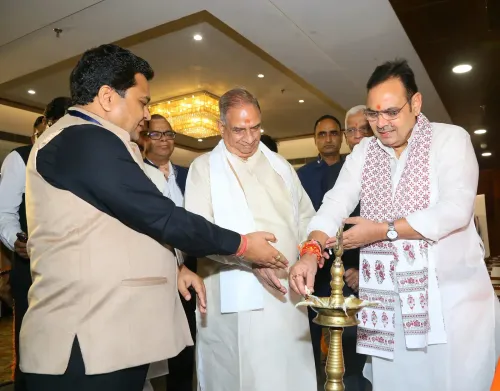
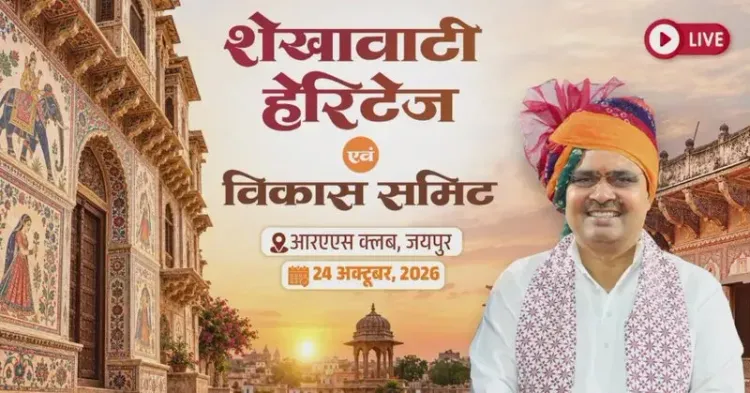
Rajasthan CM Bhajan Lal Sharma presided over the Shekhawati Heritage and Development Summit in Jaipur on 24 October 2026, aiming to link the region's famed painted havelis with stronger tourism infrastructure and economic growth.
Key Takeaways
Rajasthan CM Bhajan Lal Sharma hosted the Shekhawati Heritage and Development Summit live in Jaipur on 24 October 2026 .
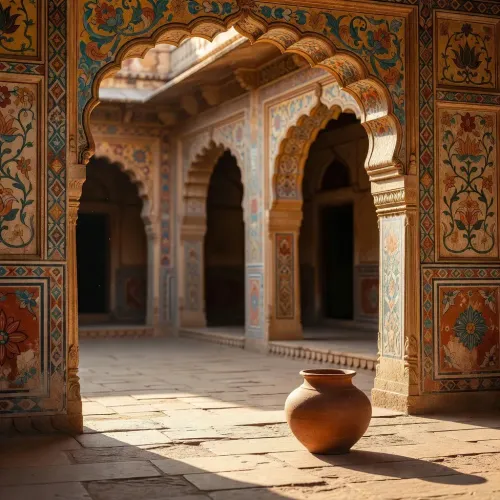
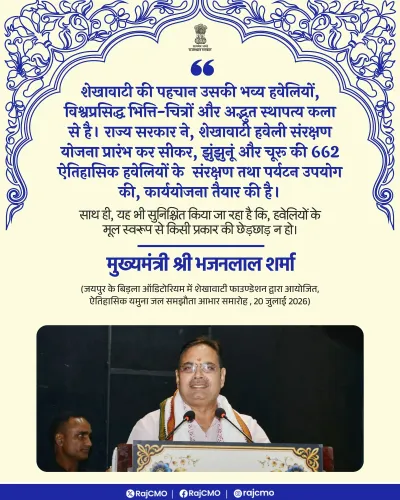
Shekhawati — covering Sikar, Jhunjhunu and Churu districts — holds one of the world's densest concentrations of 18th- and 19th-century painted havelis .
Despite its cultural wealth, Shekhawati attracts far fewer tourists than Jaipur or Udaipur , making development linkage a key policy priority.
The BJP government, in power since December 2023 , is continuing a tradition of regional summits to pair heritage conservation with tourism and infrastructure investment.
Likely deliverables to watch include haveli restoration budgets, road connectivity upgrades and a formal Shekhawati heritage tourism circuit .
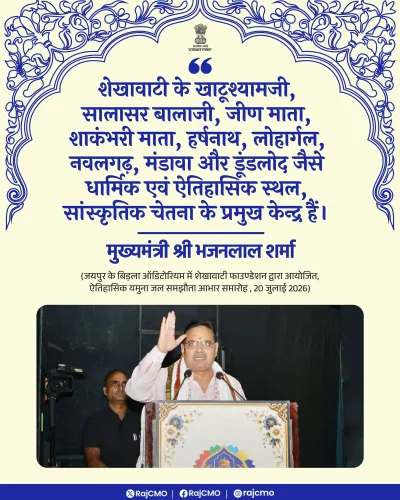
The painted havelis of Shekhawati — some of the most striking open-air fresco galleries on earth — took centre stage in Jaipur on Saturday, 24 October 2026, as Rajasthan Chief Minister Bhajan Lal Sharma presided over the live proceedings of the Shekhawati Heritage and Development Summit, signalling the state government's push to convert the region's cultural wealth into economic momentum.
A region of frescoes, long overlooked by mainstream tourism
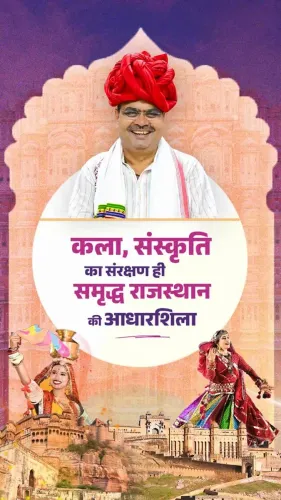
Shekhawati — spanning the districts of Sikar, Jhunjhunu and Churu in northern Rajasthan — is home to an extraordinary concentration of 18th- and 19th-century painted havelis, their outer walls alive with mythological scenes, trading caravans and colonial-era motifs. Despite that artistic density, the region has historically drawn a fraction of the visitor footfall that flows to Jaipur or Udaipur. The summit, held in the state capital, is designed to close that gap — pairing heritage conservation goals with hard infrastructure and tourism-circuit planning.
BJP's regional summit playbook in Rajasthan
Rajasthan administrations across party lines have periodically convened regional summits to tie together preservation policy, investment pitches and connectivity upgrades for asset-rich but visitor-poor zones. The current BJP government, which came to power in December 2023 under CM Sharma, has continued that tradition — with Shekhawati emerging as a priority given its unique cultural stock and relative economic underdevelopment. Today's live summit format, broadcast directly from the CM's official handle, suggests the administration intends broad visibility for whatever commitments emerge.
What the summit could unlock for Shekhawati
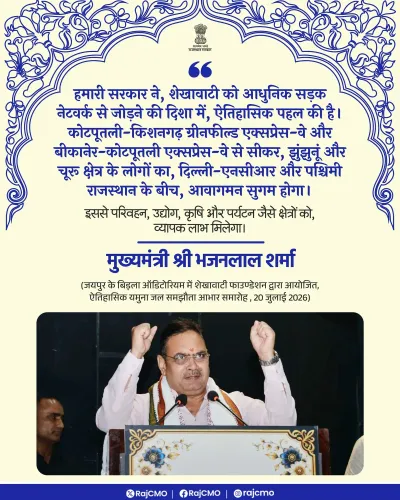
Observers will watch closely for concrete deliverables: budget allocations for haveli restoration, upgraded road and rail connectivity linking Shekhawati towns to Jaipur, and the potential notification of a dedicated heritage tourism circuit that could route domestic and international visitors through the region. A formal policy framework — rather than one-off announcements — would mark a meaningful step toward protecting frescoes that face slow decay from neglect and weather.
For a state whose tourism economy is one of its most powerful engines, putting Shekhawati properly on the map is not just a cultural act. It is an economic imperative.
Point of View
Who took office in December 2023 needing to demonstrate administrative presence beyond Jaipur, spotlighting Shekhawati serves a dual purpose: cultural credibility and visible regional outreach. The live-broadcast format is also deliberate — it signals transparency and widens the political audience for any announcement made inside the hall. Whether the summit produces binding commitments or remains aspirational will determine whether this event enters Rajasthan's policy record or simply its social-media archive.
NationPress
24 Oct 2026
Frequently Asked Questions
What is the Shekhawati Heritage and Development Summit?
It is a regional summit organised by the Rajasthan government to link the preservation of Shekhawati's famous painted havelis with economic development, improved connectivity and tourism growth in the Sikar, Jhunjhunu and Churu districts.
Why is Shekhawati considered a heritage region?
Shekhawati in northern Rajasthan is home to an extraordinary concentration of 18th- and 19th-century havelis decorated with elaborate frescoes depicting mythology, trade routes and colonial-era life, making it one of the world's most remarkable open-air art galleries.
Who is Bhajan Lal Sharma?
Bhajan Lal Sharma is the Chief Minister of Rajasthan and a BJP leader who assumed office in December 2023 following the state assembly elections.
What outcomes could come from the Shekhawati summit?
Potential outcomes include budget allocations for haveli restoration, road and rail connectivity upgrades linking Shekhawati to Jaipur, and the announcement of a dedicated heritage tourism circuit to boost visitor footfall in the region.
Where was the Shekhawati Heritage and Development Summit held?
The summit was held in Jaipur, the capital of Rajasthan, on 24 October 2026.