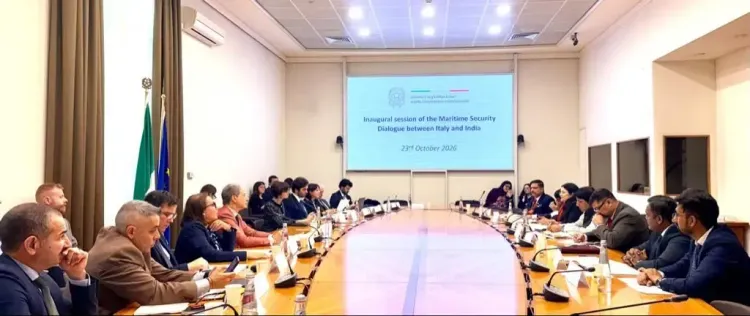
India-Italy inaugural maritime security dialogue held in Rome
Synopsis
India and Italy crossed a new diplomatic threshold on 23 October, holding their first-ever maritime security dialogue in Rome — a direct follow-up to the Modi-Meloni summit agreement in May. With a Defence Industrial Roadmap, coast guard linkages, and a proposed annual military dialogue all on the table, this is more than a one-off meeting: it is the scaffolding of a durable Indo-Mediterranean security partnership.
Key Takeaways
India and Italy held their inaugural Maritime Security Dialogue in Rome on 23 October 2026 .
Talks covered maritime situational awareness , countering illicit maritime activities , and protecting critical maritime infrastructure .
The Indian delegation was led by MEA Joint Secretary Subhashini Narayanan and visited Academia Navale , the Italian Hydrographical Institute , and the Italian Coast Guard .
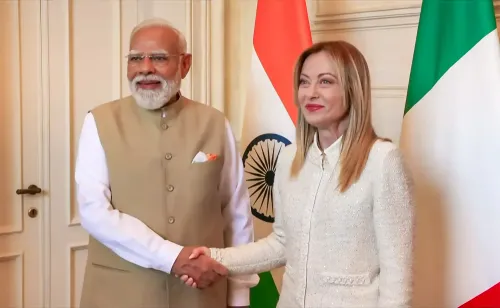
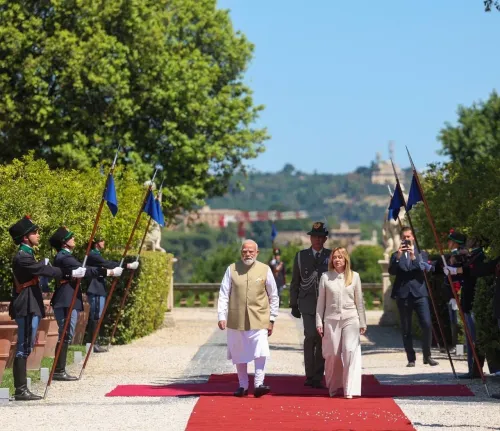
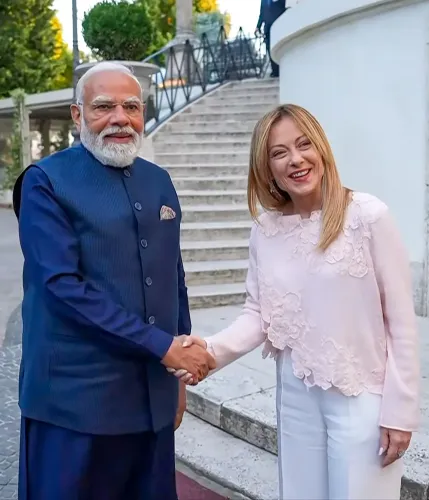
The dialogue was mandated by PM Narendra Modi and Italian PM Giorgia Meloni at their May 2026 Rome summit.
Both sides have agreed to explore an annual high-level military structured dialogue and a Defence Industrial Roadmap covering helicopters, naval platforms, and electronic warfare.
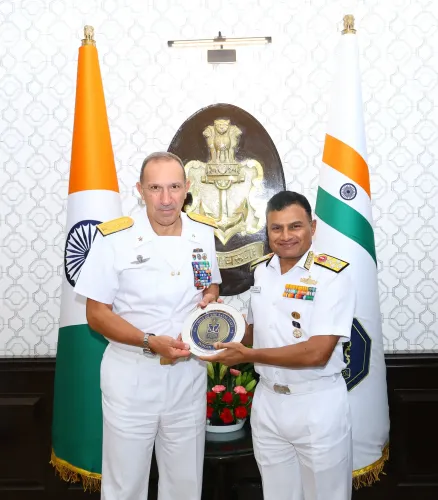
India and Italy convened their inaugural Maritime Security Dialogue in Rome on 23 October 2026, marking a significant milestone in the two nations' Special Strategic Partnership. The session, confirmed by the Indian Embassy in Italy, focused on maritime situational awareness, countering illicit maritime activities, and safeguarding critical maritime infrastructure.
What the Dialogue Covered
The talks enabled what the Indian Embassy described as 'a productive exchange of assessments about maritime security environment and cooperation in maritime domain.' Both delegations discussed concrete avenues for collaboration, spanning intelligence sharing, maritime domain awareness, and joint measures against smuggling and piracy. The Embassy characterised the session as opening 'a new chapter' in bilateral ties.
Indian Delegation and Institutional Visits
The Indian side was led by Ministry of External Affairs (MEA) Joint Secretary (Disarmament and International Security Affairs) Subhashini Narayanan. Beyond the formal dialogue table, the delegation held interactions at Academia Navale, the Italian Hydrographical Institute, Polo Nazionale della Subacquea, and the Italian Coast Guard — signalling intent to build operational, not merely diplomatic, links.
How This Dialogue Came About
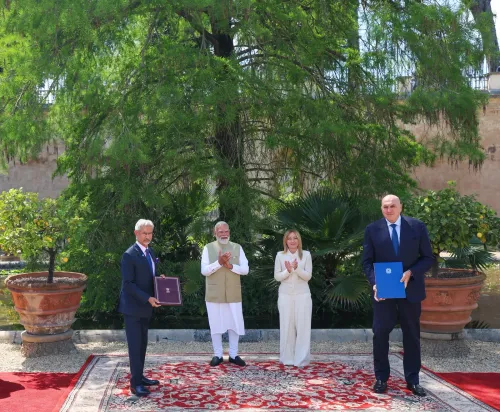
The maritime security dialogue was formally agreed upon in May 2026, when Prime Minister Narendra Modi and Italian Prime Minister Giorgia Meloni met in Rome. The two leaders had expressed satisfaction at the deepening of defence cooperation, including through ministerial exchanges, service-to-service ties, and port visits. They also welcomed the adoption of a Joint Declaration of Intent and a Defence Industrial Roadmap — a framework designed to promote co-production and co-development across helicopters, naval platforms, marine armament, and electronic warfare systems.
Broader Strategic Significance
According to the Joint Statement released after the Modi-Meloni summit, the two Prime Ministers recognised the importance of protecting critical infrastructures and their related supply chains through industrial resilience. Both sides also agreed to examine the feasibility of establishing an annual high-level military structured dialogue, complementing existing mechanisms such as the Joint Defence Committee and the Military Cooperation Group. The framework further envisages joint exercises and inter-force training courses.
What Comes Next
With the inaugural dialogue now concluded, attention will shift to whether the institutional architecture — the defence roadmap, the proposed annual military dialogue, and the coast guard linkages — translates into tangible co-development projects. The maritime domain, particularly in the Indo-Pacific and Mediterranean corridors, is increasingly contested, making this bilateral channel strategically timely for both nations.
Point of View
But a co-architect of maritime security frameworks spanning the Indian Ocean and Mediterranean. What mainstream coverage underplays is the operational texture — visits to the Italian Coast Guard and Polo Nazionale della Subacquea suggest both sides are moving toward working-level integration, not just high-level communiqués. The Defence Industrial Roadmap on helicopters and naval platforms also deserves scrutiny: India has historically struggled to convert co-development frameworks into delivered hardware. Whether this partnership avoids that pattern will be the real test of the 'new chapter' the Embassy announced.
NationPress
24 Oct 2026
Frequently Asked Questions
What was the India-Italy inaugural maritime security dialogue about?
The inaugural India-Italy Maritime Security Dialogue, held in Rome on 23 October 2026, focused on maritime situational awareness, countering illicit maritime activities, and safeguarding critical maritime infrastructure. It was described by the Indian Embassy in Italy as 'a new chapter' in the India-Italy Special Strategic Partnership.
Who led the Indian delegation at the Rome maritime dialogue?
The Indian delegation was led by Ministry of External Affairs Joint Secretary (Disarmament and International Security Affairs) Subhashini Narayanan. The team also visited Academia Navale, the Italian Hydrographical Institute, Polo Nazionale della Subacquea, and the Italian Coast Guard during the visit.
When did India and Italy agree to launch this maritime security dialogue?
Prime Minister Narendra Modi and Italian Prime Minister Giorgia Meloni agreed to launch the maritime security dialogue during their meeting in Rome in May 2026. The aim was to strengthen cooperation, coordination, and information exchange in the maritime domain.
What is the India-Italy Defence Industrial Roadmap?
The Defence Industrial Roadmap is a bilateral framework adopted by India and Italy to promote technological cooperation, co-production, and co-development projects. It covers sectors including helicopters, naval platforms, marine armament, and electronic warfare systems.
What is the proposed annual high-level military dialogue between India and Italy?
Both countries have agreed to examine the feasibility of creating an annual high-level military structured dialogue that would complement existing mechanisms such as the Joint Defence Committee and the Military Cooperation Group. The framework also envisages joint exercises and inter-force training courses.