India-Italy ties enter decisive phase: Modi, Meloni pen joint op-ed in Rome
Synopsis
Modi and Meloni didn't just meet in Rome — they co-authored a sweeping joint op-ed declaring India-Italy ties a 'Special Strategic Partnership' in a decisive phase. With a €20 billion trade target by 2029, an Indo-Mediterranean corridor concept, and a shared AI ethics framework blending India's MANAV vision with Italy's algor-ethics, this is one of the most substantively detailed bilateral frameworks India has published with a European partner.
Key Takeaways
PM Narendra Modi and Italian PM Giorgia Meloni co-authored a joint op-ed in Rome on 20 May 2025 , declaring India-Italy ties a Special Strategic Partnership in a 'decisive phase.' Both leaders set a bilateral trade target of Euro 20 billion by 2029 , covering defence, aerospace, clean tech, pharma, and agri-food.
Each country now hosts over 1,000 businesses from the other, signalling deepening supply-chain integration.
The op-ed introduced an 'Indo-Mediterranean' corridor concept, linking the Indo-Pacific and Mediterranean as interconnected strategic spaces.
On AI, both nations aligned around India's MANAV framework and Italy's 'algor-ethics' tradition, committing to human-centric, rights-preserving technology development.
Cooperation frameworks cited include the International Solar Alliance , Coalition for Disaster Resilient Infrastructure , Global Biofuels Alliance , and the India-Middle East-Europe Economic Corridor .
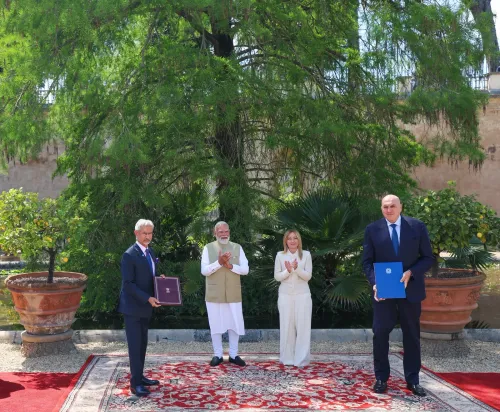
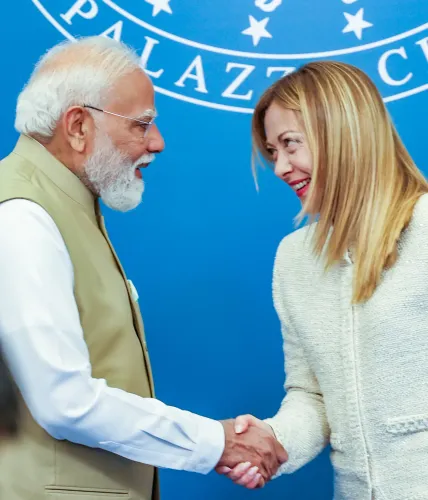
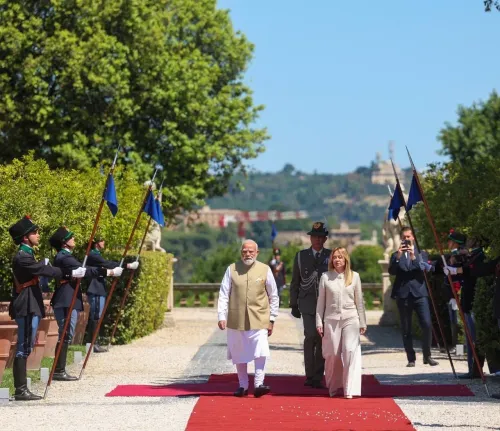
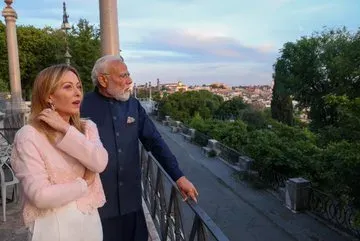
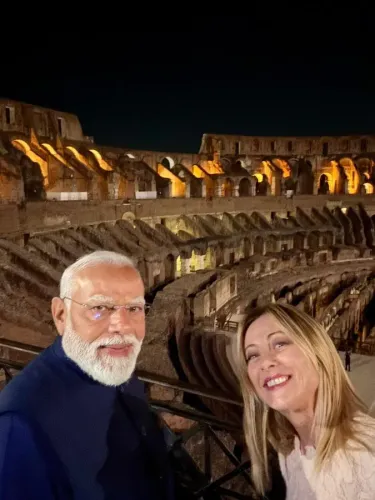
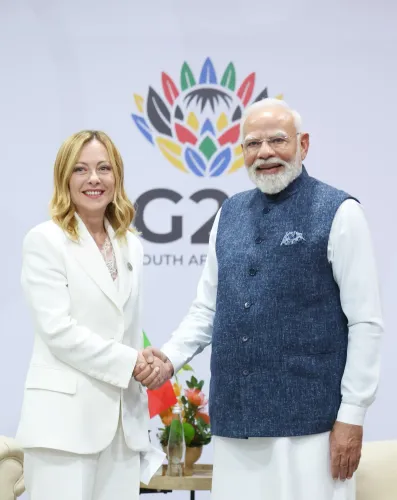
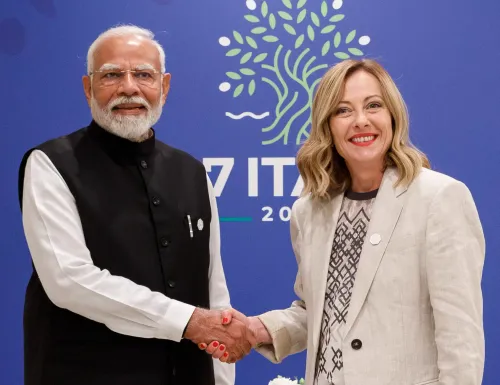
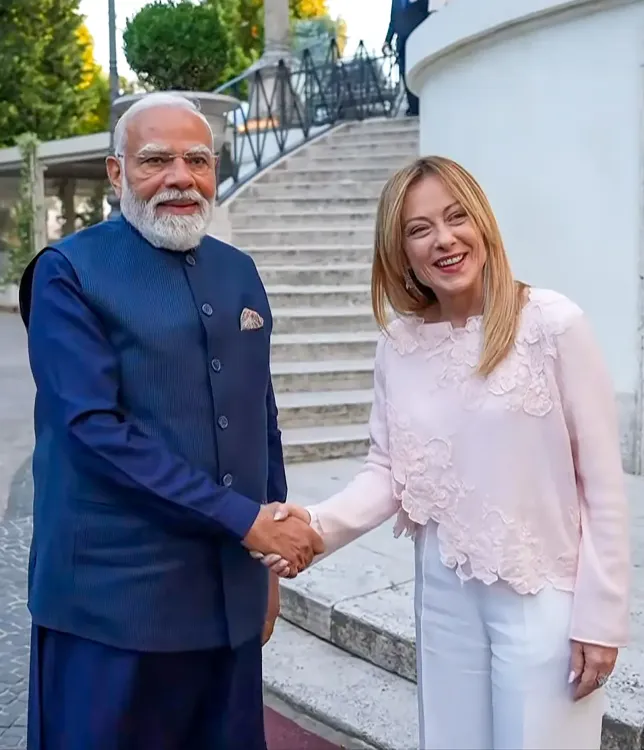
Prime Minister Narendra Modi and Italian Prime Minister Giorgia Meloni on Wednesday, 20 May jointly declared that the India-Italy Special Strategic Partnership has entered a decisive and transformative phase, co-authoring an op-ed that outlines a sweeping bilateral agenda spanning trade, technology, defence, energy, and connectivity. The article, published during Modi's visit to Rome, frames the relationship as one that has evolved from cordial friendship into a structured strategic alliance grounded in democratic values.
From Friendship to Strategic Partnership
'In recent years, our ties have expanded with unprecedented momentum, evolving from a cordial friendship into a special strategic partnership grounded in the values of freedom and democracy, and a common vision for the future,' the two leaders wrote in their joint article.
They noted that the partnership is being elevated through sustained political engagement, institutional cooperation and broader strategic alignment — particularly significant at a moment when, as they put it, 'the international system is undergoing a profound change.'
Trade, Industry and the €20 Billion Target
On the economic front, Modi and Meloni set an ambitious bilateral trade target, writing: 'We want to reach and exceed the Euro 20 billion target for trade between Italy and India by 2029, with a focus on defence and aerospace, clean technologies, machinery, automotive components, chemicals, pharmaceuticals, textiles, agri-food, tourism and more.'
The two leaders described a 'powerful synergy' between Italy's strengths in design, manufacturing and supercomputing and India's rapid economic growth, engineering talent and startup ecosystem. Notably, both countries now host over 1,000 businesses from each other's shores — a figure the leaders called a positive indicator of deepening supply-chain integration. They also drew a direct link between Italy's 'Made in Italy' brand and India's Make in India initiative, calling it a natural alignment of high-quality industrial goals.
The pending India-European Union Free Trade Agreement was cited as a key enabler that would further strengthen bilateral trade and investment flows.
Technology, AI and the 'MANAV' Vision
Technology and innovation were described as central pillars of the next phase of the partnership. The leaders identified Artificial Intelligence, quantum computing, advanced manufacturing, critical minerals and digital infrastructure as defining sectors.
In a philosophically grounded passage, the op-ed referenced India's concept of 'MANAV' — placing human beings at the centre of technology — alongside Italy's tradition of human-centric 'algor-ethics' rooted in its humanist heritage. 'Conceiving AI as a tool created by humans for humans means firmly asserting that technology cannot replace individuals or undermine their fundamental rights, nor be used to manipulate public debate or alter democratic processes,' the two leaders stated.
They also flagged AI's potential as a tool for inclusive development in the Global South, where accessible, multilingual digital public infrastructure can, in their words, 'bridge divides rather than deepen them.'
Defence, Space and Maritime Security
On defence, Modi and Meloni said collaboration would deepen in strategic technologies, maritime security and counter-terrorism. 'Our collaboration will help ensure the security of critical maritime routes, strengthen resilience in the face of threats, such as terrorism, international criminal networks, drug trafficking, cyber-crimes and human trafficking,' they wrote.
Space cooperation was also highlighted, with India's advances in satellite technology and space exploration described as complementing Italy's aerospace engineering expertise, offering 'significant opportunities for joint initiatives and next-generation technology development.'
Energy, Connectivity and the Indo-Mediterranean Corridor
Energy cooperation — spanning renewable energy, hydrogen technologies, resilient infrastructure and smart grids — was identified as another pillar. India's growing role in green hydrogen production was positioned as complementing Italy's renewable infrastructure expertise and its strategic role as an energy gateway to Europe.
The leaders also invoked India-led multilateral frameworks — the International Solar Alliance, the Coalition for Disaster Resilient Infrastructure and the Global Biofuels Alliance — as platforms for deeper collaboration.
Geopolitically, the op-ed introduced the concept of an 'Indo-Mediterranean' corridor, describing the Indo-Pacific and Mediterranean as 'increasingly interconnected spaces' rather than separate spheres. The India-Middle East-Europe Economic Corridor (IMEEC) was called a transformative initiative for strengthening transport, energy and digital connectivity across regions.
Concluding the article, both leaders drew on Indian philosophical traditions — citing 'Dharma' and 'Vasudhaiva Kutumbakam' (the world is one family) — as resonating with Italy's Renaissance-era humanist traditions. 'Our shared vision, therefore, aims to lay the foundation for a strong and forward-looking India-Italy partnership with our people at the centre,' they wrote. The next steps in formalising this agenda are expected to take shape through institutional-level follow-ups in the months ahead.
Point of View
A named Indo-Mediterranean corridor, and a co-branded AI ethics framework are not the usual communiqué boilerplate. Yet the gap between vision documents and verifiable outcomes is well-documented in Indian diplomacy. The IMEEC, for instance, has faced execution headwinds since its G20 announcement. The real test of this 'decisive phase' framing will be whether the institutional follow-ups — on the EU-India FTA, defence co-production, and AI governance — produce binding frameworks or remain aspirational. The philosophical flourishes around MANAV and Vasudhaiva Kutumbakam are resonant, but investors and industry will be watching the sectoral guidelines, not the op-ed prose.
NationPress
5 Oct 2026
Frequently Asked Questions
What did PM Modi and Giorgia Meloni announce in Rome?
Modi and Meloni co-authored a joint op-ed on 20 May 2025 in Rome, declaring India-Italy ties a Special Strategic Partnership in a 'decisive phase.' The article outlines cooperation across trade, AI, defence, space, energy and connectivity, including a €20 billion bilateral trade target by 2029.
What is the India-Italy trade target set by Modi and Meloni?
The two leaders set a target to 'reach and exceed' €20 billion in bilateral trade by 2029, with priority sectors including defence and aerospace, clean technologies, machinery, automotive components, pharmaceuticals, textiles, agri-food, and tourism.
What is the 'MANAV' concept referenced in the joint op-ed?
MANAV is India's framework for human-centric technology development, placing human beings at the centre of AI and digital systems. In the op-ed, it was aligned with Italy's 'algor-ethics' tradition to form a shared commitment to AI that preserves individual rights and democratic processes.
What is the Indo-Mediterranean corridor mentioned by Modi and Meloni?
The Indo-Mediterranean corridor is a strategic and economic concept introduced in the joint op-ed, framing the Indo-Pacific and Mediterranean as interconnected spaces linked through trade, energy, technology and data flows. It builds on the broader India-Middle East-Europe Economic Corridor (IMEEC) initiative.
How many businesses from each country operate in the other?
According to the joint op-ed, both India and Italy now host over 1,000 businesses from each other's countries — a figure the two leaders cited as evidence of deepening supply-chain integration and growing industrial presence.