Uttarakhand CM Office: Almora woman turns beekeeper
Synopsis
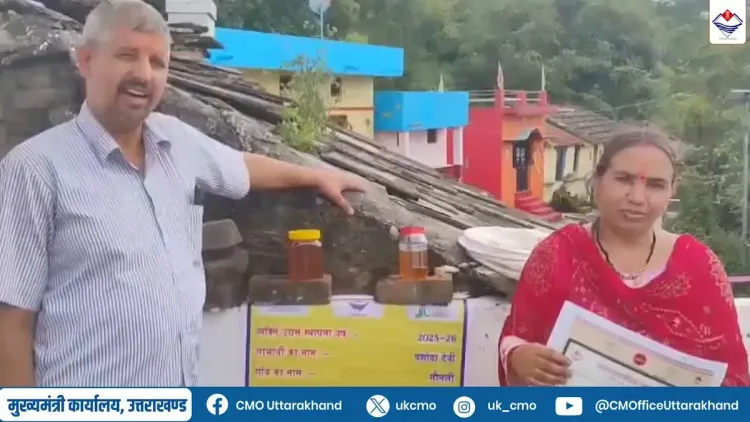
The Uttarakhand Chief Minister's Office spotlighted Yashoda Devi of Sunoli village, Almora, who runs a beekeeping enterprise with her husband — a grassroots model of self-employment in the state's hill economy.
Key Takeaways
Yashoda Devi of Sunoli village, Almora district is running a beekeeping enterprise alongside her husband as a self-employment initiative.
The Chief Minister's Office of Uttarakhand featured her story on 19 November 2026 , underlining state focus on rural livelihoods.
Beekeeping is well-suited to Uttarakhand's biodiversity-rich terrain, requiring low capital and offering viable returns for small landholders.
Almora , in the Kumaon region, faces significant out-migration pressure, making home-based enterprises like apiculture strategically important.
The post reflects a broader state pattern of amplifying individual rural success stories to encourage self-employment in hill districts.
In the hills of Almora district, a small village called Sunoli is quietly producing something sweeter than honey — a model of rural self-reliance. Yashoda Devi, a resident of Sunoli, has partnered with her husband to build a beekeeping enterprise, drawing attention from the Chief Minister's Office of Uttarakhand on Thursday, 19 November 2026.
Posting on X, the CMO shared: 'Almora janapad ke Sunoli gaon ki Yashoda Devi apne pati ke saath madhumakhi palan kar swarozgar ki nayi misal kar rahi hain' — ('Yashoda Devi of Sunoli village in Almora district is setting a new example of self-employment by practising beekeeping alongside her husband.')Why beekeeping fits Uttarakhand's hills perfectly
Uttarakhand's forested, biodiverse terrain is tailor-made for apiculture. The state's meadows and alpine flora provide bees with rich, varied forage — which translates directly into quality honey and higher returns for small producers. Beekeeping requires comparatively little land and low start-up capital, making it one of the most accessible livelihood options for hill households that cannot sustain large-scale agriculture.
For families in Almora — a district in the Kumaon region where out-migration has long hollowed out working-age populations — an enterprise that generates income without leaving home carries enormous weight. Stories like Yashoda Devi's are precisely the counter-narrative the state wants to amplify.
A pattern of spotlighting rural success
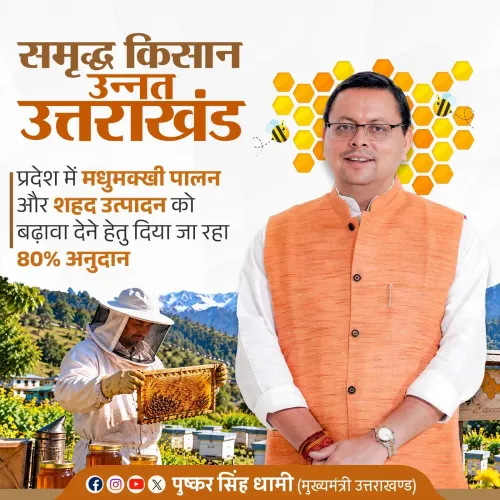
The Uttarakhand government has increasingly used individual success stories in apiculture to demonstrate that hill economies can support dignified, sustainable livelihoods. By highlighting a woman-led household enterprise, the CMO's post also signals a focus on rural women as economic actors — not just beneficiaries of welfare schemes but entrepreneurs building something on their own terms.
Beekeeping clusters, training programmes, and subsidy pipelines in districts like Almora are part of this broader push to diversify incomes beyond seasonal farming and reduce the state's chronic dependence on remittance earnings from migrants.
Point of View
The Uttarakhand government is doing something deliberately political — weaving individual uplift stories into a larger narrative about reversing hill out-migration. Almora has bled working-age residents for decades, and the CMO's choice to amplify a woman-led enterprise signals a dual message: that the hills can retain people, and that women are central to that retention. Whether anecdotal showcase translates into scaled policy — structured beekeeping clusters, cold-chain access, and guaranteed procurement — will determine if stories like Yashoda Devi's remain inspiring exceptions or become a replicable norm.
NationPress
19 Nov 2026
Frequently Asked Questions
Who is Yashoda Devi from Almora Uttarakhand?
Yashoda Devi is a resident of Sunoli village in Almora district, Uttarakhand, who has gained recognition for running a beekeeping enterprise with her husband as a model of rural self-employment.
What is beekeeping or madhumakhi palan in Uttarakhand?
Beekeeping, known locally as madhumakhi palan , is the practice of maintaining honeybee colonies for honey production and allied products. Uttarakhand promotes it as a low-investment livelihood suited to its biodiverse hill terrain.
Why does the Uttarakhand government promote rural self-employment in Almora?
Almora and other hill districts face persistent out-migration as residents seek work in cities. The state promotes self-employment activities like beekeeping to generate local income and retain people in their villages.
Is beekeeping profitable in Uttarakhand hills?
Yes, apiculture is considered a high-potential activity in Uttarakhand due to the state's rich floral biodiversity. It requires comparatively low capital, can be run on small landholdings, and produces honey that commands premium prices.
What is Sunoli village Almora known for?
Sunoli is a village in Almora district in Uttarakhand's Kumaon region. It came to public attention through the Chief Minister's Office post highlighting Yashoda Devi's beekeeping-based self-employment initiative.