Rajnath Singh in Tokyo: India-Japan defence ties get a major push
Synopsis
Union Defence Minister Rajnath Singh, in Tokyo on 19 November 2026, announced sweeping progress in India-Japan defence ties — including a first-ever JASDF fighter participation in Veer Guardian 26, maritime cooperation milestones, and a push on underwater, missile, and ship-repair arrangements ahead of the 2027 diplomatic centenary.
Key Takeaways
Japan Air Self-Defence Force fighter aircraft participated in Indian territory for the first time during the Veer Guardian 26 bilateral air exercise.
Both sides agreed to 'move swiftly' on Maritime and Air Domain Awareness, SAR, and Information Sharing under a recently signed Memorandum of Arrangement.
An early conclusion of a Maritime Ship Repair Arrangement (MSRA) — allowing reciprocal ship repair access — was affirmed as a priority.
The 3rd India-Japan Defence Industries Forum was convened in Tokyo on 13 October 2026 , advancing the industrial partnership.
Cooperation in niche, underwater, and missile technologies was agreed, alongside a push to finalise UNICORN-related agreements .
India and Japan are preparing to mark 75 years of diplomatic relations in 2027 , with ties elevated to Special Strategic and Global Partnership since 2014.
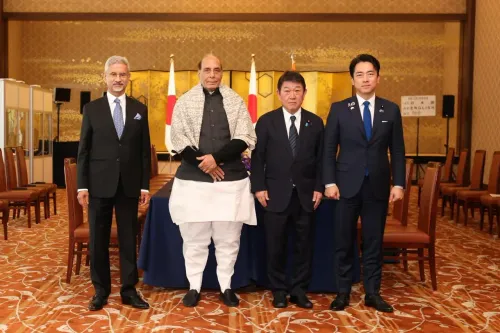
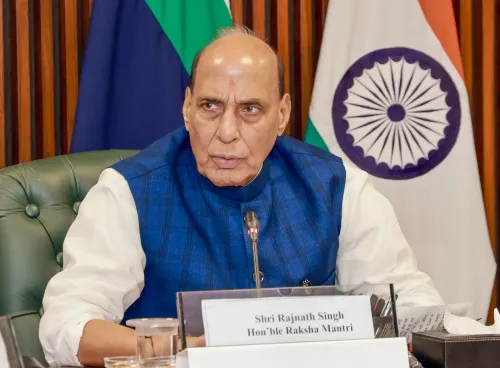
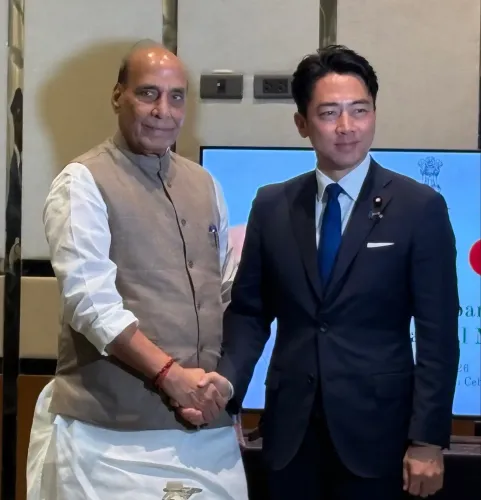
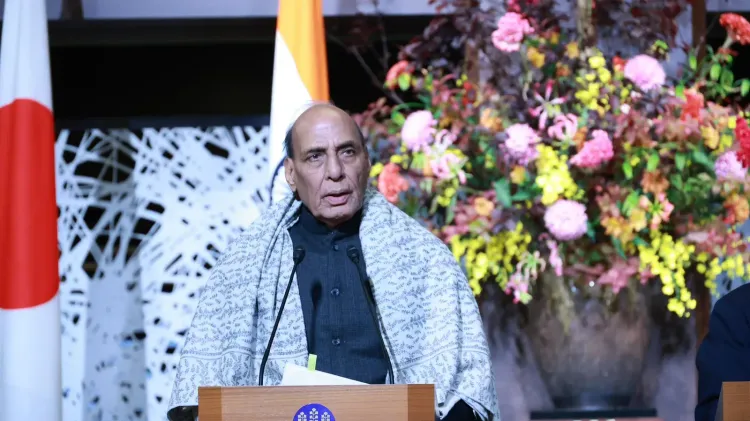
From underwater technologies to mine-countermeasure capabilities, Union Defence Minister Rajnath Singh laid out an ambitious new chapter in India-Japan defence cooperation during high-level talks in Tokyo on Thursday, 19 November 2026 — signalling that the two democracies are moving well beyond ceremonial partnership into hard operational integration.
A partnership milestone: 75 years in the making
India and Japan formally established diplomatic relations in 1952, and both sides are now laying the groundwork to mark 75 years of that relationship in 2027. The ties were elevated to a Special Strategic and Global Partnership in 2014, and the trajectory since then has been relentlessly upward. Singh underscored this in his Tokyo press statement, calling the relationship 'important for peace and prosperity in the Indo-Pacific region' — framing it not just as bilateral business but as a structural pillar of regional stability.
Veer Guardian 26 and the Joint Declaration at work
One of the clearest markers of how far the partnership has travelled came in Singh's reference to Veer Guardian 26 — the India-Japan bilateral air force exercise — where Japan Air Self-Defence Force fighter aircraft participated on Indian soil for the first time. That milestone builds directly on the Joint Declaration on Security Cooperation signed in August 2025, which set the structural framework for deepening defence and security ties. Singh expressed 'satisfaction' at the development — diplomatic understatement for a genuinely historic first.
The 3rd India-Japan Defence Industries Forum, convened in Tokyo on 13 October 2026, also featured in the discussions, signalling continued momentum on the industrial side of the partnership — not just exercises and declarations, but factories, supply chains, and co-production.
Maritime security: from MoA to concrete cooperation
The two sides moved from the symbolic to the operational on maritime security. Building on a recently signed Memorandum of Arrangement on Maritime Security Cooperation, Singh said both countries agreed to 'move swiftly' to realise cooperation in Maritime and Air Domain Awareness, Search and Rescue (SAR), and Information Sharing Arrangements. The language was deliberate — 'swiftly' and 'concrete' are the operative words here.
Also on the agenda: an early conclusion of a Maritime Ship Repair Arrangement (MSRA) that would give both navies reciprocal access to each other's ship repair facilities — a logistics agreement with significant operational implications for extended naval deployments in the Indo-Pacific. Mine-countermeasure capabilities were added to the cooperation matrix, a niche but telling indicator of how granular the partnership is becoming.
'Design with Japan, Make in India' — and what UNICORN means for the future
Singh's statement gave explicit form to the industrial logic binding the two countries: a framework he called 'Design with Japan, Make in India' — an echo of the broader Make in India defence manufacturing push, tailored for the Japan partnership. Both sides expressed expectation for an 'early conclusion' of UNICORN-related agreements, a defence cooperation framework whose specific scope is under active negotiation. Cooperation in niche, underwater, and missile technologies was also agreed upon — areas where Japan's precision engineering and India's scale offer genuine complementarity.
Rounding out the talks was a shared affirmation of peaceful resolution of regional disputes in line with international law — a pointed, if diplomatically worded, signal in an Indo-Pacific where rules-based norms are under visible pressure.
With the 2027 diplomatic centenary on the horizon and a dense pipeline of agreements moving toward conclusion, the question is no longer whether India and Japan are serious partners — it is how fast the hardware, the technology transfers, and the operational protocols can catch up with the ambition.
Point of View
Domain awareness, and niche technology. The 'Design with Japan, Make in India' formulation is significant: it aligns Japan's precision industrial base with India's defence manufacturing scale, potentially creating a template for technology-transfer partnerships that sidesteps traditional dependency dynamics. The push for UNICORN agreements and the MSRA, taken together, suggest both governments want hard deliverables before the 2027 diplomatic centenary — lending political urgency to what were previously slow-moving technical negotiations. In the broader Indo-Pacific context, this depth of Japan-India defence integration sends a structural signal to any actor seeking to unilaterally alter the region's security architecture.
NationPress
19 Nov 2026
Frequently Asked Questions
What is the Veer Guardian exercise between India and Japan?
Veer Guardian is a bilateral air force exercise between India and Japan . The 2026 edition, 'Veer Guardian 26,' marked the first time Japan Air Self-Defence Force fighter aircraft participated on Indian soil, a significant milestone in operational air cooperation.
What is the India-Japan Special Strategic and Global Partnership?
India and Japan upgraded their bilateral ties to a Special Strategic and Global Partnership in 2014 . It is the highest tier of the bilateral relationship and covers defence, security, economic, and diplomatic cooperation, with a particular focus on Indo-Pacific stability .
What is the Maritime Ship Repair Arrangement (MSRA) between India and Japan?
The Maritime Ship Repair Arrangement (MSRA) is a proposed reciprocal agreement that would allow Indian and Japanese naval vessels to use each other's ship repair facilities, enhancing operational reach and logistical flexibility in the Indo-Pacific.
What is 'Design with Japan, Make in India' in defence?
' Design with Japan, Make in India ' is a framework announced by Defence Minister Rajnath Singh for India-Japan defence industrial cooperation , combining Japan's advanced design and technology capabilities with India's large-scale manufacturing base under the Make in India initiative.
When did India and Japan establish diplomatic relations?
India and Japan established diplomatic relations in 1952 . Both countries are preparing to mark 75 years of that relationship in 2027 , with the current year designated as a foundation-laying period for centenary celebrations.