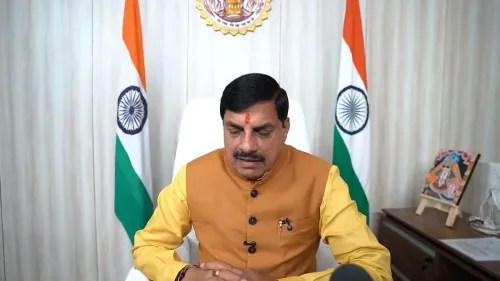
CM Mohan Yadav Allots Plots in India's First Telecom Industrial Park at Gwalior
Synopsis
Madhya Pradesh CM Dr. Mohan Yadav handed plot-allotment letters to investors in Phase 1 of India's first telecom industrial park in Gwalior on 19 November 2026, completing the phase in under five months from MoU signing and projecting 18,000–20,000 jobs.
Key Takeaways
Plot-allotment letters for Phase 1 of India's first dedicated telecom-sector industrial park were issued to investors in Gwalior on 19 November 2026 .
Mohan Yadav stated Phase 1 was completed in under five months from the MoU signing date.
The park is projected to create between 18,000 and 20,000 employment opportunities .
The Department of Telecommunications (DoT) is a central government partner in the project.
The initiative aligns with India's PLI scheme for telecom and networking products launched in 2021 under Atmanirbhar Bharat goals.
Subsequent phases of the park are expected, with job and investment outcomes to be tracked over time.
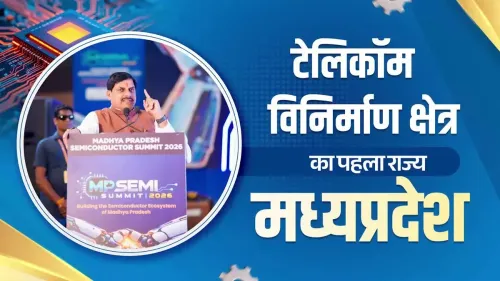
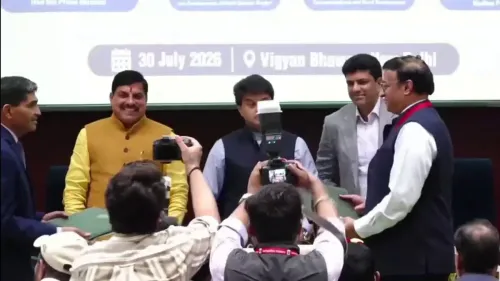
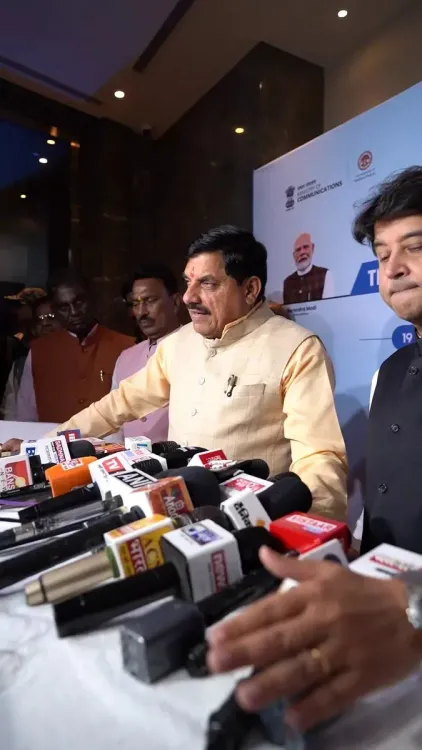
A city known for its medieval fort and classical music is now staking its claim on India's industrial map. On Thursday, 19 November 2026, the Chief Minister's Office of Madhya Pradesh announced that plot-allotment letters have been handed to investors in the first phase of what it describes as the country's only dedicated telecom-sector industrial park — located in Gwalior.
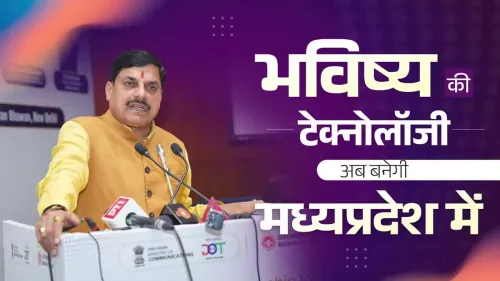
Chief Minister Dr. Mohan Yadav framed the milestone in unambiguous terms: 'Gwalior ke liye aaj gaurav ka din hai' ('Today is a day of pride for Gwalior'). Speaking at the allotment ceremony, he underlined that Phase 1 had been completed in under five months from the signing of the MoU — citing it as proof of the state government's commitment to delivery over announcements.
18,000 to 20,000 Jobs on the Horizon
The numbers attached to the project are hard to ignore. Dr. Yadav stated the park is projected to generate between 18,000 and 20,000 employment opportunities — a figure that would represent a material shift for a city whose economy has historically leaned on trade, tourism, and agriculture rather than manufacturing. The Department of Telecommunications (DoT) is listed as a central partner, lending the initiative a national policy spine.
The project slots directly into India's Production Linked Incentive (PLI) scheme for telecom and networking products, launched in 2021 to build domestic manufacturing capacity and reduce the country's heavy dependence on imported hardware. A dedicated, purpose-built park for telecom equipment production — rather than a general electronics cluster — marks a more targeted bet on a single high-value sector.
Gwalior's Industrial Pivot Under Madhya Pradesh's Tier-2 Strategy
Madhya Pradesh has been systematically seeding manufacturing clusters in its secondary cities, trying to diversify an economy where agriculture and heritage tourism have long dominated. Gwalior, sitting at the northern edge of the state with strong rail and road connectivity to Delhi and central India, makes geographic sense as an industrial anchor point.
CM Yadav put the city's dual identity at the centre of his message: Gwalior would now be recognised not only for its historical and cultural legacy, but as a new engine of industrial development and jobs — a rebranding with real infrastructure behind it. The involvement of DoT signals that this is not a state-only initiative; central spectrum and telecom-manufacturing policy frameworks are aligned with the park's ambitions.
What happens next matters as much as the launch. The government's own framing — 'first phase' — implies subsequent phases are already in the pipeline. Whether investor commitments translate into production lines, and whether the job projections hold up over time, will be the real measure of Gwalior's industrial pivot.
Point of View
Not factories. The DoT partnership is the critical variable — central spectrum and licensing support can unlock private investment that a state alone cannot attract. If Phase 2 and 3 timelines hold and the job numbers materialise, Gwalior becomes a replicable template; if they slip, the optics of a rushed land-allotment could overshadow the ambition.
NationPress
19 Nov 2026
Frequently Asked Questions
What is the Gwalior telecom industrial park?
It is described by the Madhya Pradesh government as India's first dedicated industrial park for the telecom sector, located in Gwalior, with plot allotments for Phase 1 completed on 19 November 2026 in partnership with the Department of Telecommunications.
How many jobs will the Gwalior telecom park create?
Chief Minister Dr. Mohan Yadav has stated the project is expected to generate between 18,000 and 20,000 employment opportunities.
How quickly was Phase 1 of the park completed?
According to CM Dr. Mohan Yadav, Phase 1 was completed in less than five months from the signing of the MoU with investors.
Which central government body is involved in the Gwalior telecom park?
The Department of Telecommunications (DoT) under the Government of India is a partner in the project.
How does the Gwalior telecom park connect to Atmanirbhar Bharat?
The park aligns with India's Production Linked Incentive scheme for telecom and networking products, launched in 2021 to build domestic manufacturing capacity and reduce import dependence — a core plank of the Atmanirbhar Bharat initiative.