CM Yogi: Vantangiya villages transformed with homes, schools, welfare
Synopsis
Chief Minister Yogi Adityanath says Uttar Pradesh's historically neglected Vantangiya forest villages — once clusters of huts with no welfare access — now have pucca houses, schools, Anganwadis, pensions, ration cards and Ayushman health cards, citing nine years of targeted formalisation drives.
Key Takeaways
CM Yogi Adityanath declared on 19 November 2026 that Vantangiya villages in UP have been transformed from hut clusters to settlements with full welfare coverage.
Amenities now cited include pucca houses , schools, Anganwadi centres, pensions, ration cards and Ayushman Bharat health cards.
The Vantangiya are forest-dwelling communities historically excluded from welfare schemes because their villages lacked formal revenue-village status.
The Yogi government's post-2017 land patta drive formally recognised Vantangiya settlements, unlocking eligibility for central schemes including PMAY-G and Ayushman Bharat.
Full saturation of scheme delivery across all remaining Vantangiya villages remains a key measure of progress to watch.
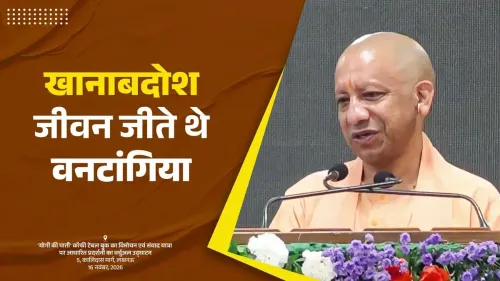
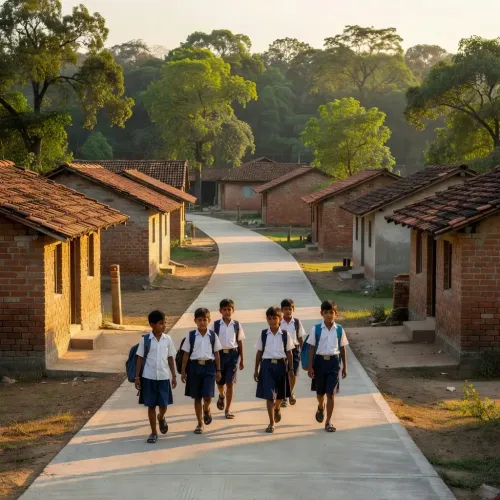
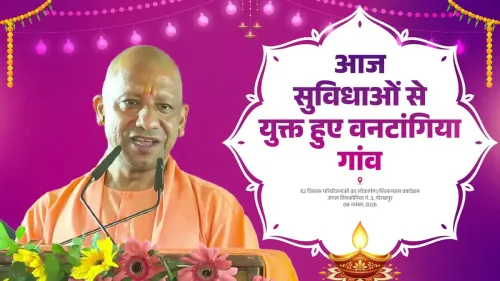
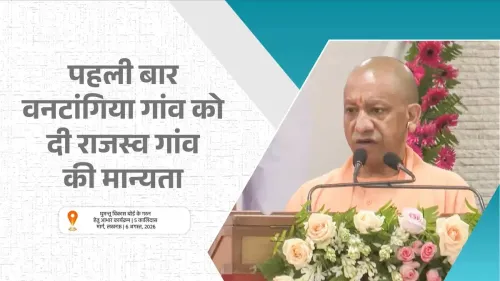
Mud huts and forgotten forestland — that was the reality of Uttar Pradesh's Vantangiya villages not so long ago. Today, the Chief Minister's Office of Uttar Pradesh quoted Chief Minister Yogi Adityanath on Thursday, 19 November 2026, declaring a sweeping transformation in these once-invisible forest settlements: pucca houses, schools, Anganwadis, pensions, ration cards and Ayushman cards are now reaching communities that the welfare state had long bypassed.
The post, shared in Hindi, carries CM Yogi's direct words: 'Vantangiya gaanvon mein pehle kewal jhopdiyan thi' — 'In Vantangiya villages, there were once only huts. Today, people here have access to amenities such as pucca houses, schools, Anganwadis, pensions, ration cards and Ayushman cards.'
Who the Vantangiya communities are — and why they were left behind
The Vantangiya are forest-dwelling communities whose origins trace back to the British colonial era, when labourers were settled inside forest reserves to cultivate teak and other plantation timber. Because their villages fell within reserved forest boundaries, they were never formally recognised as revenue villages — which meant no land rights, no government schemes, and for generations, no path out of poverty.
Estimates place dozens of such settlements across Uttar Pradesh, concentrated in districts adjoining the Terai belt. Without a revenue record, residents could not access Pradhan Mantri Awas Yojana-Gramin (PMAY-G) housing grants, public distribution system ration cards, or health coverage — a bureaucratic wall built not from malice but from omission.
The 2017 policy pivot and what has changed since
When the Yogi Adityanath government took office in 2017, it launched targeted drives to issue land pattas — formal ownership documents — to Vantangiya households. That single step unlocked eligibility for the full stack of central and state welfare schemes. PMAY-G funds could now build pucca homes on legally recognised land. Ayushman Bharat cards could be issued against permanent addresses. Children could be enrolled in nearby schools; Anganwadi nutrition centres could be established inside the settlements.
The approach reflects a broader pattern in UP governance over the past nine years: using administrative formalisation — recognising rights on paper — as the lever to plug marginalised communities into the national welfare architecture rather than creating parallel delivery channels.
What still needs to be watched
Announcing coverage and achieving full saturation are different things. Progress on delivery of pucca houses under PMAY-G, the actual functioning of school and Anganwadi infrastructure, and the enrolment rates for pensions and Ayushman health cards across every remaining Vantangiya settlement will determine whether the transformation CM Yogi describes is complete or still a work in progress.
For communities that waited decades simply to be counted, the arc of change is undeniable — but the last mile is always the hardest to verify.
Point of View
Rather than relying on ad hoc relief. The land-patta-first approach mirrors similar drives for urban slum regularisation and nomadic tribe recognition across the country, suggesting a replicable model the state is keen to showcase. Politically, spotlighting Vantangiya welfare reinforces the government's outreach to forest-margin communities ahead of future electoral cycles in UP's Terai-belt constituencies. The harder governance test — whether scheme saturation matches the rhetoric — will be measured in audit data and ground-level delivery reports.
NationPress
19 Nov 2026
Frequently Asked Questions
Who are the Vantangiya communities in Uttar Pradesh?
The Vantangiya are forest-dwelling communities originally settled inside reserved forests during the British colonial era to work on timber plantations. Because their villages fell outside formal revenue records, they were historically excluded from government welfare schemes.
What welfare facilities has the UP government provided to Vantangiya villages?
According to CM Yogi Adityanath, Vantangiya villages now have pucca houses under PMAY-G, schools, Anganwadi nutrition centres, pension coverage, ration cards under the public distribution system, and Ayushman Bharat health insurance cards.
How did the Yogi government unlock welfare access for Vantangiya communities?
The key step was issuing land pattas — formal land-ownership documents — to Vantangiya households from 2017 onwards. Formal recognition as a revenue village made residents eligible for central and state welfare schemes that require a legal address.
What is the Ayushman Bharat card and who gets it?
The Ayushman Bharat card is issued under India's national health insurance scheme, providing eligible low-income households with cashless coverage for secondary and tertiary hospital treatment. Vantangiya families, once formalised, became eligible to receive these cards.
What still needs to happen in Vantangiya villages?
Full delivery of pucca houses, operational schools and Anganwadis, and complete enrolment in pension and Ayushman schemes across every remaining Vantangiya settlement in UP still need to be verified and completed, as official saturation figures have not been independently confirmed.