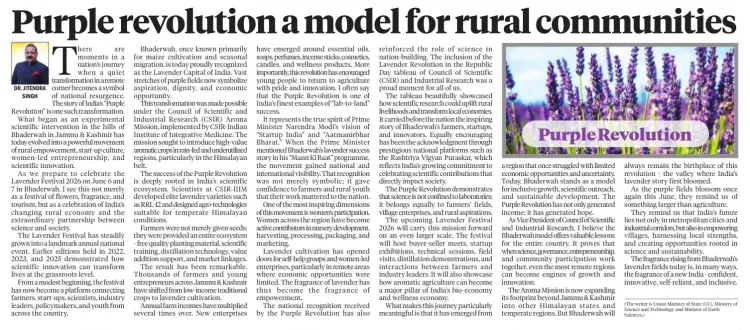
Dr. Jitendra Singh writes on Lavender Festival in Bhaderwah
Synopsis
Union Minister Dr. Jitendra Singh has written an article for The Statesman to mark the 2026 Lavender Festival in Bhaderwah, framing Jammu and Kashmir's Purple Revolution as a replicable rural development model built on CSIR-backed lavender cultivation.
Key Takeaways
Union Science and Technology Minister Dr.
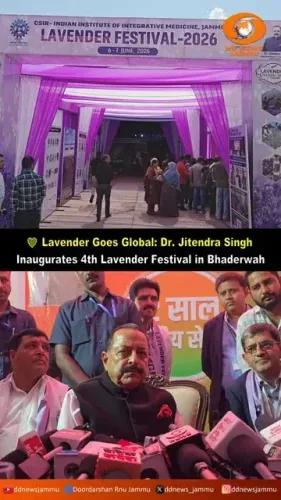
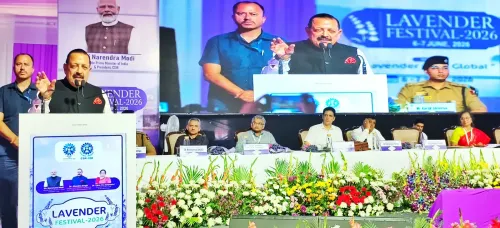
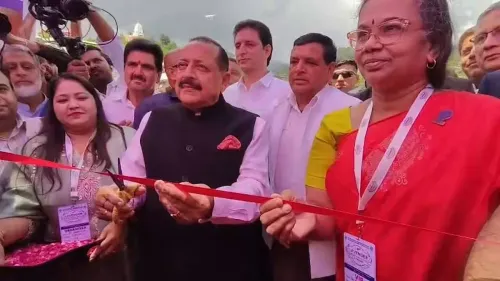
Jitendra Singh authored an article in The Statesman timed to the Bhaderwah Lavender Festival on June 6–7, 2026 .
The article is titled 'Purple Revolution: A Model for Rural Communities', positioning lavender farming as a replicable rural livelihood template.
The Bhaderwah Lavender Festival has been held annually since 2021 in Doda district, Jammu and Kashmir .
The Purple Revolution is underpinned by the CSIR Aroma Mission , launched in 2016 , with distillation units established in J&K from 2018 onwards.
Key beneficiaries include smallholder farmers and women's self-help groups engaged in lavender processing across Jammu and Kashmir .
The next phase of CSIR Aroma Mission expansion and new infrastructure for Doda district remain key developments to watch.
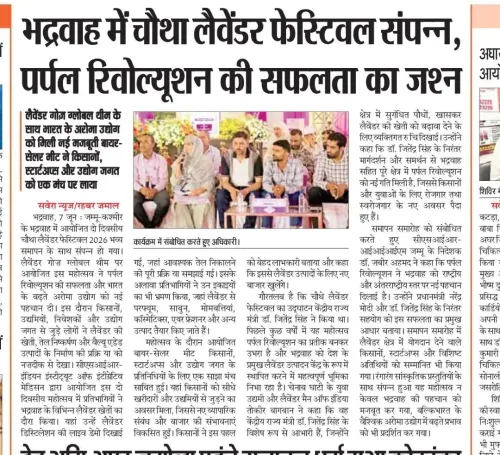
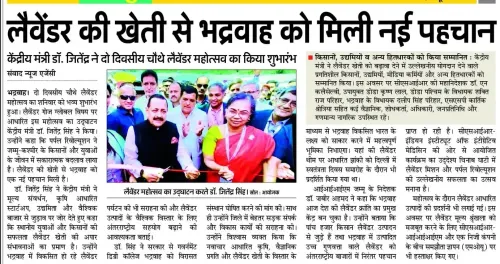
Union Science and Technology Minister Dr. Jitendra Singh on Sunday, June 7, 2026, shared an article authored by him in The Statesman, timed to coincide with the two-day Lavender Festival being held in Bhaderwah, Jammu and Kashmir, on June 6 and 7. The piece, titled 'Purple Revolution: A Model for Rural Communities', examines how commercial lavender cultivation is reshaping livelihoods in the valley.
Context
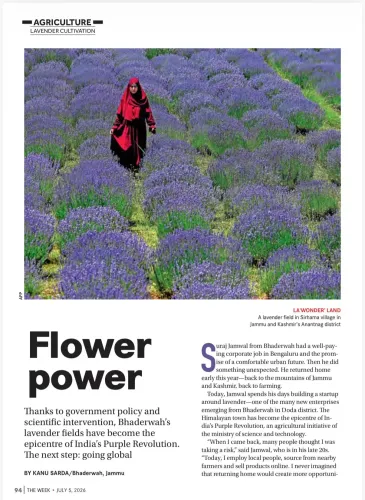
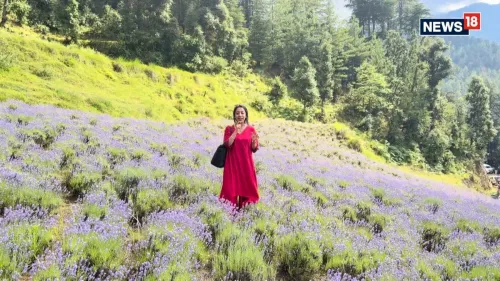
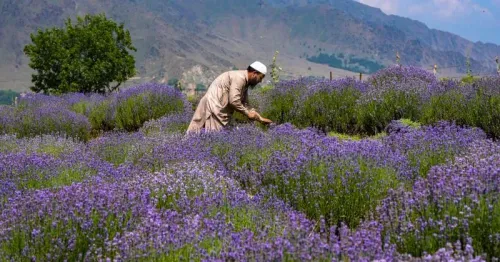
Bhaderwah, nestled in the Doda district of Jammu and Kashmir, has in recent years emerged as the focal point of India's Purple Revolution — a government-backed push to introduce high-value lavender farming as an alternative to subsistence crops. The annual Lavender Festival, held in the valley since 2021, serves as a showcase for the programme's outputs, linking farmers directly to buyers and processors. This year's edition marks the sixth consecutive festival, underlining the initiative's continuity.
Dr. Singh, who holds independent charge of the Ministry of Science and Technology and also serves as Minister of State in the Prime Minister's Office, has been closely associated with the Purple Revolution narrative in Jammu and Kashmir. His article frames lavender cultivation not merely as an agricultural intervention but as a replicable rural development model.
Policy Backdrop
The Purple Revolution draws its institutional backbone from the CSIR Aroma Mission, launched in 2016 by the Council of Scientific and Industrial Research to scale cultivation, processing, and marketing of aromatic plants across India. Large-scale lavender planting and distillation units were established in Jammu and Kashmir under guidance from CSIR-Indian Institute of Integrative Medicine (CSIR-IIIM) from 2018 onwards, giving the programme a scientific foundation that distinguishes it from conventional crop-promotion schemes.
Following the reorganisation of Jammu and Kashmir as a Union Territory in 2019, the central government intensified support for aromatic and medicinal crop clusters in hilly and border regions. Lavender, which thrives in the altitude and climate of the Bhaderwah valley, became a flagship crop under this broader diversification agenda. Similar aromatic crop clusters have since been encouraged in other Himalayan states under the same mission framework.
Stakeholders and Impact
The primary beneficiaries of the Purple Revolution are Jammu and Kashmir farmers — particularly smallholders in Doda and adjoining districts — and rural women's self-help groups who have been integrated into lavender processing and oil extraction units. The shift from traditional crops to lavender has been positioned as a means of supplementing farm incomes in a region where agricultural productivity has historically been constrained by terrain and limited market access.
By authoring a public-facing article timed to the festival, Dr. Singh signals continued ministerial attention to the programme at a moment when its visibility is highest. The Lavender Festival also functions as a soft-power and tourism event, drawing visitors to Bhaderwah and amplifying the valley's identity as a lavender destination comparable to regions in France and Kashmir's own Pulwama district.
What's Next
Observers will watch for announcements regarding the next phase of CSIR Aroma Mission area expansion and any new distillation or marketing infrastructure planned for Doda district. References to the programme's scale and outcomes in forthcoming Union Budget documents or Jammu and Kashmir agricultural policy statements would indicate whether the Purple Revolution is being elevated from a regional pilot to a nationally replicated model. Dr. Singh's article, by framing Bhaderwah as a template for rural communities, suggests the political intent to do precisely that.
Point of View
Photogenic development story in Jammu and Kashmir. The Purple Revolution has served successive governments as a symbol of post-2019 developmental intent in the Union Territory, and Singh's framing of it as a 'model for rural communities' signals ambitions to export the template beyond J&K. The timing, on the final day of the festival itself, maximises media and social-media resonance. Longer term, the article's publication in a legacy print outlet suggests a strategy of building durable policy narrative, not just social-media optics.
NationPress
23 Oct 2026
Frequently Asked Questions
What is the Bhaderwah Lavender Festival?
The Bhaderwah Lavender Festival is an annual event held in Bhaderwah valley, Doda district, Jammu and Kashmir, to showcase the outputs of India's Purple Revolution — the government's initiative promoting commercial lavender farming. It has been organised every year since 2021.
What is the Purple Revolution in India?
The Purple Revolution is a central government initiative, backed by the CSIR Aroma Mission, that promotes large-scale lavender cultivation as a high-value alternative crop in Jammu and Kashmir's hilly regions, aiming to raise rural incomes and diversify agriculture.
What is the CSIR Aroma Mission?
The CSIR Aroma Mission is a programme launched in 2016 by the Council of Scientific and Industrial Research to scale the cultivation, processing, and marketing of aromatic plants, including lavender, across India. In J&K, it operates through CSIR-IIIM.
Why did Dr. Jitendra Singh write about the Lavender Festival?
Dr. Jitendra Singh, as Union Science and Technology Minister with oversight of CSIR and related programmes, authored the article to mark the 2026 Bhaderwah Lavender Festival and frame the Purple Revolution as a replicable rural development model for other communities.
Where is Bhaderwah located?
Bhaderwah is a valley in Doda district, Jammu and Kashmir, situated at high altitude. It has emerged as India's primary lavender cultivation hub under the CSIR Aroma Mission and the Purple Revolution initiative.