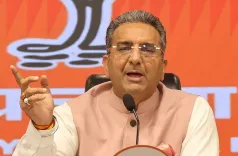
Akhilesh Yadav demands Aadhaar-voter linkage, metal cards to stop fake voting
Synopsis
Samajwadi Party president Akhilesh Yadav has demanded Aadhaar linkage with voter rolls, metal voter cards, and biometric authentication at booths, directly accusing the BJP of enabling fake voting and challenging the Election Commission to act.
Key Takeaways
Akhilesh Yadav posted three specific electoral reform demands on November 9, 2026 .
He called for Aadhaar cards to be linked with the voting process to eliminate ghost voters.
He demanded replacement of paper and plastic voter IDs with metal voter cards that cannot be forged.
He proposed fingerprint or iris biometric authentication at polling booths, citing the uniqueness of biometrics.
Yadav explicitly stated these measures would prevent the BJP from facilitating fake voting.
The Election Commission previously piloted biometric voter authentication in Andhra Pradesh and Telangana from 2015 but has not mainstreamed it.
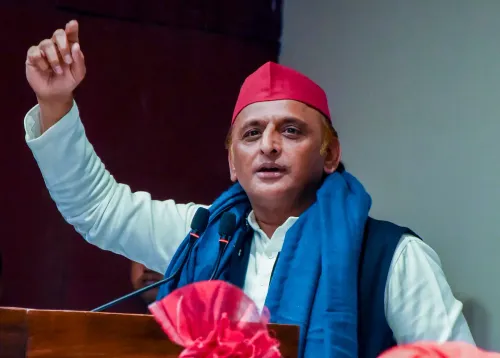
Three demands. No ambiguity. Samajwadi Party president Akhilesh Yadav on Monday, November 9, 2026, laid out a pointed electoral reform agenda on X, calling for Aadhaar linkage with voter rolls, tamper-proof metal voter cards, and mandatory biometric authentication at polling booths — framing each measure as a direct check on what he called the BJP's alleged practice of fake voting.
The three-point reform demand, unpacked
Yadav's post, written in Hindi, leaves little room for interpretation. 'चुनाव को लेकर सीधी-सरल मांग' — 'a straight, simple demand on elections' — he wrote, before listing three proposals. First: link Aadhaar cards to the voting process. Second: replace paper and plastic voter identity cards with metal cards that cannot be duplicated. Third: adopt fingerprint or iris-based biometric identification at the booth, because, as he noted, no two individuals share identical biometrics — making impersonation structurally impossible.
The logic is deliberate. Each demand targets a different layer of the voter identity chain: the registry, the physical document, and the point-of-vote authentication. Taken together, they would make it significantly harder to register ghost voters, forge identity cards, or impersonate a legitimate voter at the booth.
Aadhaar-voter linkage: a decade of starts and stops
The idea of tying Aadhaar — India's biometric unique identity programme, launched in 2009 and given statutory backing under the Aadhaar Act of 2016 — to electoral rolls is not new. The government first explored the linkage around 2014-15 as a way to purge duplicate entries from voter lists. That effort ran into Supreme Court privacy rulings and was subsequently scaled back.
The Election Commission of India has not been entirely passive on biometrics either: it ran voter authentication pilots in Andhra Pradesh and Telangana from 2015 onwards. The Commission's official position, however, has been that its existing Electoral Photo Identity Card (EPIC) system and Electronic Voting Machine safeguards are adequate. That gap — between what pilots have demonstrated and what the Commission has mainstreamed — is precisely the space opposition leaders continue to press on.
SP's BJP charge and the broader opposition pattern
Yadav's explicit accusation — that stronger safeguards will prevent the BJP from engineering fake votes — is combative but consistent with a long-running Samajwadi Party narrative around electoral roll manipulation in Uttar Pradesh and nationally. Multiple opposition parties have made variants of this argument ahead of assembly and general elections, particularly around demands for metal or tamper-proof voter cards and stricter biometric checks.
The timing matters. Demands for electoral reform tend to sharpen as election cycles approach, and SP's framing — anchoring the demand not in abstract good governance but in a specific accusation against the ruling party — is designed to do double work: push a policy position while keeping pressure on the BJP's credibility on institutional integrity.
What happens next depends on whether the Election Commission moves to expand its Aadhaar-linkage or biometric authentication pilots, or whether these proposals find their way into an electoral reform bill in a forthcoming parliamentary session. For now, Akhilesh Yadav has drawn the line in public — daring both the Commission and the ruling party to respond.
Point of View
Keeping the SP relevant on governance debates ahead of any electoral cycle. The Aadhaar-voter linkage question has genuine policy history behind it — Supreme Court privacy concerns, Election Commission pilots, parliamentary debate — which gives the demand more institutional weight than a purely rhetorical charge. By insisting biometric safeguards will structurally block BJP fraud rather than simply asking for 'free and fair elections,' the SP is shifting from defensive to offensive electoral politics. If the Election Commission responds, even cautiously, Yadav gains a policy win; if it stays silent, the accusation hangs in the air unanswered.
NationPress
9 Nov 2026
Frequently Asked Questions
What is Akhilesh Yadav's demand regarding Aadhaar and elections?
Akhilesh Yadav has demanded that Aadhaar cards be linked to the voter roll, that voter identity cards be made of metal to prevent forgery, and that fingerprint or iris biometric authentication be used at polling booths to stop fake voting.
Has India ever tried linking Aadhaar with voter IDs?
Yes. The government first proposed Aadhaar-voter linkage around 2014-15 to remove duplicate entries, but the initiative was scaled back following Supreme Court rulings on privacy. The Election Commission also ran biometric voter authentication pilots in Andhra Pradesh and Telangana from 2015 onwards.
Why does Akhilesh Yadav want metal voter ID cards?
Yadav argues that metal cards are significantly harder to counterfeit than paper or plastic versions, making it more difficult to create fraudulent voter identity documents that could be used for impersonation at polling booths.
What is the Election Commission's current position on biometric voting?
The Election Commission maintains that the existing Electoral Photo Identity Card system and Electronic Voting Machine safeguards are adequate, though it has piloted biometric authentication in select states in the past.
Is Aadhaar-voter linkage legally possible in India?
The Aadhaar Act of 2016 enables biometric authentication for various public services, but Aadhaar-voter linkage faces legal complexity due to Supreme Court privacy rulings. Any mandatory linkage would likely require fresh legislative or judicial clearance.