Akhilesh Yadav deploys PDA Prahari for voter roll aid
Synopsis
Samajwadi Party president Akhilesh Yadav praised PDA Prahari volunteers assisting voters affected by the Election Commission's Special Intensive Revision exercise and called on all volunteers to redeploy on 24 October for maximum voter support.
Key Takeaways
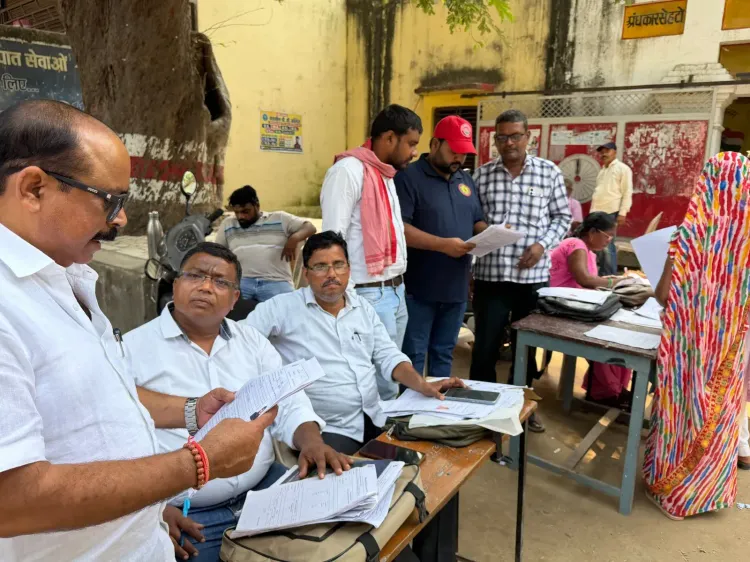
Akhilesh Yadav on 18 October 2026 congratulated active PDA Prahari volunteers helping voters facing difficulties due to the Special Intensive Revision (SIR) of electoral rolls.
He directed all PDA Praharis to remain fully mobilised on 24 October 2026 and assist voters wherever possible.
The SIR is a periodic Election Commission of India exercise to update and clean up voter rolls; opposition parties allege it can result in wrongful deletions.
The PDA (Pichhda-Dalit-Alpsankhyak) coalition is the Samajwadi Party's core social base in Uttar Pradesh .
The Samajwadi Party has deployed workers during SIR exercises since at least 2012 to protect its voters from roll-related exclusions.
With an electoral roll revision under way and voters reportedly struggling to get their names in order, Samajwadi Party president Akhilesh Yadav on Sunday, 18 October 2026 publicly commended every active PDA Prahari volunteer already on the ground — and ordered a full remobilisation for 24 October.
In his post, Akhilesh wrote: 'हर सजग-सक्रिय पीडीए प्रहरी को इस बात के लिए हार्दिक बधाई की वो SIR के कारण समस्या झेल रहे मतदाताओं की सहायता कर रहे हैं।' — 'Heartfelt congratulations to every alert and active PDA Prahari for helping voters who are facing difficulties because of the SIR. All PDA Praharis must again remain fully prepared on 24 October and extend every possible assistance to voters.'
What the SIR is, and why it matters on the ground
The Special Intensive Revision (SIR) is an exercise periodically conducted by the Election Commission of India to update, correct, and clean up electoral rolls — adding new eligible voters, removing deceased or relocated names, and fixing errors. While the process is designed to improve roll accuracy, opposition parties have long flagged that such revisions can inadvertently — or otherwise — leave legitimate voters stranded: names deleted, details wrong, or documentation demands difficult to meet at short notice.
The Samajwadi Party has deployed party workers to guide voters through SIR-related paperwork since at least 2012, positioning the effort as a service to its core PDA — Pichhda (OBC), Dalit, Alpsankhyak (minority) — social coalition, the communities it argues are most vulnerable to roll-related exclusions.
PDA Prahari: boots on the ground for the coalition
The PDA Prahari network is the Samajwadi Party's structured volunteer corps specifically tasked with ground-level outreach among PDA-category voters. Akhilesh's call on 18 October is a direct activation order — volunteers are to identify voters facing SIR-related problems, assist with documentation, and shepherd them through the correction window before it closes.
The 24 October date mentioned in the post signals a specific mobilisation day — likely tied to a correction or claims-and-objections window in the ongoing revision calendar, though the precise official deadline has not been independently confirmed.
A pattern built before every major election
Indian opposition parties routinely ramp up cadre activity during electoral roll revisions, and the Samajwadi Party has made it a signature practice. The framing is deliberate: by branding the effort under the PDA banner, the party ties a procedural civic exercise directly to its political identity, reinforcing loyalty among OBC, Dalit, and minority voters in Uttar Pradesh while simultaneously building a visible contrast with the ruling establishment.
The intensity of such mobilisations typically tracks the electoral calendar. Any increase in PDA Prahari deployment in the days after 24 October will be a signal worth watching.
Point of View
Dalit, and minority voters at the exact moment the state machinery is most intrusive in their civic lives. The 24 October mobilisation date suggests the party has identified a specific correction window in the SIR calendar and is racing to maximise its advantage before it closes. Sustained deployment at this scale, if it continues, would indicate the Samajwadi Party is treating the current period as an effective pre-election ground war — regardless of whether a formal poll schedule has been announced. The broader pattern mirrors SP's post-2022 strategy of deepening PDA infrastructure between election cycles to reduce dependence on last-minute campaign surges.
NationPress
18 Oct 2026
Frequently Asked Questions
What is PDA Prahari in the Samajwadi Party?
PDA Prahari is the Samajwadi Party's volunteer corps tasked with ground-level outreach and assistance for voters from the PDA — Pichhda (OBC), Dalit, and Alpsankhyak (minority) — social coalition championed by party president Akhilesh Yadav.
What is the SIR in the context of elections?
SIR stands for Special Intensive Revision, an exercise periodically conducted by the Election Commission of India to update electoral rolls — correcting errors, adding new voters, and removing ineligible entries. Opposition parties often allege it causes wrongful deletions among their supporters.
Why is Akhilesh Yadav asking PDA Prahari to be active on 24 October 2026?
Akhilesh Yadav has called for full PDA Prahari mobilisation on 24 October 2026 to help voters dealing with problems arising from the ongoing SIR, likely coinciding with a claims-and-objections or correction window in the revision calendar.
What is the PDA coalition of the Samajwadi Party?
PDA stands for Pichhda (Other Backward Classes), Dalit, and Alpsankhyak (religious minorities) — the social coalition that forms the Samajwadi Party's core political base in Uttar Pradesh, a framework Akhilesh Yadav has heavily promoted since 2022.
Has the Samajwadi Party helped voters during electoral roll revisions before?
Yes. The Samajwadi Party has deployed party workers to assist voters with SIR-related documentation and corrections since at least 2012, framing it as a service to PDA-category communities who it says are most at risk from roll errors.