India-EU launch ₹169 crore EV battery recycling drive under TTC
Synopsis
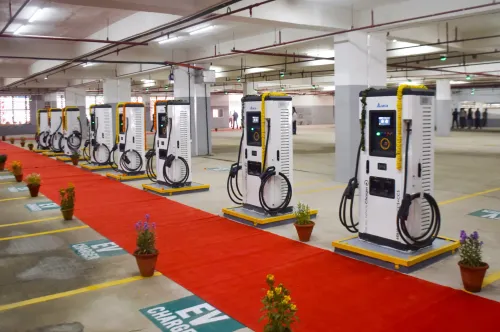
India and the EU have committed ₹169 crore to tackle one of the EV sector's least glamorous but most critical problems — what happens to batteries after they die. A joint pilot line on Indian soil and a focus on lithium, cobalt, and graphite recovery signal that this is less a symbolic gesture and more a structural bet on circular economy infrastructure.
Key Takeaways
India and the EU have launched a ₹169 crore joint EV battery recycling initiative under the India-EU Trade and Technology Council (TTC) .
The call for proposals is open until 15 September 2026 , under Working Group 2 on Green and Clean Energy Technologies .
Funding comes from the EU's Horizon Europe programme and India's Ministry of Heavy Industries .
A joint India-EU pilot line will be established in India for real-world testing of recycling technologies.
Key materials targeted for recovery include lithium , graphite , and cobalt .
The initiative aims to reduce India's dependence on imported critical minerals and advance circular economy goals.
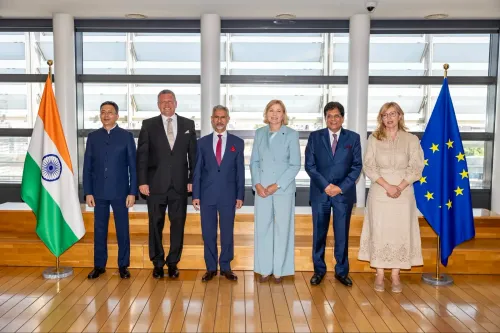
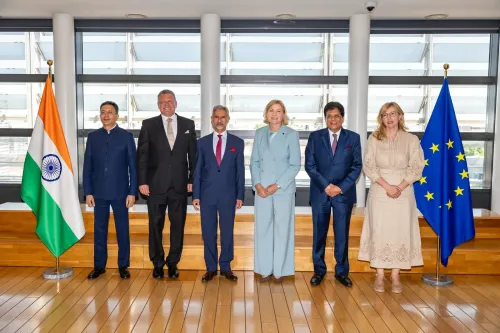
India and the European Union (EU) have launched a ₹169 crore joint initiative for electric vehicle (EV) battery recycling, marking the third coordinated call for proposals under the India-EU Trade and Technology Council (TTC). Announced on 6 May 2026 in New Delhi, the programme sets a submission deadline of 15 September 2026 and aims to address one of the most pressing challenges in the EV ecosystem — sustainable battery recycling and recovery of critical raw materials.
What the Programme Covers
The initiative falls under Working Group 2 on Green and Clean Energy Technologies within the TTC framework. Funding will be channelled through the European Union's Horizon Europe programme on the EU side, while India's Ministry of Heavy Industries will support domestic participation. The call for proposals is designed to accelerate innovation in advanced recycling technologies, with a specific focus on high-efficiency recovery of valuable materials including lithium, graphite, and cobalt.
The programme will also prioritise the development of safe, digitalised battery collection systems and support pilot-scale demonstrations of new recycling processes. A key structural feature is the establishment of a joint India-EU pilot line in India, intended to enable real-world testing and faster industrial deployment of these technologies.
Key Technical Priorities
According to programme documents, the initiative will target several critical technical challenges: achieving high recovery rates from end-of-life batteries, handling mixed battery chemistries, improving logistics with an inclusive approach, and ensuring safety standards across the recycling chain. The programme will also promote second-life applications of batteries — extending their utility beyond their primary use in vehicles — as part of a broader circular economy strategy. These combined efforts are expected to reduce India's dependence on imported critical minerals, a strategic vulnerability that has grown alongside the country's EV ambitions.
What Officials Said
Prof. Ajay Kumar Sood, Principal Scientific Adviser to the Government of India, described the launch as a significant step in strengthening the India-EU strategic partnership. He noted that as India's EV market expands rapidly, building a robust domestic recycling ecosystem is crucial for both resource security and environmental sustainability. EU Ambassador to India Hervé Delphin highlighted the central role of batteries in the global green transition, stating that the initiative aims to bridge the gap between innovation and real-world application while advancing shared climate goals. Dr. Parvinder Maini, Scientific Secretary at the Office of the Principal Scientific Adviser, said the collaboration would accelerate India's transition towards a circular economy. Marc Lemaitre, Director-General for Research and Innovation at the European Commission, emphasised that the initiative reflects a deepening partnership between India and the EU in green innovation.
Why This Matters for India
India's EV sector has grown sharply over the past three years, but battery recycling infrastructure has lagged behind. Without a credible domestic recycling ecosystem, the country risks exporting its critical mineral problem — spending heavily on imports only to discard the recovered materials inefficiently. This is the third call under the TTC framework, suggesting a structured, multi-year approach rather than a one-off bilateral gesture. The joint pilot line in India is particularly significant: it positions Indian industry to absorb and scale EU-developed recycling technology, potentially reducing the cost curve for domestic manufacturers. With proposals open until 15 September 2026, researchers and industry players on both sides have roughly four months to submit applications.
Point of View
Which could give Indian manufacturers a technology transfer pathway that bilateral agreements rarely deliver. The TTC's Working Group 2 has now issued three coordinated calls, suggesting institutional continuity, but the real test is whether domestic industry can absorb and commercialise the outputs. India's critical mineral dependency — particularly on lithium and cobalt — is a strategic vulnerability that no amount of bilateral goodwill resolves without hard industrial infrastructure.
NationPress
25 Sept 2026
Frequently Asked Questions
What is the India-EU EV battery recycling initiative launched in May 2026?
It is a ₹169 crore joint programme under the India-EU Trade and Technology Council (TTC), launched on 6 May 2026, focused on recycling electric vehicle batteries and recovering critical raw materials such as lithium, cobalt, and graphite. Proposals can be submitted until 15 September 2026.
Who is funding the India-EU EV battery recycling programme?
The EU side is funding through the Horizon Europe programme, while India's Ministry of Heavy Industries is backing domestic participation. The combined funding pool is approximately ₹169 crore.
What is the joint India-EU pilot line and why does it matter?
The joint pilot line is a shared testing facility to be established in India, designed to enable real-world validation and faster industrial deployment of new battery recycling technologies. It is intended to help Indian industry absorb and scale advanced recycling processes developed through the collaboration.
Which materials will the recycling programme focus on recovering?
The programme targets high-efficiency recovery of lithium, graphite, and cobalt — all critical minerals used in EV batteries that India currently relies heavily on imports to obtain.
How does this initiative fit into India's broader EV and circular economy goals?
The programme addresses a key gap in India's EV ecosystem: the lack of a robust domestic battery recycling infrastructure. By promoting second-life battery applications and reducing dependence on imported critical minerals, it supports both India's circular economy transition and its resource security objectives.