Delhi Government Invites Public Input on Draft EV Policy 2026 for Sustainable Mobility
Synopsis
The Delhi government is seeking public input on its draft Electric Vehicle Policy 2026, aimed at promoting sustainable mobility and reducing pollution. Stakeholders can submit their feedback via email or post within a 30-day timeframe to shape the future of clean transport in the capital.
Key Takeaways
Public Engagement: Stakeholders are invited to provide input on the draft policy.
Clean Mobility Focus: The policy aims to reduce pollution and promote EV adoption.
Incentives: Financial incentives are available for electric vehicles across various segments.
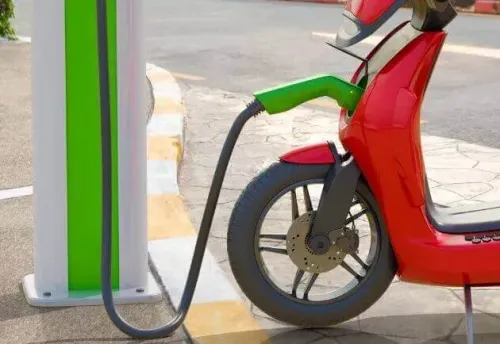
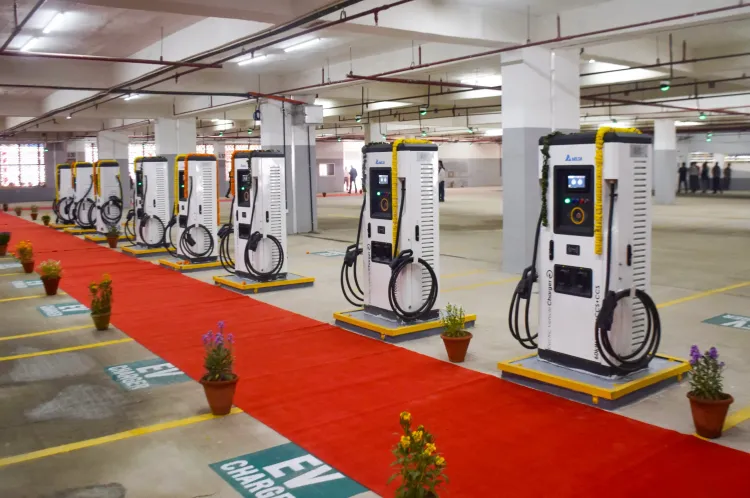
Infrastructure Development: A comprehensive charging network will be established.
Scrapping Incentives: Available for transitioning to electric vehicles.
New Delhi, April 11 (NationPress) – On Saturday, the Delhi government invited all stakeholders, including the general public, to provide their feedback and comments on the draft Delhi Electric Vehicle (EV) Policy 2026. Submissions can be made via email or postal mail within a 30-day window.
The draft policy has been posted on the official Transport Department website and will remain effective until 2030. Its primary objective is to reduce vehicular pollution and encourage the adoption of electric vehicles.
“We welcome feedback from all stakeholders, including the general public, within 30 days from this announcement. You can reach out through the following methods: Email: evpolicy2026@gmail.com or by post to the Joint Commissioner (EV), Transport Department, Govt. of NCT of Delhi, 5/9 Underhill Road, Delhi- 110054,” the notification stated.
In this context, the public is kindly urged to refrain from visiting the office in person to prevent unnecessary crowding. Comments and objections submitted after the deadline will not be entertained,” the notification further mentions.
The Delhi government emphasizes its commitment to combat air pollution, aiming to facilitate a transition toward clean mobility through targeted incentives, infrastructure enhancement, and robust regulatory measures.
The Delhi Electric Vehicle Policy 2026–2030 (spanning four years) aims to maintain this momentum, accelerating the adoption of electric vehicles, enhancing air quality, and establishing a supportive ecosystem for electric mobility. The policy becomes effective from the notification date.
Key goals of the policy include boosting EV adoption across all major vehicle types; facilitating the installation of a comprehensive charging infrastructure across Delhi; developing a strong EV supply chain that encompasses battery recycling, servicing, and component recovery; improving air quality by lessening reliance on Internal Combustion Engine (ICE) vehicles; and ensuring fiscal efficiency and transparent execution.
For two-wheelers, the ex-factory price of electric models will not exceed Rs 2.25 lakh.
The state government will offer incentives to boost electric two-wheeler adoption: In the first year of registration, Rs 10,000 per kWh, with a cap of Rs 30,000; in the second year following the notification, Rs 6,600 per kWh, capped at Rs 20,000; and in the third year after the notification, Rs 3,300 per kWh, capped at Rs 10,000.
For electric three-wheeler auto-rickshaws, the incentives for registration are: Year 1 from the date of notification, Rs 50,000; Year 2, Rs 40,000; and Year 3, Rs 30,000.
For electric four-wheeled goods vehicles, the GNCTD will provide the following incentives to promote e-truck adoption: Year 1 from the notification, Rs 1,00,000; Year 2, Rs 75,000; and Year 3, Rs 50,000, as stated in the notification.
For electric two-wheelers, a scrapping incentive of Rs 10,000 will be granted upon purchasing a new electric vehicle under this policy, provided that the purchase occurs within six months of obtaining the Certificate of Deposit (CoD) from an authorized scrapping facility.
This incentive is applicable for the scrapping of Delhi-registered BS-IV and older two-wheelers, in accordance with the draft policy.
A scrapping incentive of Rs 25,000 will be available upon purchasing a new electric three-wheeler under the same conditions as two-wheelers.
For electric cars (non-transport), a scrapping incentive of Rs 1,00,000 will be available upon purchasing a new electric car under this policy, with an ex-factory price not exceeding Rs 30 lakh.
For electric four-wheeled goods carriers (N1 trucks), a scrapping incentive of Rs 50,000 will be awarded upon purchasing a new electric vehicle under this policy.
Point of View
The draft Electric Vehicle Policy 2026 represents a significant step towards clean mobility in Delhi. It reflects the government's commitment to combat air pollution while encouraging public participation to enhance policy effectiveness. The focus on incentives and infrastructure development marks a proactive approach to sustainable transport.
NationPress
18 Sept 2026
Frequently Asked Questions
What is the deadline for feedback on the draft EV policy?
Feedback on the draft EV policy must be submitted within 30 days from the announcement date.
How can I provide feedback on the EV policy?
Feedback can be submitted via email at evpolicy2026@gmail.com or by post to the Joint Commissioner (EV), Transport Department, Govt. of NCT of Delhi.
What are the main goals of the Delhi Electric Vehicle Policy 2026?
The policy aims to reduce vehicular pollution, promote EV adoption, improve air quality, and develop supportive infrastructure.
What incentives are offered for electric two-wheelers?
Incentives include up to Rs 30,000 in the first year, Rs 20,000 in the second year, and Rs 10,000 in the third year.
Are there scrapping incentives under this policy?
Yes, scrapping incentives are available for electric two-wheelers, three-wheelers, and cars, with amounts varying based on vehicle type.