LeT commander, ISI-linked official killed as Pakistan's terror ties exposed
Synopsis
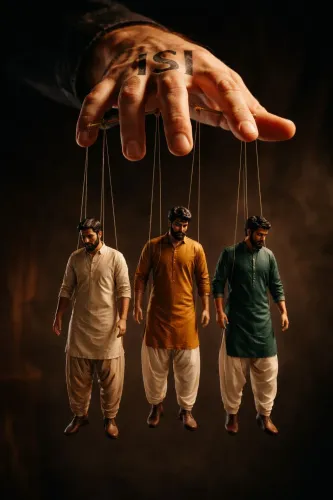
Unknown gunmen have killed a top LeT commander in Quetta and an ISI-linked official in Khyber Pakhtunkhwa — but it is documents recovered from the slain ISI official that are sending shockwaves, reportedly confirming Pakistan's covert operational ties to the Islamic State, a charge Islamabad has long denied.
Key Takeaways
Mir Shukr Khan Raisani , a senior LeT commander based in Quetta, Balochistan , was killed by unknown gunmen.
Mohammad Iqbal , an ISI -linked official from Kurram District , was killed in Orakzai district, KP ; documents found on him reportedly implicate the ISI in supporting the Islamic State .
Officials allege Pakistan has been training several hundred Islamic State recruits in KP to deploy against both the TTP , BLA , and the Afghan Taliban .
The LeT has been struggling to rebuild its command structure after Operation Sindoor , with multiple senior figures killed in recent months.
Pakistan has consistently denied links to the Islamic State , but officials say the recovered documents contradict that position.
A senior Lashkar-e-Taiba (LeT) commander and an Inter-Services Intelligence (ISI)-linked official have been shot dead by unknown gunmen in separate incidents inside Pakistan, with documents recovered from the slain ISI official reportedly confirming Islamabad's covert ties to the Islamic State. The killings, occurring on or around 12 May, are being closely tracked by Indian intelligence agencies and have deepened scrutiny of Pakistan's relationships with multiple terror outfits.
Who Was Killed
The two deceased have been identified as Mir Shukr Khan Raisani and Mohammad Iqbal. Raisani was a top LeT commander operating out of Quetta, Balochistan, where he oversaw the outfit's regional operations. According to officials, just a day before his killing he had attended a major LeT-organised event. Prior to his Balochistan posting, Raisani had been involved in recruitment and training activities targeting Jammu and Kashmir.
Mohammad Iqbal, originally from Kurram District (formerly Kurram Agency), was killed by unknown gunmen in Orakzai district, a mountainous area of Khyber Pakhtunkhwa (KP). He was described as a low-level official with direct links to the ISI.
Documents Found on Iqbal Expose ISI-ISIS Links
The killing of Iqbal has proved to be the more consequential of the two, according to officials. Several important documents were reportedly recovered from him following his death. These documents, officials say, indicate that Iqbal — along with several other ISI officials — was directly involved with the Islamic State in KP and Afghanistan.
Pakistan has consistently denied any support for the Islamic State. However, officials argue that the documents retrieved from Iqbal contradict Islamabad's official position. An Intelligence Bureau official, speaking on condition of anonymity, said that Pakistan has allegedly been nurturing the Islamic State for strategic reasons, primarily to use the group as a counterweight against the Afghan Taliban and domestic insurgencies.
Pakistan's Alleged Strategic Calculus
According to officials, with security forces under mounting pressure in both KP and Balochistan, Pakistan reportedly struck a pact with the Islamic State whereby the outfit's fighters would battle alongside the LeT against both the Tehreek-e-Taliban Pakistan (TTP) and the Balochistan Liberation Army (BLA). Another official claimed that the ISI has been training several hundred Islamic State recruits in KP — some earmarked to fight the TTP and BLA domestically, others reportedly deployed into Afghanistan to battle the Taliban.
The Afghan Taliban has previously accused Pakistan of nurturing groups counterproductive to Afghanistan's stability. The Islamic State Khorasan Province (ISKP), launched in Afghanistan, had sought to displace the Taliban regime and establish a caliphate, but the Taliban reportedly kept the group in check. Now, with Taliban-Pakistan relations deteriorating sharply, Islamabad is allegedly pivoting toward the Islamic State as a tool to weaken the Taliban and eventually influence governance in Kabul, officials said.
LeT Under Pressure After Operation Sindoor
The LeT has been attempting to rebuild its operational capacity after suffering significant blows during Operation Sindoor. However, the recent wave of targeted killings by unknown gunmen has severely disrupted those efforts. Officials note that the pattern of killings is not random — senior functionaries, top commanders, and even founding members of the LeT have been systematically targeted.
Notably, Raisani's death is the latest in a series of hits on LeT's top leadership in recent months. The cumulative effect, officials say, is making it exceptionally difficult for the outfit to reconstitute its command structure.
What Comes Next
The twin killings and the intelligence fallout from the recovered documents are expected to intensify diplomatic and intelligence pressure on Pakistan. As the identity of the gunmen remains unconfirmed, the broader pattern of targeted eliminations within Pakistan's terror ecosystem continues to raise uncomfortable questions for Islamabad — both about who is behind the killings and about what further documents or disclosures may yet surface.
Point of View
Bad terrorist' framework, but being caught with ISI fingerprints on Islamic State files is a different order of exposure. What is equally striking is the pattern: the unknown gunmen appear to be working through a list, methodically dismantling LeT's command hierarchy at a moment when the outfit is already reeling from Operation Sindoor. Whether this is a rival state actor, a rogue domestic faction, or something else entirely, Islamabad's inability to identify or stop the gunmen is itself a damaging signal about the ISI's situational awareness inside its own territory.
NationPress
25 Sept 2026
Frequently Asked Questions
Who was Mir Shukr Khan Raisani and why was he killed?
Mir Shukr Khan Raisani was a senior Lashkar-e-Taiba commander overseeing the outfit's operations in Balochistan, with a prior role in recruitment and training targeting Jammu and Kashmir. He was shot dead by unknown gunmen in Quetta, a day after attending a major LeT event.
What documents were found on Mohammad Iqbal and what do they reveal?
Documents recovered from Mohammad Iqbal after his killing in Orakzai district reportedly show that he and several other ISI officials were directly involved with the Islamic State in Khyber Pakhtunkhwa and Afghanistan. Officials say the documents contradict Pakistan's long-standing denial of any support for the Islamic State.
Why would Pakistan allegedly support the Islamic State?
According to officials, Pakistan has allegedly been nurturing the Islamic State as a strategic tool to counter the Afghan Taliban — with whom relations have deteriorated — and to use its fighters against domestic insurgencies such as the TTP and BLA. The goal, officials claim, is to eventually weaken Taliban control over Afghanistan.
How has the LeT been affected by the recent wave of killings?
The LeT has been trying to rebuild after suffering significant damage during Operation Sindoor. However, the ongoing targeted killings of senior functionaries, top commanders, and founding members by unknown gunmen have severely disrupted those reconstruction efforts, making it exceptionally difficult to restore the outfit's command structure.
Who are the unknown gunmen carrying out these killings in Pakistan?
The identity of the gunmen remains unconfirmed. Indian intelligence agencies are tracking the killings closely, but no group has claimed responsibility. The systematic targeting of senior terror figures and ISI-linked officials has raised widespread speculation about the actors involved.