Is Pakistan's ISI Uniting Jihadist and Sectarian Groups?
Synopsis
Recent reports reveal a concerning alliance between terrorist groups Lashkar-e-Taiba and Islamic State Khorasan Province, orchestrated by Pakistan's ISI. This partnership showcases a dangerous strategy where jihadist and sectarian factions unite, posing significant threats to regional stability and security.
Key Takeaways
ISI orchestrates a coalition between LeT and ISKP .
The alliance signifies a dangerous strategy for regional security.
Indian forces are equipped with advanced technology to counter these threats.
The collaboration enhances operational capabilities of terrorist groups.
Public support for jihad recruitment is alarming.
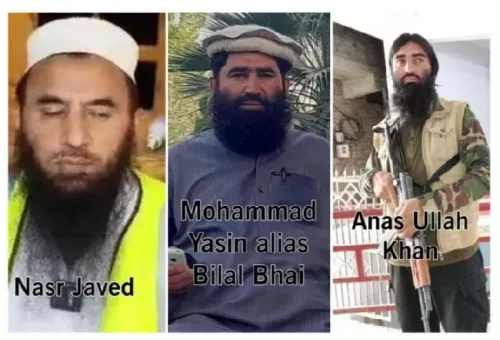
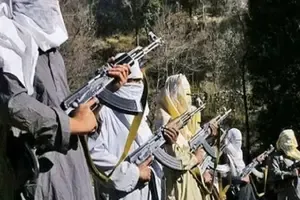
New Delhi, Jan 22 (NationPress) The increasing collaboration between terror entities Lashkar-e-Taiba (LeT) and Islamic State Khorasan Province (ISKP) highlights the tactical maneuvering by Pakistan’s Inter-Services Intelligence (ISI). A recent report underscored a significant incident where ISKP coordinator Mir Shafiq Mangal gifted a weapon to LeT leader Rana Mohammad Ashfaq, signifying a coalition that integrates jihadist and sectarian factions under ISI oversight.
“Pakistan’s Deep State has transformed terrorism into a calculated tool of state policy, promoting rather than denouncing it. This deliberate strategy is perilous, as evidenced by a concerning consolidation among terrorist groups orchestrated by the Inter-Services Intelligence. The ISI not only acts as a protector but also as the architect, uniting factions like Lashkar-e-Taiba, Jaish-e-Mohammad, Islamic State Khorasan Province, and Hamas into what can be referred to as an ‘unholy alliance,’ as detailed in a report from India Narrative.
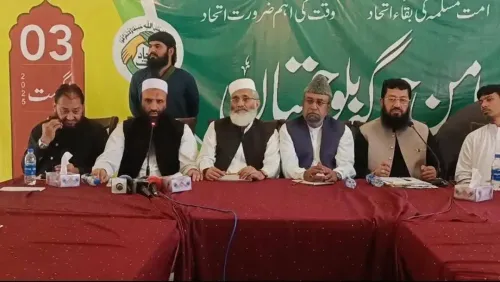
“Following Operation Sindoor, which significantly affected LeT’s base in Muridke and exposed its connections, the ISI intensified its efforts. It instructed LeT and JeM to collaborate as a “pack” instead of operating as isolated entities. Army officials have been publicly seen at the funerals of terrorists, while politicians share platforms with LeT deputy Saifullah Kasuri. Prominent LeT leader Rauf openly boasts about the ease of jihad recruitment under state support at parades attended by Talha Saeed, son of Hafiz Saeed,” the report states.
The report indicates that the ISI-backed network merges LeT’s urban logistics and operatives with JeM’s suicide bombing tactics, enhanced by support from Hamas, to maintain a strategy of ongoing violence against India.
Moreover, it emphasizes that Indian forces, equipped with advanced technology, are well-prepared to tackle the challenges posed by this new front fusion.
“Drone jammers, anti-drone swarms, and laser countermeasures are deployed to thwart IED drops. Precision artillery, human performance-enhancing exosuits, and rapid-response units from the Para Special Forces are poised to manage hybrid fidayeen and urban sieges. Sensor grids along the Line of Control and strategic helicopter pads allow for swift interventions, while cyber units aim to disrupt hawala networks and propaganda efforts. The Indian Armed Forces are vigilant in patrolling the skies to ensure denial of air support over Jammu and Kashmir, while also guarding against potential foreign intelligence leaks,” the report concluded.
Point of View
It is imperative to recognize the alarming developments surrounding Pakistan's ISI and its role in uniting terrorist factions. This orchestrated alliance poses significant risks not only to India but to regional stability as well. Our coverage aims to bring these critical issues to light, ensuring that our audience remains informed and aware.
NationPress
15 Sept 2026
Frequently Asked Questions
What is the role of ISI in the alliance between LeT and ISKP?
The ISI is acting as the architect of a coalition between Lashkar-e-Taiba and Islamic State Khorasan Province, facilitating collaboration among various jihadist and sectarian groups.
What implications does this alliance have for India?
The alliance poses a significant threat to India’s national security, as these groups increase their operational capabilities and coordination against Indian interests.
How is India preparing to counter these threats?
India is enhancing its military readiness with advanced technology, including drone jammers and rapid-response units, to effectively address the challenges posed by these terrorist groups.