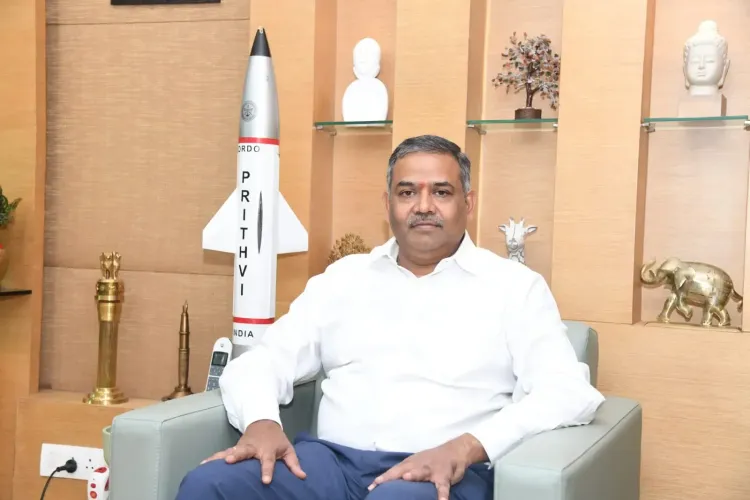
DRDO scientist P. Srihari takes charge as RCI Director in Hyderabad
Synopsis
The man behind India's ASAT satellite intercept and the MRSAM induction into the IAF has taken charge of DRDO's premier missile laboratory. Dr P. Srihari's appointment as RCI Director brings three decades of hands-on weapons development experience to an institution central to India's strategic self-reliance push.
Key Takeaways
Srihari assumed charge as Director, Research Centre Imarat (RCI) , Hyderabad, on 15 September 2026 .
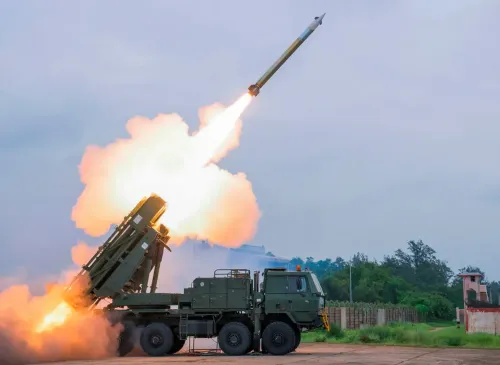
RCI is a premier laboratory of the Defence Research and Development Organisation (DRDO) , specialising in missile systems.
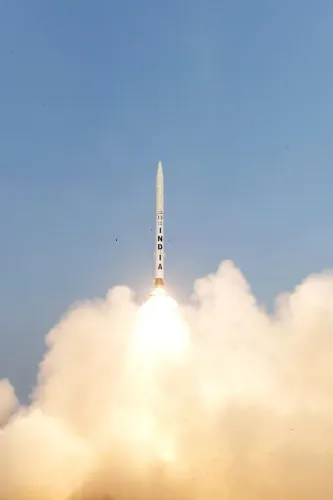
Srihari was a core team member of India's historic Anti-Satellite (ASAT) mission in March 2019 , which intercepted a Low Earth Orbit satellite.
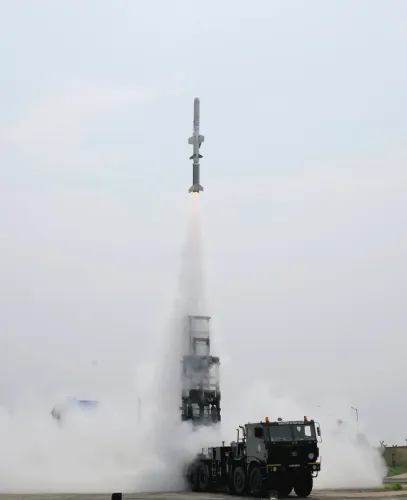
He led the MRSAM (IAF) project; the first Firing Unit was inducted into the Indian Air Force in October 2021 .
He was elevated to Programme Director of the Indian Ballistic Missile Defence Programme in 2022 .
He is a recipient of the Agni Award for Excellence , DRDO Award for Path-Breaking Research , and Scientist of the Year award.
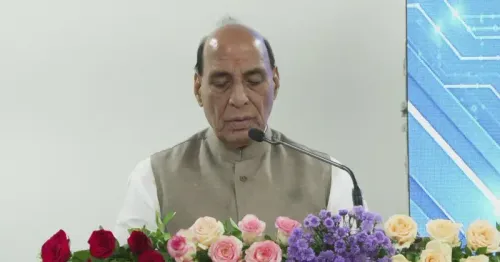
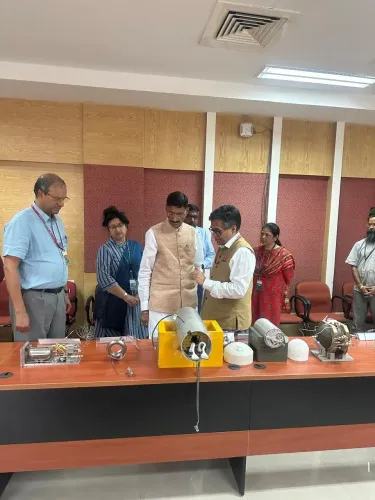
Senior defence scientist Dr P. Srihari has assumed charge as Director of Research Centre Imarat (RCI), Hyderabad, one of the premier laboratories of the Defence Research and Development Organisation (DRDO). Srihari took over the role on Tuesday, 15 September 2026, bringing with him over three decades of expertise in missile systems, radar engineering, and ballistic missile defence.
Academic and Early Career Background
Srihari holds a B.Tech in Mechanical Engineering from Nagarjuna University (1990), a Master of Engineering from PSG College of Technology, Coimbatore, and a Ph.D. from Osmania University, Hyderabad, according to an official defence release. He entered DRDO through the Mechanical Engineering Fellowship Course (MEFC), beginning his career as Scientist 'B' at the Electronics and Radar Development Establishment (LRDE), Bengaluru, in October 1992.
His early work centred on the Multi-Mode Radar (MMR) for the Light Combat Aircraft (LCA) programme, where he designed and developed a multilayer slotted array antenna — a technology subsequently adopted across several DRDO antenna programmes, including those for the Advanced Light Helicopter (ALH) and the Battle Field Surveillance Radar (BFSR).
Key Milestones in Missile and Radar Development
In 2000, Srihari was deputed to IAI/ELTA for the Long Range Tracking Radar (LRTR) under Programme AD, and he played a significant role in establishing the Kolar Radar Range. By December 2003, he moved to the Defence Research and Development Laboratory (DRDL), Hyderabad, joining the Liquid Propulsion Division.
At DRDL, he designed and developed the Divert and Attitude Control System (DACS) for interceptor missiles under the Indian Ballistic Missile Defence (BMD) Programme. His cold gas Reaction Control System (RCS) was successfully deployed in target missiles used during interceptor trials. From 2015, he joined Programme AD, contributing to the PDV and AD II interceptor missiles.
Notably, Srihari was among the core team members who executed the historic Anti-Satellite (ASAT) mission in March 2019, which successfully intercepted a Low Earth Orbit (LEO) satellite — making India only the fourth nation globally to demonstrate such a capability.
MRSAM Induction and BMD Leadership
In 2019, Srihari was designated Project Director for the Medium Range Surface-to-Air Missile (MRSAM) for the Indian Air Force (IAF), a joint developmental programme between DRDO and Israel Aerospace Industries (IAI). Under his leadership, the first Firing Unit was successfully inducted into the Indian Air Force in October 2021, with production lines established to deliver all remaining Firing Units seamlessly.
He was subsequently elevated to Programme Director of Programme AD — the prestigious Indian Ballistic Missile Defence programme — in 2022, underlining his centrality to India's strategic defence architecture.
Honours, Publications, and Professional Memberships
For his contributions to indigenous defence technology, Srihari has received the Agni Award for Excellence in Self-Reliance, the DRDO Award for Path-Breaking Research, and the Scientist of the Year Award. He has published more than 10 research papers in national and international journals on missile systems.
He serves as Honorary Secretary of the Aeronautical Society of India (AeSI), Hyderabad chapter, and is a member of the High Energy Materials Society of India (HEMSI), the Indian National Society for Aerospace and Related Mechanisms (INSARM), and the Society of Automotive Engineers (SAE).
His appointment to head RCI — which specialises in missile systems and associated technologies — positions him to drive the next phase of India's self-reliance agenda in advanced defence electronics and strategic weapons.
Point of View
Particularly as the MRSAM production ramp-up and next-generation BMD interceptors enter critical phases. India's self-reliance narrative needs programme directors who have actually delivered hardware — and Srihari's record suggests he has.
NationPress
15 Sept 2026
Frequently Asked Questions
Who is Dr P. Srihari and what is his new role at DRDO?
Dr P. Srihari is a senior DRDO defence scientist who has assumed charge as Director of Research Centre Imarat (RCI), Hyderabad, on 15 September 2026. RCI is one of DRDO's top laboratories, focused on missile systems and associated technologies. Srihari brings over 30 years of experience in radar, missile, and ballistic missile defence programmes.
What is Research Centre Imarat (RCI)?
Research Centre Imarat is a premier laboratory of the Defence Research and Development Organisation (DRDO) based in Hyderabad. It specialises in the development of missile systems, navigation and guidance technologies, and advanced defence electronics critical to India's strategic weapons programme.
What was Dr Srihari's role in India's ASAT mission?
Dr Srihari was a core group member of the team that successfully executed India's Anti-Satellite (ASAT) mission in March 2019, which intercepted a Low Earth Orbit (LEO) satellite. The mission, known as Mission Shakti, made India only the fourth country in the world to demonstrate this capability.
What is the MRSAM programme that Dr Srihari led?
The Medium Range Surface-to-Air Missile (MRSAM) for the Indian Air Force is a joint development programme between DRDO and Israel Aerospace Industries (IAI). Dr Srihari served as Project Director for this programme from 2019; the first Firing Unit was inducted into the Indian Air Force in October 2021.
What awards and recognition has Dr P. Srihari received?
Dr Srihari has been conferred the Agni Award for Excellence in Self-Reliance, the DRDO Award for Path-Breaking Research, and the Scientist of the Year award for his contributions to India's defence technology. He has also published more than 10 research papers in national and international journals on missile systems.