Is Pakistan's ISI Utilizing Bangladesh as a Covert Base for Cross-Border Terrorism?
Synopsis
A recent report raises alarms about Pakistan's ISI using Bangladesh as a covert base for terrorist activities, with significant implications for regional security. As terror networks re-emerge, the need for vigilance and action is more critical than ever.
Key Takeaways
Pakistan's ISI is reportedly using Bangladesh as a base for terrorism.
Several terror outfits are re-establishing networks in northeastern India.
A madrasa's sudden closure raises concerns about its links to radicalization.
The timing of events suggests a coordinated effort to evade law enforcement.
Bangladesh must take decisive measures to prevent becoming a hub for cross-border terrorism.
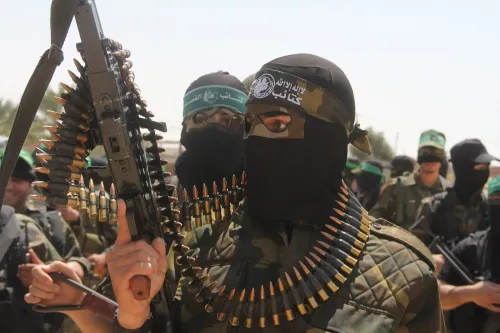
New Delhi, Dec 11 (NationPress) Recent findings reveal that terror groups backed by Pakistan, such as Lashkar-e-Taiba (LeT) and Jaish-e-Mohammad (JeM), are re-establishing their networks within India's northeastern regions and West Bengal, heavily depending on secure transit routes and logistical bases located in Bangladesh, according to a report released on Thursday.
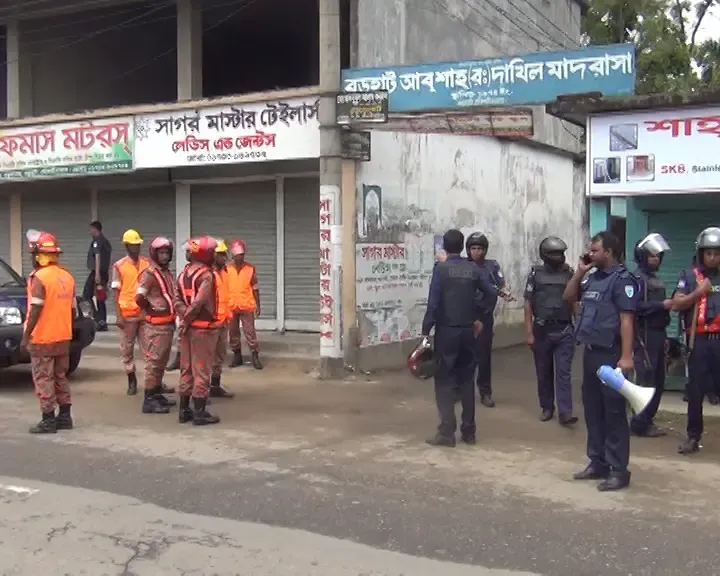
“The Inter-Services Intelligence (ISI) of Pakistan is once again engaging in risky maneuvers dangerously close to Bangladesh’s borders. A large madrasa near Dhaka, previously noted by security agencies as a hub for radical activities, has unexpectedly ceased operations, with key personnel vanishing overnight,” stated Salah Uddin Shoaib Choudhury, Editor of the Bangladeshi newspaper ‘Blitz’, in an article for the Usanas Foundation think tank.
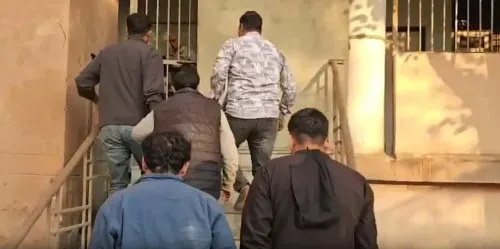
“This sudden shutdown followed the capture of several medical professionals from Al Falah University in Faridabad, alongside the detention of Jawad Ahmed Siddiqui, a prominent figure in the Al Falah group, related to the recent Delhi blast,” Choudhury added.
According to law enforcement intelligence in Bangladesh, the madrasa in Dhaka had long maintained “communication channels” with various religious charities and private donors associated with the Gulf region and Pakistan. However, despite years of speculation, no thorough investigation was conducted.
“A madrasa does not disappear overnight unless efforts are made to cover its tracks. The timing of this closure - occurring immediately after the arrest of individuals linked to Al Falah University in connection with the Delhi blast - is too precise to be merely coincidental. Someone must have alerted them. Many counterterrorism experts believe that the ISI-backed network, which has historically exploited Bangladesh for destabilization, is involved,” the report contended.
The report further highlights that, since the 'Jihadist Coup' last year, international media have largely undervalued the extent to which the ISI, along with its proxies including Lashkar-e-Taiba (LeT) and Jaish-e-Mohammad (JeM), are working to restore operational routes through Bangladesh. This situation demands a clear-eyed and uncompromising evaluation.
The report emphasized that Bangladesh must not allow the ISI to turn its territory into a covert launchpad for cross-border terrorism.
“If it occurs once, it will occur again. If one madrasa is utilized, more will follow. If one militant team enters undetected, others will arrive with greater sophistication and deeper connections. This is why the madrasa's shutdown must be regarded as a national security crisis - not merely a trivial observation,” it stressed.
The report indicated that Bangladesh’s political leadership must overcome its tendency to minimize evident warning signs.
“The ISI thrives where governments are reluctant. It flourishes in settings where bureaucracy shies away from confrontation. It embeds itself wherever it perceives political distractions,” it noted.
Point of View
It is crucial to recognize the urgency of the situation. The resurgence of ISI-backed networks in Bangladesh poses a significant threat to national and regional security. Immediate and decisive actions are necessary to mitigate these risks and ensure the safety of our citizens.
NationPress
20 Sept 2026
Frequently Asked Questions
What does the report say about the madrasa near Dhaka?
The report indicates that a madrasa near Dhaka has abruptly ceased its operations, which raises concerns about its links to terrorist activities and its relation to the recent Delhi blast.
How has the ISI been implicated in these developments?
The ISI has been cited as reactivating its networks in Bangladesh, using the region as a logistical base for facilitating terrorism across borders.
What actions are being called for in response to this issue?
The report emphasizes the need for Bangladesh's political establishment to take the situation seriously and not downplay the warning signs that could lead to increased terrorism.
What are the implications of the madrasa's closure?
The closure of the madrasa is viewed as a national security emergency, highlighting the potential for more such institutions to be exploited for militant activities.
What should Bangladesh do to counter this threat?
Bangladesh must strengthen its security measures and ensure that its territory is not used as a base for terrorist operations, addressing the root causes of radicalization.