Why Are Excludable Voters High in Constituencies of Influential Trinamool Ministers in Bengal?
Synopsis
The enumeration phase of the Special Intensive Revision in West Bengal reveals a striking contrast in the number of excludable voters between constituencies represented by influential Trinamool Congress ministers and BJP legislators. This discrepancy raises questions about electoral dynamics and voter eligibility in the state.
Key Takeaways
High number of excludable voters in constituencies of Trinamool Congress ministers.
Lower counts in BJP-led constituencies, indicating potential electoral advantages.
Significant implications for future elections and party strategies.
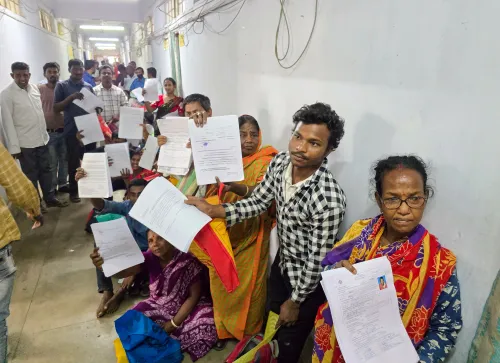
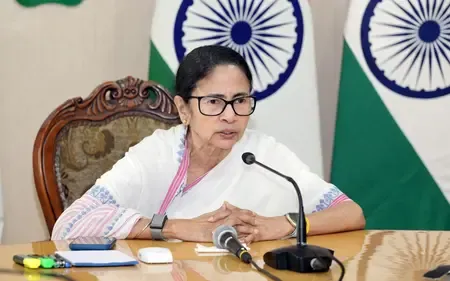
Kolkata, Dec 12 (NationPress) Following the completion of the enumeration phase in the ongoing Special Intensive Revision (SIR) in West Bengal, a significant number of excludable voters has emerged in the Assembly constituencies represented by prominent members of the state Cabinet, including the Chief Minister Mamata Banerjee.
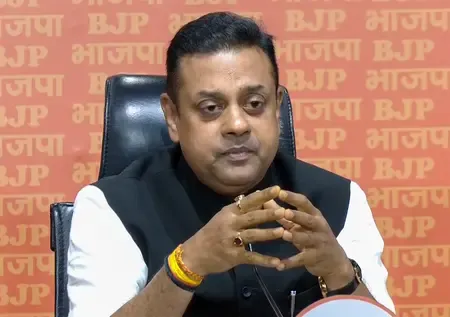
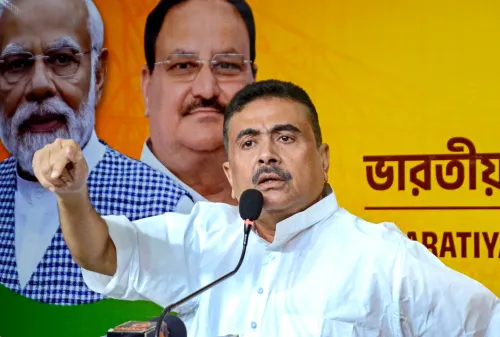
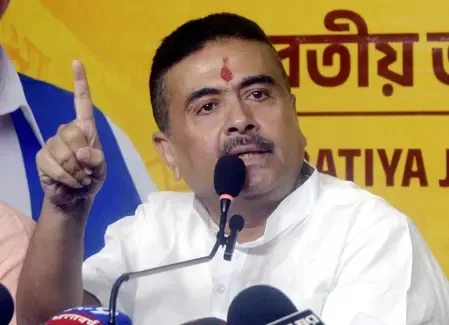
In stark contrast, the Assembly constituencies represented by BJP legislators, including the Leader of Opposition (LoP) Suvendu Adhikari, show a comparatively lower count of excludable voters.
For instance, in the Bhabanipur constituency of Kolkata, where Mamata Banerjee serves as the elected representative, a total of 44,787 voters have been marked as excludable.
The Kolkata Port Assembly constituency, represented by the Minister for Municipal Affairs and Urban Development and Kolkata Mayor Firhad Hakim, has an even higher number of 63,730 identified excludable voters.
Similarly, the Behala (Paschim) constituency in South 24 Parganas district, with former Education Minister and Trinamool Congress Secretary General Partha Chatterjee as its legislator, has 52,247 excludable voters.
In the Dum Dum Uttar constituency, there are 33,912 excludable voters, while Dum Dum constituency has 33,862 and Tollygunge constituency has 35,309 excludable voters, represented by State Finance Minister Chandrima Bhattacharya, State Education Minister Bratya Basu, and State Power Minister Aroop Biswas, respectively.
In comparison, the Nandigram constituency in East Midnapore, where Suvendu Adhikari holds office, has a significantly lower count of just 10,599 excludable voters.
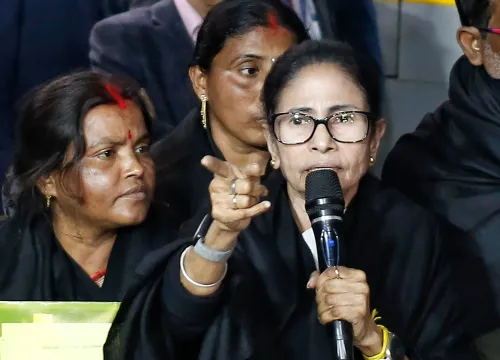
During the 2021 West Bengal Assembly elections, Adhikari won from Nandigram by defeating Chief Minister Mamata Banerjee by a margin of less than 2,000 votes. Mamata later won a by-election in Bhabanipur, securing her position as Chief Minister for a third consecutive term.
In the Siliguri Assembly constituency located in Darjeeling district, where BJP's Chief Whip Shankar Ghosh is elected, the number of excludable voters is 31,181.
Lastly, the Balurghat constituency in North Dinajpur district, represented by BJP legislator and former Chief Economic Advisor Ashok Kumar Lahiri, has 11,219 excludable voters.
Point of View
Showcasing the complexities within the state's political framework.
NationPress
30 Sept 2026
Frequently Asked Questions
What are excludable voters?
Excludable voters are individuals who have been identified as ineligible to vote due to various reasons, such as not meeting residency requirements or not having the necessary documentation.
Why is the number of excludable voters significant?
The number of excludable voters can impact electoral outcomes, as it reflects the health of the electoral rolls and can influence the representation of different political parties.
How does this data affect the current political landscape in West Bengal?
The disparity in excludable voters between constituencies represented by different parties indicates potential challenges for the BJP in gaining traction in regions dominated by the Trinamool Congress.