Did the Maharashtra Assembly Just Pass a Bill to Alleviate Stamp Duty Disputes?
Synopsis
On December 12, the Maharashtra Assembly took a significant step by unanimously approving a bill aimed at simplifying the appeal process for stamp duty disputes, enabling citizens to seek relief directly from the state government. This legislative move is expected to alleviate the burden on the High Court and expedite the resolution of pending cases.
Key Takeaways
Maharashtra Assembly passed a unanimous bill for stamp duty relief.
Citizens can now appeal directly to the state government .
A fee of Rs 1,000 is applicable for appeals.
The new provision aims to expedite pending cases .
This amendment promotes efficient administrative processes .
Nagpur, Dec 12 (NationPress) The Maharashtra Assembly has passed a bill on Friday with unanimous support to amend the Maharashtra Stamp Duty (Second Amendment) Bill 2025, aimed at offering relief to the general populace regarding stamp duty disputes.
This legislation introduces a straightforward process for citizens to appeal directly to the state government concerning stamp duty disputes, eliminating the need to approach the high court.
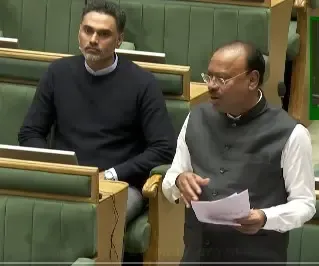
State Revenue Minister Chandrashekhar Bawankule presented this bill in the assembly.
During the discussions, MLAs Bhaskar Jadhav and Atul Bhatkhalkar shared their insights, leading to the bill's unanimous approval.
According to Minister Bawankule, the existing provisions under the 'Maharashtra Stamp Act, 1958' mandated that orders issued by the Chief Controlling Revenue Officer could only be contested by filing a writ petition in the High Court. This not only increased the case load on the High Court but also raised legal costs for the involved parties. Moreover, the state's revenue was delayed due to prolonged court cases. To address this, a new 'Section 53B' has been incorporated.
The new provision allows any individual dissatisfied with the Chief Comptroller Revenue Authority's order to file an appeal with the state government within 60 days of receiving the order.
A nominal fee of Rs 1,000 is required for this appeal.
The state government will consider both perspectives and render a definitive decision, which will be conclusive.
Minister Bawankule expressed optimism that this amendment will significantly decrease the backlog of cases in the High Court, saving both time and money for ordinary citizens.
Additionally, it is anticipated to expedite the release of the state's withheld revenue, as outlined in the bill's statement of purpose.
He further noted that the bill will also bring about necessary changes in Section 32C and Section 53.
This bill is a crucial step towards ensuring swift justice for citizens and simplifying administrative procedures.
Point of View
This legislative change signifies a progressive step toward reducing judicial congestion and enhancing citizen accessibility to government resolutions. It reflects a growing commitment to streamline administrative processes, ensuring that the public can navigate disputes more effectively.
NationPress
6 Oct 2026
Frequently Asked Questions
What does the new bill entail?
The bill allows citizens to appeal directly to the state government regarding stamp duty disputes instead of going through the high court, thereby simplifying the process.
How much is the appeal fee?
The appeal fee is set at Rs 1,000.
What is the timeframe for filing an appeal?
Individuals can file an appeal within 60 days from the date they receive the order from the Chief Comptroller Revenue Authority.
Who introduced this bill?
The bill was introduced by State Revenue Minister Chandrashekhar Bawankule.
What will happen to the decisions made by the state government?
The decisions made by the state government will be final and conclusive.