Will the RBI's Second Tranche of OMO Buys at Rs 50,000 Crore Impact the Market?
Synopsis
The RBI's upcoming second tranche of OMO buys worth Rs 50,000 crore is set to stimulate the market. Scheduled for December 18, this move aims to enhance liquidity in the banking system. Will this decision bolster economic growth? Keep reading to find out more about its implications.
Key Takeaways
RBI announces Rs 50,000 crore OMO purchases.
Scheduled auction on December 18.
Results to be published the same day.
Includes multiple benchmark securities.
Goal is to enhance banking liquidity.
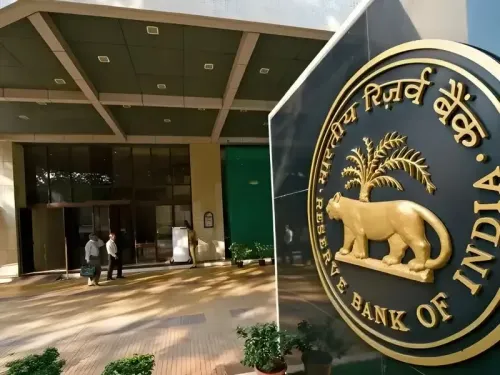
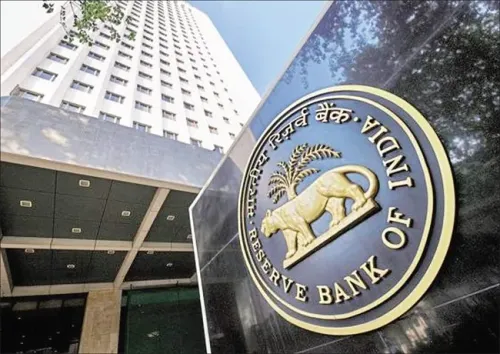
New Delhi, Dec 12 (NationPress) On Friday, the Reserve Bank of India (RBI) announced its plans to execute the second phase of Open Market Operation (OMO) purchases, which will involve government securities valued at Rs 50,000 crore, slated for December 18.
The central bank indicated that the auction is scheduled for December 18, running from 9:30 to 10:30 a.m., via its core banking solution platform, E-Kuber.
Results from the auction will be disclosed on the same day.
Successful bidders are required to have the necessary securities available in their Subsidiary General Ledger accounts by 12 p.m. on December 19.
This purchase will encompass several benchmark securities, including 6.75% GS 2029, 6.10% GS 2031, 6.54% GS 2032, 7.18% GS 2033, 6.33% GS 2035, 7.23% GS 2039, and 7.09% GS 2054, as per the RBI's announcement.
OMO transactions are generally utilized by the RBI to bolster sustainable liquidity within the banking system.
Previously, on Wednesday, the RBI purchased government bonds totaling Rs 50,000 crore from the market to enhance liquidity in the banking sector and stimulate economic growth.
This initiative is part of the RBI's monetary policy strategy unveiled last week, aimed at introducing Rs 1 lakh crore into the market through government securities purchases, alongside an additional $5 billion equivalent via a foreign exchange swap arrangement.
The RBI has been actively selling US dollars in the market to stabilize the rupee, which has led to a significant reduction in cash availability within the banking system, potentially causing interest rates to rise.
Reserve Bank Governor Sanjay Malhotra stated on Friday that the RBI is committed to maintaining adequate liquidity in the banking sector without specifically aiming for surplus levels of approximately 1% of net demand and time liabilities (NDTL).
“Monetary transmission is underway, and we will ensure sufficient liquidity to facilitate it,” he remarked.
Malhotra noted that the current liquidity in the banking system sometimes surpasses 1% of NDTL, fluctuating between 0.6% and 1%, with occasional peaks.
“The precise figure, whether 0.5%, 0.6%, or 1%, is less significant. What truly matters is that banks maintain adequate reserves for smooth operation,” he added.
Point of View
I believe the RBI's proactive measures, including the second tranche of OMO purchases, reflect a strategic approach to stabilize and enhance liquidity in the banking system. This initiative is crucial for supporting economic growth amid ongoing challenges. The RBI's commitment to maintaining sufficient liquidity without explicitly targeting surplus levels demonstrates a balanced approach to monetary policy.
NationPress
6 Oct 2026
Frequently Asked Questions
What is the purpose of the RBI's OMO purchases?
The RBI's OMO purchases aim to inject liquidity into the banking system, thereby supporting economic growth.
When will the auction for the second tranche of OMO purchases take place?
The auction for the second tranche of OMO purchases is scheduled for December 18, between 9:30 and 10:30 a.m.
What securities will be included in the OMO purchases?
The OMO purchases will include several benchmark securities such as 6.75% GS 2029, 6.10% GS 2031, and others.
How will the results of the auction be communicated?
The results of the auction will be published on the same day, December 18.
What does the RBI's commitment to liquidity mean for the banking system?
The RBI's commitment to liquidity means that it will ensure banks have adequate reserves to operate smoothly, supporting monetary transmission.