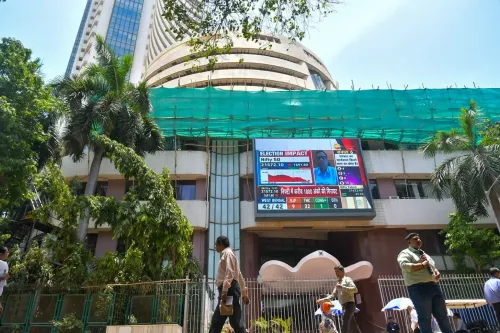
Will the Indian Stock Market Sustain Its Bullish Trend Amidst FII Inflows?
Synopsis
In a week marked by slight losses, the Indian stock market managed a surprising turnaround, buoyed by a rate cut from the US Federal Reserve. With optimism surrounding FII inflows and trade progress, analysts predict a positive outlook, despite ongoing challenges. Discover how these factors interplay in the dynamic landscape of Indian equities.
Key Takeaways
Nifty rose by 0.57% on the last trading day.
US Fed's rate cut eased liquidity concerns.
Broader indices, including Nifty Midcap100 and Smallcap100, underperformed.
Sector performance was mixed; selective buying in certain areas.
Market outlook remains positive but sensitive to external factors.
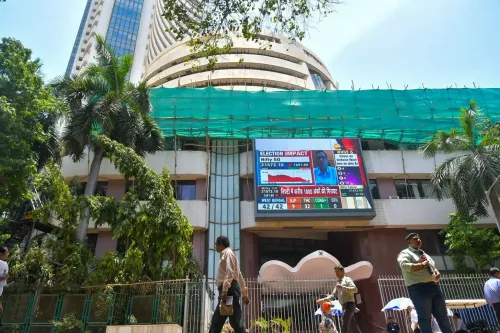
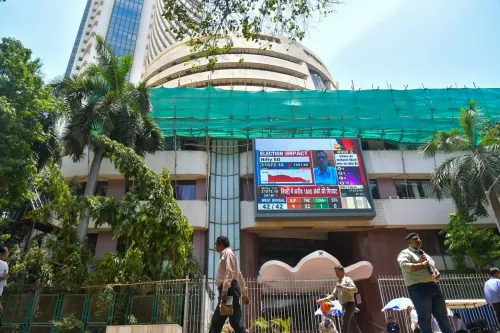
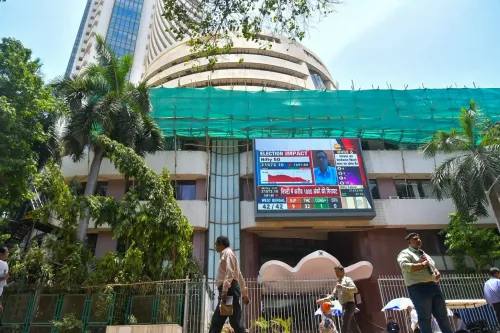
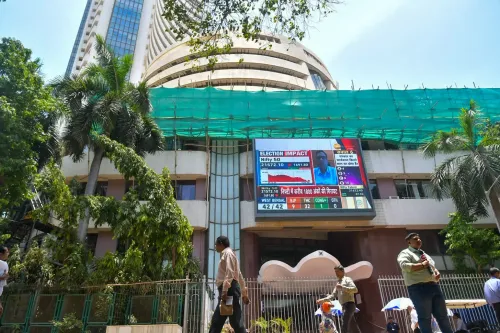
Mumbai, Dec 13 (NationPress) The Indian equity market experienced slight losses throughout the week due to ongoing FII outflows and the prevailing uncertainty regarding US-India trade discussions.
Nevertheless, the trading week concluded on an optimistic note with Nifty climbing by 0.57% on the final trading day, following a 25-basis point rate reduction announced by the US Federal Reserve.
The key indices, Nifty and Sensex, recorded declines of 0.36% and 0.17% respectively, wrapping up the week at 26,046 and 85,267.
The Indian stock market commenced the week on a low note, influenced by a depreciating rupee and negative global sentiments stemming from rising Japanese bond yields.
The US Fed's rate cut later on alleviated liquidity worries, enhancing expectations for renewed FII investments. Supported by central bank policies, consistent domestic investments, and optimism regarding trade advancements despite vague timelines, the market ended the week on a strong footing.
In November, India's inflation rate based on the Consumer Price Index (CPI) was projected at 0.71%, slightly up from 0.25% in October, as reported by the Ministry of Statistics.
Broader indices lagged behind, with the Nifty Midcap100 and Smallcap100 declining 0.51% and 0.67% respectively over the week.
The performance across sectors was varied; while IT faced challenges, there was selective buying in PSU banks, real estate, and consumer durables.
Hrishikesh Yedve, AVP of Technical and Derivative Research at Asit C. Mehta Investment Intermediates, pointed out that the weekly chart of Nifty indicates buying interest at lower levels.
Nifty is facing strong resistance at 26,200 and 26,325, while the support zone is pegged at 25,700, he explained.
Experts believe that the market outlook remains positive in the near term, although it is sensitive to factors like rupee stability, FII flow trends, clarity on trade agreements, and signals from major global central banks.
Despite risks associated with currency fluctuations and global trade uncertainties, improving visibility of earnings along with liquidity support offer a favorable environment and downside protection, they noted.
Point of View
It's critical to recognize the evolving dynamics of the Indian stock market. The recent fluctuations, influenced by global economic policies and local factors, highlight both risks and opportunities for investors. While optimism prevails, a cautious approach is essential to navigate these uncertain waters, ensuring that strategies align with market movements and investor sentiments.
NationPress
26 Sept 2026
Frequently Asked Questions
What factors influenced the Indian stock market this week?
The Indian stock market was influenced by sustained FII outflows, uncertainties surrounding US-India trade negotiations, and a rate cut by the US Federal Reserve.
What was the performance of Nifty and Sensex during the week?
Nifty and Sensex experienced marginal losses of 0.36% and 0.17% respectively, closing at 26,046 and 85,267.
How did the US Federal Reserve's actions impact the market?
The US Federal Reserve's announcement of a 25-basis point rate cut eased liquidity concerns, fostering hopes for renewed FII inflows.
What is the outlook for the Indian stock market?
Analysts suggest a generally positive outlook for the market, albeit sensitive to rupee stability, FII flow trends, and trade agreement clarity.
Which sectors showed resilience during the week?
PSU banks, real estate, and consumer durables showed selective buying interest, while the IT sector faced pressure.