How Many Jan Aushadhi Kendras Have Been Established Across India?
Synopsis
As the Indian government continues to expand healthcare accessibility, the establishment of Jan Aushadhi Kendras (JAKs) has reached over 17,610 nationwide. This initiative aims to provide affordable generic medicines, significantly reducing healthcare costs for citizens.
Key Takeaways
17,610 Jan Aushadhi Kendras opened across India as of November 30, 2025.
Uttar Pradesh has the highest number of JAKs.
Significant funds allocated for the expansion of the scheme, rising from Rs 65 crore to Rs 284.50 crore .
JAKs provide affordable generic medicines .
Goal to reach 25,000 JAKs by March 2027.
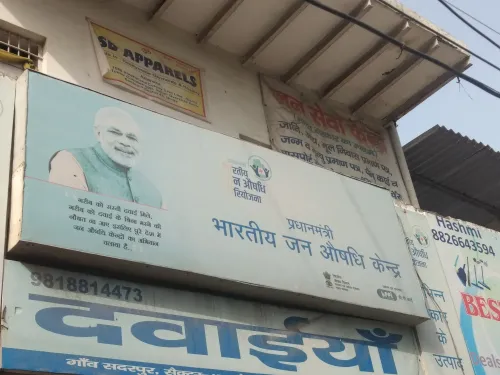
New Delhi, Dec 13 (NationPress) As of November 30, a remarkable total of 17,610 Jan Aushadhi Kendras (JAKs) have been established throughout India, as reported to the Parliament by the government.
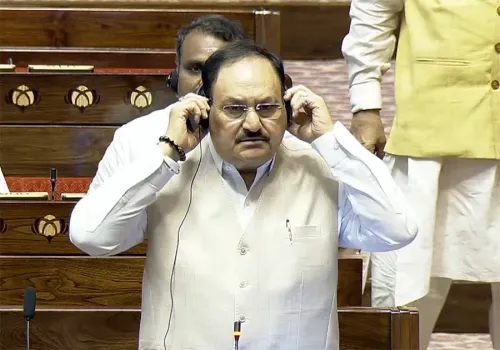
In a formal response in the Lok Sabha, the Union Minister of State in the Ministry of Chemicals and Fertilizers, Anupriya Patel, disclosed the state-wise and district-wise statistics of the JAKs, along with information regarding the funds allocated and utilized under the program over the last five years.
According to Patel, “As of 30.11.2025, a total of 17,610 Jan Aushadhi Kendras (JAKs) have been inaugurated nationwide under the Pradhan Mantri Bhartiya Janaushadhi Pariyojana (PMBJP) scheme.”
Furthermore, she noted that the total sales under this initiative amounted to Rs 6,290.23 crore in MRP value over the past five financial years.
Uttar Pradesh leads with the highest number of JAKs at 3,731, followed by Kerala (1,685), Karnataka (1,543), and Tamil Nadu (1,483).
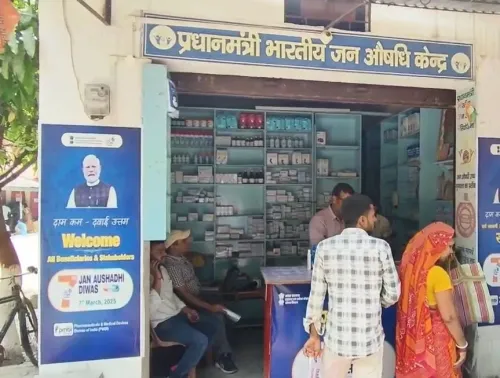
Launched in 2014 with a mere 80 centers, the flagship initiative, the Pradhan Mantri Bhartiya Janaushadhi Pariyojana (PMBJP), aims to make essential medicines more accessible to the public, reducing out-of-pocket expenses. These government-run pharmacies offer generic medications at lower prices, without compromising on quality and effectiveness compared to expensive branded alternatives.
Patel highlighted that the funds allocated for JAKs increased significantly from Rs 65 crore in 2020-21 to Rs 284.50 crore in 2024-25, with Rs 182.73 crore utilized during this period.
Incentives for JAK owners include a 10% monthly purchase incentive capped at Rs 10,000 per month, along with an additional incentive for maintaining a stock of 200 high-demand products.
To expand the scheme's reach, the government aims to establish 25,000 JAKs by March 2027.
Applications for opening JAKs are invited from individual entrepreneurs, non-governmental organizations, societies, trusts, firms, and private companies.
Point of View
The establishment of Jan Aushadhi Kendras signifies a crucial step toward equitable healthcare in India. As these centers grow, they not only provide essential medicines at lower costs but also empower individuals to take charge of their health without financial strain. This initiative aligns with the government's commitment to enhancing public welfare and ensuring that no citizen is denied access to necessary healthcare.
NationPress
30 Sept 2026
Frequently Asked Questions
What are Jan Aushadhi Kendras?
Jan Aushadhi Kendras are government-run pharmacies that provide affordable generic medicines, ensuring quality healthcare access for all.
How many Jan Aushadhi Kendras are there in India?
As of November 30, 2025, there are a total of 17,610 Jan Aushadhi Kendras across India.
What is the goal of the PMBJP scheme?
The goal of the Pradhan Mantri Bhartiya Janaushadhi Pariyojana (PMBJP) scheme is to make essential medicines accessible at lower prices, reducing out-of-pocket expenses for citizens.
Who can apply to open a Jan Aushadhi Kendra?
Applications to open a Jan Aushadhi Kendra can be submitted by individual entrepreneurs, NGOs, trusts, societies, firms, and private companies.
What incentives are available for JAK owners?
JAK owners receive a 10% monthly purchase incentive, capped at Rs 10,000, and additional incentives for maintaining a stock of 200 high-demand products.