Mansukh Mandaviya: Govt is pro-poor, pro-farmer and industry-friendly
Synopsis
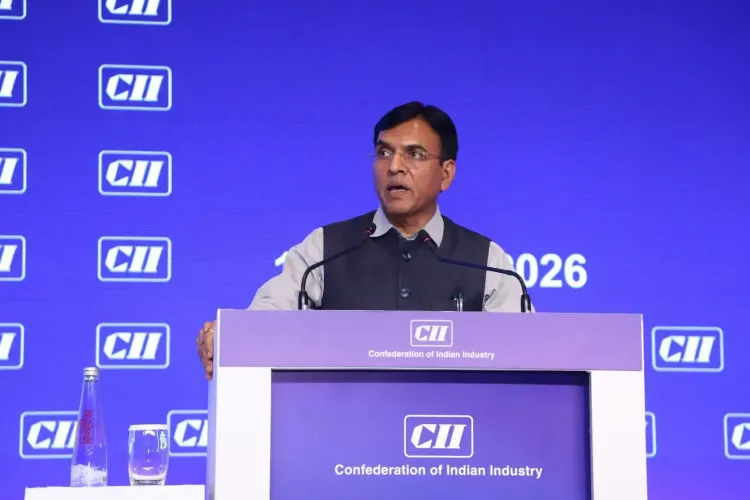
At the CII Annual Business Summit 2026, Labour Minister Mansukh Mandaviya made the case that being pro-industry and pro-labour are not opposing goals — and that India's path to a developed economy runs through both. With Uday Kotak and Chandrajit Banerjee amplifying the message, the summit signalled a rare moment of alignment between government and industry on the labour reform agenda.
Key Takeaways
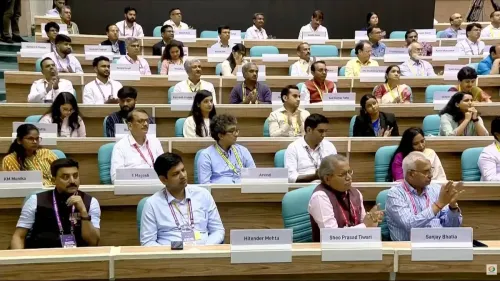
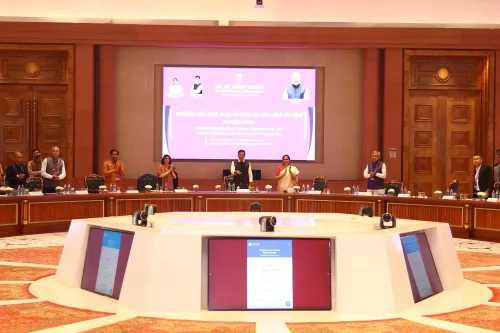
Mansukh Mandaviya addressed the CII Annual Business Summit 2026 in Mumbai on 12 May 2026 .
The minister described the government as simultaneously pro-poor, pro-farmer, and industry-friendly .
Chandrajit Banerjee said rising purchasing power of the working class could drive domestic consumption and boost manufacturing.
Uday Kotak called on India to remain ambitious, disciplined, and prepared for future challenges.
Discussions centred on the Viksit Bharat vision and India's next phase of labour and economic reform.
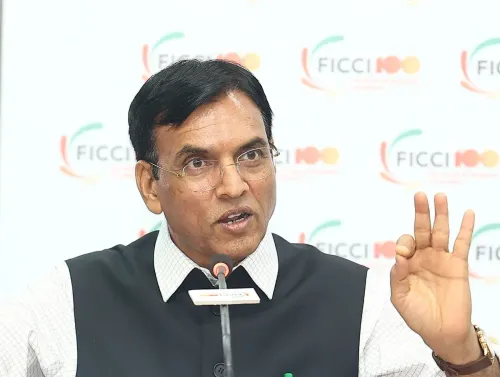
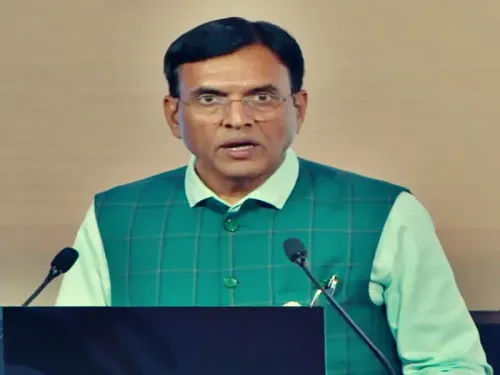
Union Labour and Employment Minister Mansukh Mandaviya on Tuesday, 12 May 2026, said the government's approach to economic growth is centred on balancing the interests of the poor, farmers, industry, and labour — stressing that industry and workers must move together for India's long-term development. Speaking in Mumbai, Mandaviya reaffirmed the Centre's commitment to a growth model that is simultaneously industry-friendly and labour-centric.
What Mandaviya Said
Addressing the Special Plenary VII on Next-Gen Labour Reforms at the CII Annual Business Summit 2026, Mandaviya was direct about the government's dual mandate. "Our government is pro-poor and pro-farmer, but it is also an industry-friendly government," he said.
"It is important that we move forward by being both pro-industry and pro-labour. Industry and labour must be intertwined, moving together towards a shared future," the minister added. He underlined that sustainable economic progress can only be achieved when industries thrive alongside the workforce that powers them.
The Viksit Bharat Vision
The summit's discussions also touched on India's broader ambition of becoming a developed economy under the Viksit Bharat framework. Speakers highlighted the evolving role of India's workforce as a central pillar in that transition, connecting labour reform to the country's long-term competitiveness.
Chandrajit Banerjee, speaking during another session, argued that the rising purchasing power of India's working class could become a significant driver of domestic demand and manufacturing growth. "The improving purchasing power of the Indian working class has the potential to drive domestic consumption, which, in turn, will boost manufacturing and help make India Viksit and Atma Nirbhar," Banerjee said.
Industry Leaders Weigh In
Uday Kotak, former president of CII and founder of Kotak Mahindra Bank, offered a note of measured ambition, acknowledging India's strong growth trajectory while cautioning against complacency. "India's growth journey over the last few decades has been remarkable, but this is also the time to remain ambitious, disciplined and prepared for future challenges," Kotak said.
Other industry leaders at the summit echoed the importance of preparing India for the next phase of economic transformation amid shifting global dynamics, including supply chain realignments and evolving trade partnerships.
Why This Matters
The remarks come at a time when India is navigating a delicate balance between attracting foreign and domestic investment and protecting the interests of a vast informal workforce. Labour reform has historically been a contentious area, with industry bodies pushing for greater flexibility and trade unions demanding stronger worker protections. Mandaviya's framing — that the two need not be in conflict — signals the Centre's intent to pursue a consensus-driven reform agenda ahead of what is expected to be a busy legislative calendar.
The CII Annual Business Summit 2026 is expected to produce a set of policy recommendations on next-generation labour reforms that will be submitted to the government in the coming weeks.
Point of View
Who make up over 90% of India's workforce and are conspicuously absent from this conversation. Kotak's call for discipline and ambition is well-taken, but without structural reforms that close the formal-informal divide, India's manufacturing ambitions risk being built on a workforce that remains underprotected and underpaid.
NationPress
3 Oct 2026
Frequently Asked Questions
What did Mansukh Mandaviya say at the CII Annual Business Summit 2026?
Labour Minister Mansukh Mandaviya said the government is pro-poor, pro-farmer, and industry-friendly, and that industry and labour must move together towards a shared future. He was speaking at the Special Plenary on Next-Gen Labour Reforms in Mumbai on 12 May 2026.
What is the CII Annual Business Summit 2026?
It is an annual gathering of industry leaders, policymakers, and business executives organised by the Confederation of Indian Industry (CII). The 2026 edition in Mumbai included sessions on labour reforms, economic transformation, and the Viksit Bharat vision.
What did Uday Kotak say at the summit?
Kotak Mahindra Bank founder and former CII president Uday Kotak said India's growth journey over recent decades has been remarkable, but urged the country to remain ambitious, disciplined, and prepared for future challenges.
How does this relate to the Viksit Bharat vision?
Speakers at the summit linked next-generation labour reforms directly to India's goal of becoming a developed economy under the Viksit Bharat framework, arguing that a skilled, well-compensated workforce is essential to achieving that target.
What did Chandrajit Banerjee say about India's working class?
Banerjee said the improving purchasing power of India's working class has the potential to drive domestic consumption, boost manufacturing, and help make India self-reliant and developed.