Mandaviya hosts 12th BRICS Labour Ministers' Meet in Hyderabad
Synopsis
Union Minister Mansukh Mandaviya hosted the 12th BRICS Labour and Employment Ministers' Meeting in Hyderabad on 15 July 2026, welcoming delegates from member nations to advance multilateral cooperation on employment, skilling, and social protection among emerging economies.
Key Takeaways
Union Minister Mansukh Mandaviya hosted the 12th BRICS Labour and Employment Ministers' Meeting in Hyderabad on 15 July 2026 .
BRICS is a grouping of Brazil, Russia, India, China, and South Africa , established in 2009 to promote cooperation among emerging markets.
India previously hosted the BRICS Labour and Employment Ministers' Meeting in 2016 , focusing on job creation and social security.
Key themes across BRICS labour forums include employment formalisation, post-pandemic recovery, digitalisation of work, and social protection frameworks.
Outcomes from the meeting are expected to feed into deliberations at the next BRICS Leaders' Summit .
Hyderabad was chosen as the host city owing to its convention infrastructure and strong international connectivity.
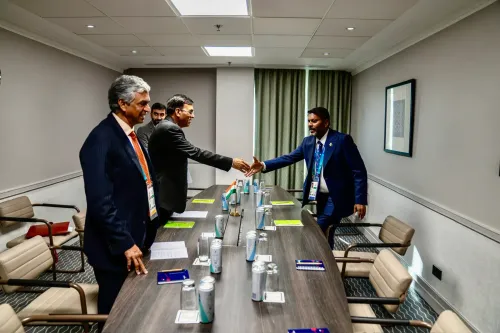
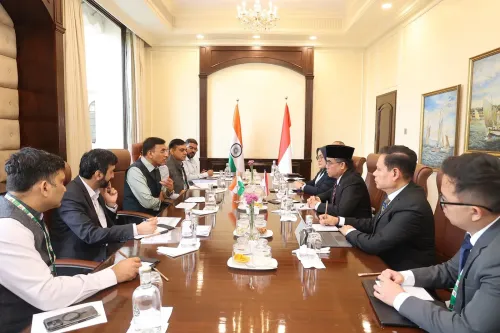
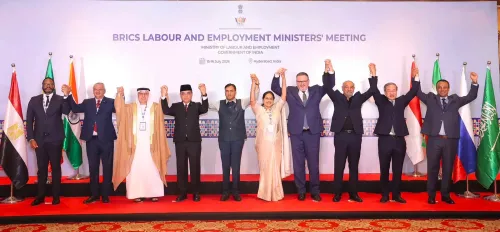
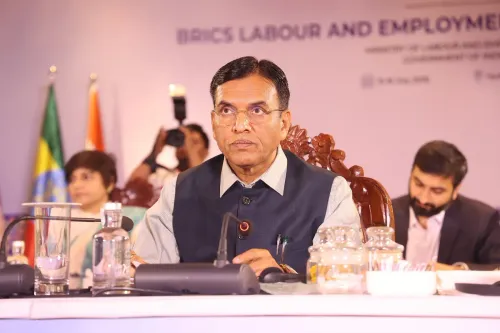
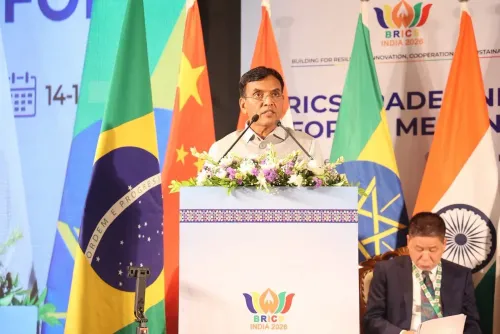
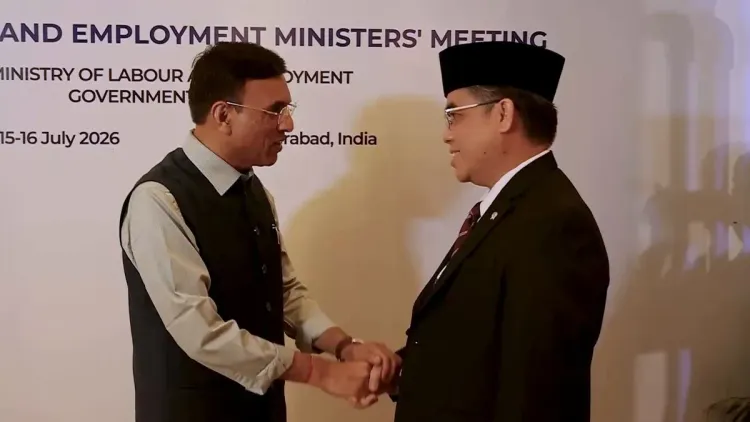
Union Labour and Sports Minister Mansukh Mandaviya on Wednesday, 15 July 2026, welcomed delegates from BRICS nations to the 12th BRICS Labour and Employment Ministers' Meeting hosted in Hyderabad, marking a significant multilateral engagement on employment and labour cooperation among emerging economies.
Context
The meeting brought together labour and employment ministers from the BRICS grouping — an intergovernmental bloc comprising Brazil, Russia, India, China, and South Africa, formed in 2009 to foster economic and political cooperation among major emerging markets. Hyderabad, the capital of Telangana, served as the venue, leveraging its established convention infrastructure and strong air connectivity to host senior international delegates.
Minister Mandaviya extended what he described as 'the warmth of India's hospitality' to the assembled ministers and delegates, signalling India's intent to position itself as a constructive and welcoming host within the BRICS framework.
Policy Backdrop
India has a long-standing tradition of using BRICS ministerial platforms to advance discussions on employment formalisation, skilling, and social protection. The country previously hosted the BRICS Labour and Employment Ministers' Meeting in 2016 during an earlier presidency cycle, where the focus centred on job creation and social security frameworks.
Successive BRICS labour meetings have addressed pressing themes including post-pandemic labour market recovery and the growing impact of digitalisation and automation on jobs across member economies. The grouping's recent membership expansion has further broadened the range of national labour models and policy perspectives represented at such forums, making consensus-building both more complex and more consequential.
Stakeholders and Impact
The meeting holds direct relevance for workers across BRICS economies, whose collective labour forces represent a substantial share of the global workforce. Labour ministries from member nations use these platforms to exchange best practices on social security portability, gig economy regulation, and skills recognition frameworks that can ease cross-border employment.
For India specifically, the hosting role provides an opportunity to showcase domestic labour reforms and position Indian policy models — particularly in areas of formalisation and digital labour market infrastructure — as reference points for other emerging economies. Hyderabad's own profile as a technology and services hub lends a fitting backdrop to discussions on the future of work.
What's Next
Attention will now turn to the final declaration expected to emerge from the 12th ministerial meeting, which could include joint commitments on employment generation, social protection floors, and digital skilling. Any working groups constituted at this meeting are likely to report their findings ahead of the next BRICS Leaders' Summit.
Outcomes from this labour ministers' forum may also feed into India's broader multilateral legacy on employment issues, reinforcing positions articulated during previous international engagements. The meeting underscores India's continued commitment to shaping the global labour policy agenda through multilateral platforms.
Point of View
The government signals that labour diplomacy is now a meaningful strand of its foreign policy posture. The meeting also arrives at a moment when the expanded BRICS grouping is navigating divergent labour market models, making India's role as a consensus-builder particularly significant. The outcomes here could quietly shape the employment chapter of the next BRICS Leaders' Summit declaration.
NationPress
14 Oct 2026
Frequently Asked Questions
What is the 12th BRICS Labour and Employment Ministers' Meeting?
It is a ministerial-level forum where labour and employment ministers from BRICS nations — Brazil, Russia, India, China, and South Africa — meet to coordinate on employment policy, social protection, and skilling. The 12th edition was hosted by India in Hyderabad on 15 July 2026.
Who hosted the BRICS Labour Ministers' Meeting in 2026?
Union Minister of Labour and Employment Mansukh Mandaviya hosted the meeting on behalf of India, welcoming delegates in Hyderabad on 15 July 2026.
Why was Hyderabad chosen for the BRICS Labour Ministers' Meeting?
Hyderabad, the capital of Telangana, is a frequent host of multilateral ministerial meetings due to its well-developed convention infrastructure and strong domestic and international air connectivity.
Has India hosted a BRICS Labour Ministers' Meeting before?
Yes. India previously hosted the BRICS Labour and Employment Ministers' Meeting in 2016 during an earlier BRICS presidency cycle, with discussions centred on job creation and social security frameworks.
What outcomes are expected from the 12th BRICS Labour Ministers' Meeting?
A final joint declaration covering themes such as employment formalisation, digital skilling, and social protection is anticipated. Working groups formed at the meeting may also report to the next BRICS Leaders' Summit.