Mandaviya Chairs BRICS Labour Meet, India Pushes BRICS CONNECT
Synopsis
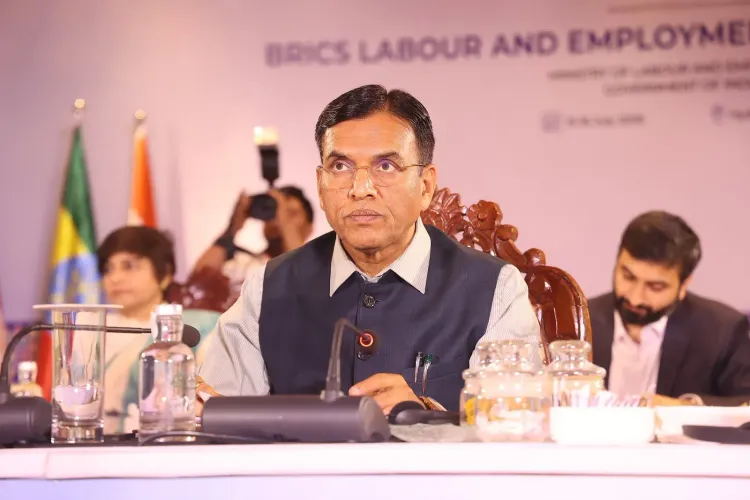
Union Minister Mansukh Mandaviya chaired the 12th BRICS Labour and Employment Ministers' Meeting in Hyderabad on 15 July 2026, securing consensus adoption of a forward-looking declaration and welcoming BRICS CONNECT, India's proposed platform for labour policy knowledge sharing across BRICS nations.
Key Takeaways
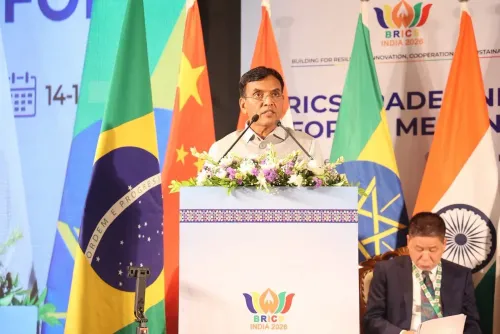
Mansukh Mandaviya chaired the 12th BRICS Labour and Employment Ministers' Meeting in Hyderabad on 15 July 2026 .
A forward-looking declaration was adopted by consensus under India's BRICS Chairship .
BRICS CONNECT , an India-proposed collaborative platform for knowledge sharing among BRICS labour ministries, was welcomed by consensus.
India's chairship priorities included social security, women's workforce participation, skilling, and digital technologies for workers' welfare.
The meeting was framed around PM Narendra Modi's 'Humanity First' vision for India's multilateral engagement.
Outcomes are expected to feed into the broader BRICS Summit process, with implementation of BRICS CONNECT to be closely tracked.
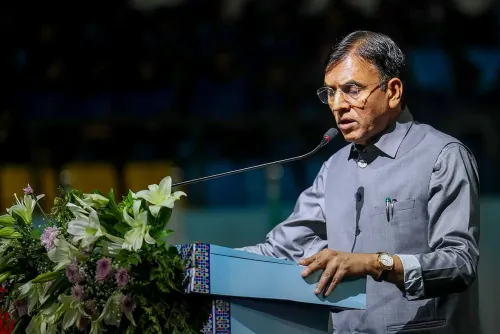
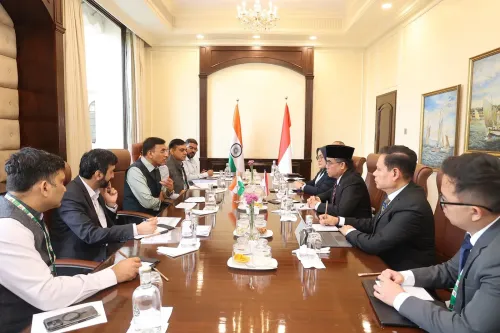
Union Labour and Sports Minister Mansukh Mandaviya chaired the 12th BRICS Labour and Employment Ministers' Meeting in Hyderabad on Wednesday, 15 July 2026, steering member nations toward a consensus declaration on the future of work. India, holding the BRICS Chairship, used the platform to advance its priorities of social security, women's workforce participation, skilling, and digital technologies for workers' welfare. The meeting concluded with the adoption of a forward-looking declaration and the formal welcome of BRICS CONNECT, an India-proposed knowledge-sharing initiative.
Context
Mandaviya announced the outcomes on X, stating that the meeting was 'guided by the vision of PM Shri Narendra Modi ji and the spirit of Humanity First.' He described the adopted declaration as a 'landmark' document that 'cements BRICS as an effective forum for building an inclusive, resilient, and people-centric future of work.' The minister also expressed satisfaction that BRICS CONNECT — a platform for collaborative knowledge exchange among BRICS labour ministries — was welcomed by consensus.
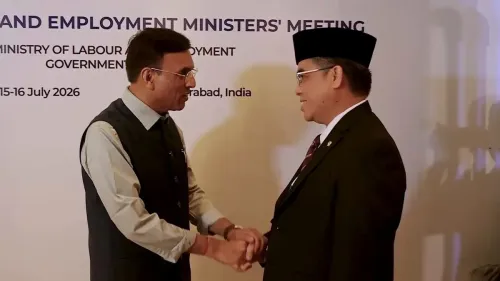
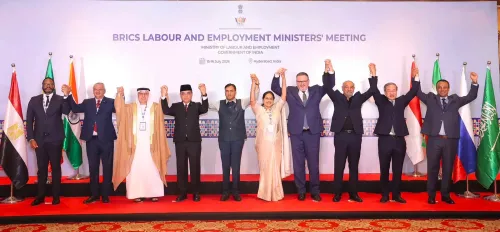
The meeting brought together Labour and Employment Ministers from BRICS nations to deliberate on shared challenges in employment, social protection, and workforce development. Hyderabad, a major economic and technology hub in Telangana, served as the host city for the ministerial gathering.
Policy Backdrop
India's BRICS Chairship has consistently emphasised an agenda centred on inclusive growth, digital public infrastructure, and human capital development — themes that align closely with the domestic policy direction under Prime Minister Narendra Modi. The 'Humanity First' framework has been a recurring articulation of India's approach to multilateral engagement, prioritising people-centric outcomes over purely macroeconomic metrics.
BRICS forums have evolved considerably over the years, expanding from their original macroeconomic and trade focus to encompass labour markets, social security systems, and skills ecosystems. The Labour and Employment Ministers' Meeting is part of this broader institutional architecture, providing a dedicated space for cooperation on workforce issues across major emerging economies. Consensus declarations at such forums signal collective intent, even as implementation remains a national prerogative.
Stakeholders and Impact
BRICS CONNECT, as proposed by India, is designed to serve as a collaborative platform enabling knowledge sharing among BRICS labour ministries. Its adoption by consensus indicates that member nations have agreed in principle to formalise cooperation on labour policy learnings, best practices, and institutional frameworks. Workers across BRICS nations — particularly those in the informal sector, women entering the workforce, and youth seeking skills training — are the intended beneficiaries of the agenda advanced at this meeting.
Women's workforce participation received specific emphasis under India's chairship, reflecting a broader domestic and international policy focus on closing gender gaps in employment. Digital technologies for workers' welfare — encompassing everything from social security delivery to skilling platforms — also featured prominently, consistent with India's push for digital public infrastructure in multilateral settings.
What's Next
The adoption of the declaration under India's Chairship sets the stage for follow-up action at the next BRICS Summit, where leaders are expected to take stock of ministerial-level outcomes. The practical implementation of BRICS CONNECT — including its governance structure, participating institutions, and knowledge-exchange mechanisms — will be closely watched as a test of whether the consensus translates into operational cooperation. India's ability to shepherd these outcomes through the broader BRICS process will be a measure of its multilateral influence during this chairship cycle.
Point of View
Social security, women's employment — into multilateral frameworks. Mandaviya's chairing of the ministerial meeting in Hyderabad, rather than New Delhi, also signals an intent to project India's regional economic hubs onto the global stage. The consensus declaration, while non-binding, gives India a diplomatic win it can reference at the upcoming BRICS Summit. The broader pattern suggests India is increasingly using multilateral forums not just for dialogue but to seed institutional structures aligned with its own policy architecture.
NationPress
13 Oct 2026
Frequently Asked Questions
What is BRICS CONNECT?
BRICS CONNECT is a collaborative platform proposed by India to facilitate knowledge sharing and strengthen cooperation among BRICS countries on labour and employment matters. It was welcomed by consensus at the 12th BRICS Labour and Employment Ministers' Meeting in Hyderabad on 15 July 2026.
What happened at the 12th BRICS Labour and Employment Ministers' Meeting?
The 12th BRICS Labour and Employment Ministers' Meeting was held in Hyderabad on 15 July 2026, chaired by Union Minister Mansukh Mandaviya. Member nations adopted a forward-looking declaration by consensus and welcomed India's BRICS CONNECT initiative.
What are India's priorities under its BRICS Chairship for labour?
Under its BRICS Chairship, India has prioritised social security, women's workforce participation, skilling, and the use of digital technologies for workers' welfare, framed within PM Narendra Modi's 'Humanity First' vision.
Who is Mansukh Mandaviya?
Mansukh Mandaviya is India's Union Minister of Labour and Employment and Youth Affairs and Sports, and a senior leader of the Bharatiya Janata Party (BJP). He chaired the 12th BRICS Labour and Employment Ministers' Meeting in Hyderabad in July 2026.
What does the BRICS Labour declaration mean for workers?
The consensus declaration adopted under India's BRICS Chairship signals collective intent among BRICS nations to build an inclusive, resilient, and people-centric future of work, with specific focus on social security, skills development, and digital welfare tools for workers across member countries.