BRICS Labour Meet 2026: Mandaviya pledges inclusive, future-ready workforce
Synopsis
At the BRICS Labour Ministers' Meeting in Hyderabad, India showcased a sweeping reform record — 29 laws collapsed into four Labour Codes, 317 million unorganised workers on e-Shram, and a social protection net reaching 1 billion people per ILO estimates. The meeting ended with a collective BRICS Declaration on decent work, with India's Chairship framing the agenda around 'Humanity First'.
Key Takeaways
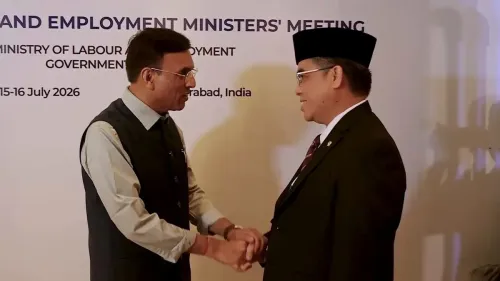
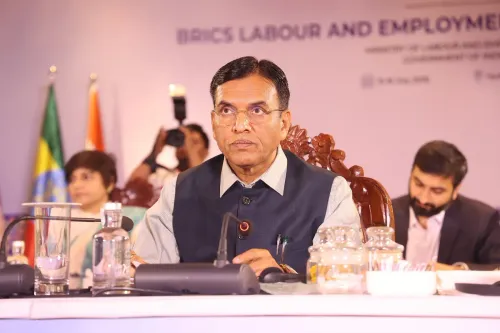
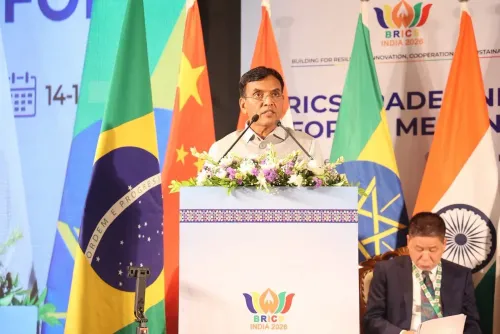
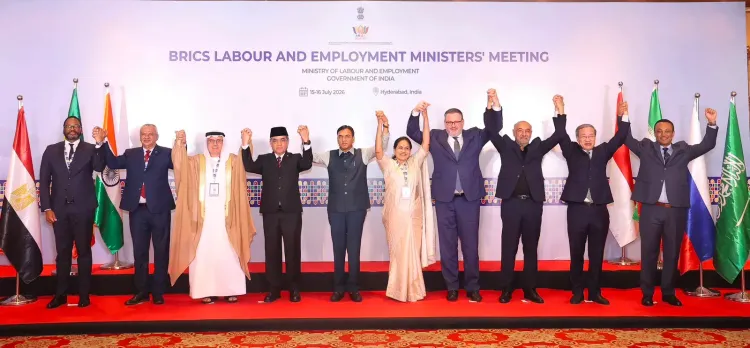
Dr Mansukh Mandaviya addressed the BRICS Labour and Employment Ministers' Meeting in Hyderabad on 15 July 2026 under India's BRICS Chairship 2026 .
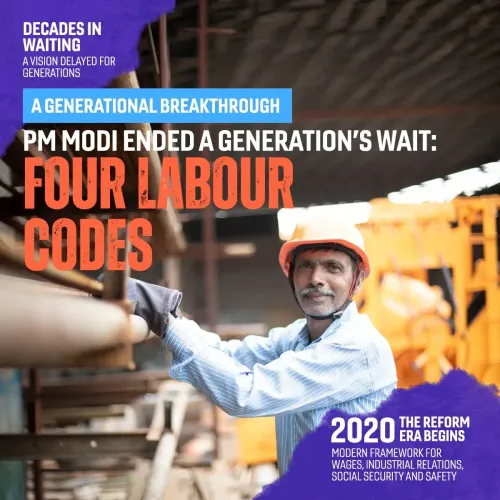
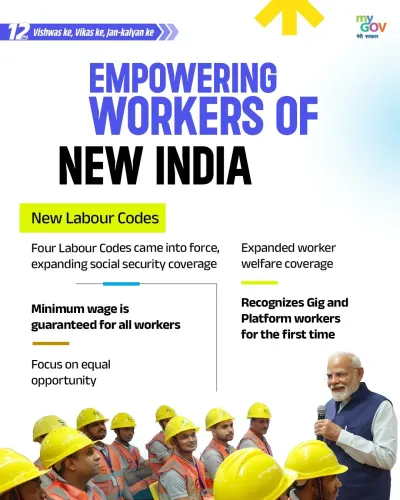
India consolidated 29 labour laws into four Labour Codes in November 2025 , described as a landmark worker-centric reform.
The e-Shram portal has registered over 317 million unorganised workers , enabling welfare access and de-duplication.
India hosts more than 2,100 Global Capability Centres employing 2.35 million professionals and generating nearly USD 98 billion in annual revenue.
The ILO stated India's social protection system now reaches 1 billion people , calling it a model for South-South cooperation.
The meeting concluded with the adoption of the BRICS Labour and Employment Ministers' Declaration on decent work and inclusive growth.
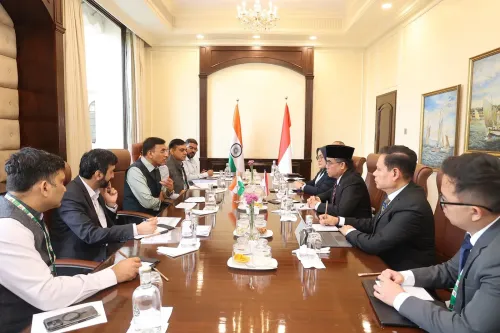
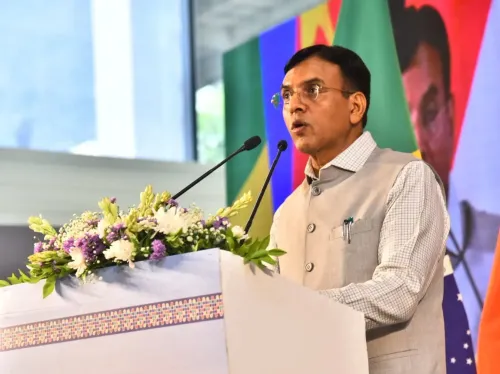
Labour Minister Dr Mansukh Mandaviya on Wednesday, 15 July reaffirmed India's commitment to building resilient, inclusive, and digitally empowered labour markets at the BRICS Labour and Employment Ministers' Meeting held in Hyderabad under India's BRICS Chairship 2026. Addressing fellow ministers, he declared that no worker would be left behind as BRICS nations collectively shape the future of work.
India's Labour Reform Milestones
Dr Mandaviya highlighted that India consolidated 29 outdated labour laws into four modern Labour Codes in November 2025, describing it as a landmark reform that creates a worker-centric ecosystem for the country's 1.4 billion citizens. The minister said the reform marks a decisive shift from a compliance-heavy framework to one that prioritises worker welfare and economic agility.
He further noted that the e-Shram portal has enabled unique identification, de-duplication, and seamless access to welfare benefits for over 317 million registered unorganised workers. The National Career Service portal, he added, integrates job-matching, skills mapping, and counselling — with its flexible digital architecture allowing rapid expansion to emerging worker categories such as platform workers.
Digital Platforms and Global Technology Sharing
India has extended its digital labour infrastructure beyond its own borders, sharing the technology with partner countries including Mauritius. Dr Mandaviya underlined India's efforts to strengthen international labour mobility by connecting its skilled workforce with global opportunities.
He cited a telling indicator of this ambition: India today hosts more than 2,100 Global Capability Centres employing 2.35 million professionals and generating nearly USD 98 billion in annual revenue — a figure that reflects the country's growing role as a hub for high-skill global employment.
ILO Commends India's Social Protection Reach
Gilbert F. Houngbo, Director General of the International Labour Organisation (ILO), commended India's leadership in a video message, noting that the country had placed labour and employment at the heart of the BRICS agenda. He expressed appreciation for India's expanding social security ecosystem.
'According to ILO running estimates, India's social protection system now reaches 1 billion people. This milestone offers lessons that can be shared through South-South cooperation,' Houngbo said. The endorsement from the ILO lends significant weight to India's claims of inclusive governance at a multilateral stage.
BRICS Declaration and What It Commits To
A key outcome of the meeting was the adoption of the BRICS Labour and Employment Ministers' Declaration, which reflects the shared commitment of member nations to promote decent work, strengthen social protection systems, enhance employability, and support inclusive growth. The Declaration also reaffirmed the importance of South-South cooperation and mutual learning in addressing common labour market challenges.
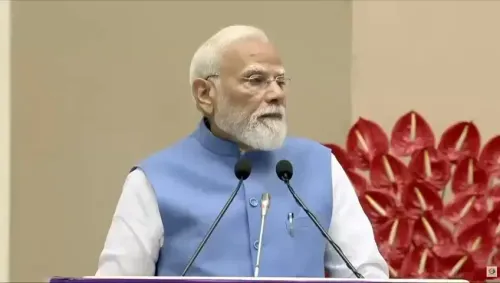
Dr Mandaviya framed India's BRICS Chairship as guided by Prime Minister Narendra Modi's vision of a 'people-centric' approach and the spirit of 'Humanity First' — positioning the Hyderabad meeting as part of a broader diplomatic and developmental agenda. The next steps in implementing the Declaration's commitments will be closely watched by labour advocacy groups and BRICS partner nations alike.
Point of View
Not audited outcomes. The consolidation of 29 laws into four Labour Codes also remains contested domestically, with trade unions arguing that the Codes dilute worker protections even as the government frames them as modernisation. At a multilateral forum, India's digital infrastructure story travels well — the harder question is whether the workers at the bottom of the pyramid feel the difference.
NationPress
14 Oct 2026
Frequently Asked Questions
What was the BRICS Labour and Employment Ministers' Meeting 2026?
It was a ministerial-level meeting held in Hyderabad on 15 July 2026 under India's BRICS Chairship 2026, where labour ministers from BRICS nations discussed decent work, social protection, and the future of employment. The meeting concluded with the adoption of the BRICS Labour and Employment Ministers' Declaration.
What labour reforms did India highlight at the BRICS meeting?
India highlighted the consolidation of 29 outdated labour laws into four modern Labour Codes in November 2025, the e-Shram portal covering over 317 million unorganised workers, and the National Career Service portal for job-matching and skills mapping. India also noted it had shared its digital labour platforms with partner countries including Mauritius.
What did the ILO say about India's social protection system?
ILO Director General Gilbert F. Houngbo said in a video message that, according to ILO running estimates, India's social protection system now reaches 1 billion people — calling it a milestone with lessons for South-South cooperation.
What is the BRICS Labour and Employment Ministers' Declaration?
It is a joint declaration adopted at the Hyderabad meeting, committing BRICS nations to promote decent work, strengthen social protection, enhance employability, support inclusive growth, and deepen labour cooperation. It also reaffirmed the importance of South-South cooperation among member states.
What are India's Global Capability Centres and why were they mentioned?
India's more than 2,100 Global Capability Centres employ 2.35 million professionals and generate nearly USD 98 billion in annual revenue. Dr Mandaviya cited them as evidence of India's ability to connect its skilled workforce with global opportunities and strengthen international labour mobility.