Biomedical Research Career Programme Phase-III: Govt commits ₹1,500 crore
Synopsis
India has committed ₹1,500 crore to Phase-III of its Biomedical Research Career Programme, with ₹500 crore coming from London-based Wellcome Trust — a rare international philanthropic co-investment in Indian science. Set against a bioeconomy that has grown twenty-fold since 2014, this is the Centre's most ambitious push yet to turn research talent into market-ready healthcare solutions.
Key Takeaways
The Central government launched Phase-III of the Biomedical Research Career Programme on 15 July 2025 with a ₹1,500 crore outlay. ₹1,000 crore comes from the Department of Biotechnology ; ₹500 crore from the London-based Wellcome Trust .
The programme targets a workforce of basic scientists, clinician-researchers, public health experts, and research managers.
India's bioeconomy has grown from $10 billion in 2014 to over $195 billion in 2025 , with a $300 billion target by 2030 .
India hosts nearly 12,000 biotechnology startups and is among the world's top vaccine manufacturers.
Jitendra Singh called for greater philanthropic and industry participation to bridge the research-to-product translation gap.
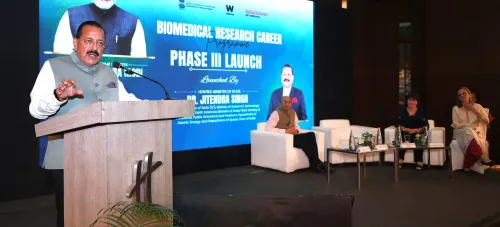
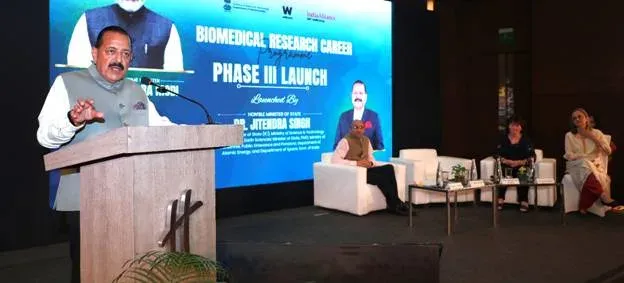
The Central government on Wednesday, 15 July launched Phase-III of the Biomedical Research Career Programme (BRCP) with a total outlay of ₹1,500 crore, aimed at expanding fellowships, scaling research grants, and translating scientific discoveries into practical healthcare solutions. The announcement was made through an official statement from the Ministry of Science and Technology.
Funding Breakdown
Of the total corpus, ₹1,000 crore will be contributed by the Department of Biotechnology, while the remaining ₹500 crore comes from the London-based Wellcome Trust, marking a significant international philanthropic commitment to India's biomedical ecosystem. The blended public-private funding model is designed to reduce dependence on government allocations alone and signal India's credibility as a global research destination.
What the Programme Aims to Achieve
According to Union Minister of State for Science and Technology and Earth Sciences, Dr. Jitendra Singh, Phase-III is designed to nurture a globally competitive biomedical research workforce spanning basic scientists, clinician-researchers, public health experts, science communicators, and research managers. The programme also seeks to create greater opportunities for interdisciplinary and collaborative research across institutions.
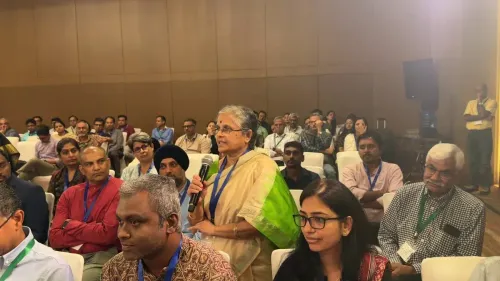
Dr. Singh added that the initiative is expected to attract fresh philanthropic and international partnerships, multiplying the impact of India's investments in biomedical science. Notably, the launch event included interactions with researchers whose careers were shaped by earlier phases of the programme, along with presentations on its scientific achievements and long-term impact.
India's Bioeconomy: The Bigger Picture
The minister highlighted that India's bioeconomy has expanded nearly twenty-fold — from $10 billion in 2014 to more than $195 billion in 2025 — and is projected to reach $300 billion by 2030. India currently hosts nearly 12,000 biotechnology startups and has emerged as one of the world's leading vaccine manufacturers, steadily reinforcing its position as a global biotechnology hub.
Dr. Singh described biotechnology as 'the defining force behind India's next phase of economic growth, scientific advancement and global competitiveness,' underscoring the strategic importance the government places on the sector.
Call for Greater Private and Philanthropic Participation
The minister also called on philanthropic institutions and industry players to step up engagement, arguing that while India possesses abundant scientific talent and innovative ideas, sustained financial partnerships remain essential for converting research into technologies, diagnostics, and affordable healthcare solutions. This comes amid a broader push by the Centre to reduce the translation gap between laboratory discoveries and market-ready healthcare products.
What Comes Next
Phase-III builds on the foundation laid by earlier iterations of the programme, with a sharper focus on research translation and ecosystem-building. Observers will watch whether the expanded fellowship base and international funding partnership produce measurable outcomes in patent filings, clinical trials, and commercialised health innovations — metrics that earlier phases were not always benchmarked against publicly.
Point of View
Not necessarily products. India's bioeconomy growth figures are impressive, yet the country still imports a significant share of advanced diagnostics and biologics. Phase-III's real test will be whether its fellowship-to-commercialisation pipeline is structured with verifiable milestones, or whether it remains, as critics of past programmes argue, a talent-development exercise disconnected from market outcomes.
NationPress
14 Oct 2026
Frequently Asked Questions
What is the Biomedical Research Career Programme Phase-III?
Phase-III of the Biomedical Research Career Programme is a ₹1,500 crore government initiative launched on 15 July 2025 to expand biomedical research fellowships, scale research grants, and accelerate the translation of scientific discoveries into practical healthcare applications. It is jointly funded by the Department of Biotechnology and the Wellcome Trust.
Who is funding the ₹1,500 crore biomedical research programme?
The outlay is split between two sources: ₹1,000 crore from India's Department of Biotechnology and ₹500 crore from the London-based Wellcome Trust. The international philanthropic contribution marks a significant co-investment in India's biomedical research ecosystem.
What kind of researchers will the programme support?
The programme aims to build a workforce spanning basic scientists, clinician-researchers, public health experts, science communicators, and research managers. It also prioritises interdisciplinary and collaborative research across institutions.
How large is India's bioeconomy and what is its growth target?
India's bioeconomy stood at over $195 billion in 2025, up from $10 billion in 2014 — a nearly twenty-fold increase. The government has set a target of $300 billion by 2030, underpinned by approximately 12,000 biotechnology startups and a strong vaccine manufacturing base.
Why is the government calling for more private and philanthropic investment in biomedical research?
According to MoS Dr. Jitendra Singh, while India has abundant scientific talent and innovative ideas, sustained financial partnerships are essential to convert research into technologies, diagnostics, and affordable healthcare solutions. The government views philanthropy and industry as critical to bridging the gap between laboratory discovery and market-ready health products.