HP CM Office Weighs Policy to Regularise Poor Settlers on Govt Land
Synopsis
The Chief Minister's Office of Himachal Pradesh announced on 15 July 2026 that the state government will consider framing a policy to regularise houses of poor and landless families who settled on government land years ago, potentially conferring formal tenure on long-excluded households.
Key Takeaways
The Chief Minister's Office of Himachal Pradesh announced on 15 July 2026 that the state will consider a land regularisation policy.
The policy would target poor and landless people who built homes on government land many years ago.
The announcement is at the consideration stage — no draft policy or timeline has been notified yet.
Formal land tenure could unlock access to central housing schemes such as Pradhan Mantri Awas Yojana (Gramin) for affected families.
Himachal Pradesh's mountainous terrain has historically made informal settlements on state land a persistent governance challenge.
Revenue departments and local bodies would benefit from clearer land records once a formal regularisation framework is in place.
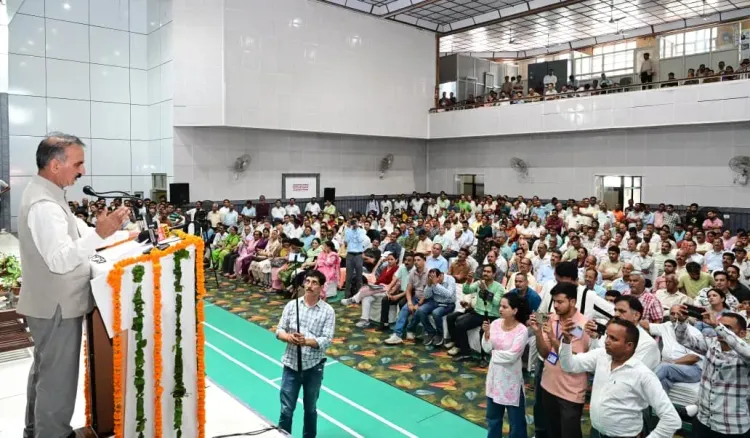
The Chief Minister's Office of Himachal Pradesh announced on Wednesday, 15 July 2026 that the state government is considering framing a policy to regularise houses of poor and landless people who settled on government land many years ago, marking a significant potential shift in the state's land tenure framework.
The official post from @CMOFFICEHP listed this as a key announcement and important point, stating in Hindi: 'सरकारी भूमि पर अनेक वर्षों पहले बसे गरीब एवं भूमिहीन लोगों के मकानों को नियमित करने के लिए प्रदेश सरकार एक नीति बनाने पर विचार करेगी' — meaning, 'the state government will consider framing a policy to regularise the houses of poor and landless people who settled on government land many years ago.'
Context
Himachal Pradesh, a northern Himalayan state with challenging terrain and historically dispersed rural settlements, has long grappled with the question of informal occupation of government land. Many economically weaker households, unable to access formal land markets, built homes on state-owned land over decades. These families have lived without formal tenure security, leaving them vulnerable to eviction and ineligible for several government welfare schemes tied to land ownership. The announcement signals that the state government is now willing to examine a structured, policy-driven solution rather than handling such cases on an ad hoc basis. The use of the phrase 'many years ago' in the official statement suggests the policy would target long-standing settlements, not recent encroachments.Policy Backdrop
Across India, state governments have periodically introduced land regularisation measures for economically weaker sections occupying government land. Such policies typically set a cut-off date for eligible occupation, define the category of beneficiaries — usually landless and below-poverty-line households — and prescribe a process for conferring occupancy or ownership rights, sometimes with a nominal fee. These efforts often complement central government housing programmes, including the Pradhan Mantri Awas Yojana (Gramin), which targets rural shelter deficits but requires beneficiaries to have clear land rights. A regularisation policy in Himachal Pradesh could therefore unlock access to such central schemes for a section of the population currently excluded due to their informal land status.Stakeholders and Impact
The primary beneficiaries would be landless and poor families in Himachal Pradesh who constructed homes on government land, potentially spanning multiple generations. Formal tenure would confer legal protection against eviction, enable access to institutional credit, and make households eligible for a range of state and central welfare entitlements linked to property ownership. For the state administration, a clearly defined policy would also reduce litigation and disputes arising from informal settlements. Local bodies and revenue departments would gain a cleaner framework for managing government land records, which in a terrain-heavy state like Himachal Pradesh are often complex and contested.What's Next
The announcement is framed as a consideration — the government 'will consider framing' such a policy — meaning formal drafting, stakeholder consultation, and legislative or executive notification steps remain ahead. Observers will watch whether the state government brings a concrete policy proposal before the assembly during upcoming sessions or incorporates it into the next budget exercise. The scope of the policy — including which categories of land, which beneficiaries, and what cut-off dates apply — will determine its eventual reach and impact across the state's rural and semi-urban settlements.Point of View
Case-by-case handling of informal land occupation toward a structured policy framework — a move that carries both electoral and administrative logic in a state with a large rural poor population. By framing the proposal around 'poor and landless' settlers, the ruling dispensation positions itself as responsive to a constituency that has historically lacked formal property rights and the welfare access that comes with them. The announcement also fits a broader pattern seen across Indian states of using land regularisation as a tool to simultaneously address social equity concerns and clean up revenue records. However, the devil will lie in the details — the cut-off date, eligible land categories, and fee structures will determine whether the policy delivers genuine tenure security or becomes mired in bureaucratic complexity.
NationPress
14 Oct 2026
Frequently Asked Questions
What did the Himachal Pradesh CM Office announce about government land?
The Chief Minister's Office of Himachal Pradesh announced on 15 July 2026 that the state government will consider framing a policy to regularise houses of poor and landless people who settled on government land many years ago.
Who will benefit from Himachal Pradesh's proposed land regularisation policy?
The policy is intended to benefit poor and landless families who built homes on government land in Himachal Pradesh years ago and currently lack formal land tenure.
Has Himachal Pradesh passed the land regularisation policy yet?
No. As of the 15 July 2026 announcement, the government has only said it will 'consider' framing such a policy. No draft or notified policy exists yet.
How does land regularisation help poor families in India?
Regularisation grants formal land or occupancy rights, protecting families from eviction, enabling access to institutional loans, and making them eligible for government housing and welfare schemes that require proof of land ownership.
Will this policy affect recent encroachments on government land in Himachal Pradesh?
The announcement specifically refers to people who settled 'many years ago,' suggesting the policy would target long-standing settlements rather than recent encroachments, though the exact cut-off date has not been specified.