HP CM Office Vows Power for Every Home in Himachal
Synopsis
The Chief Minister's Office of Himachal Pradesh on 9 July 2026 reaffirmed the state government's goal of universal household electricity access, highlighting benefits for students, farmers, small traders, and rural families across the hill state.
Key Takeaways
The Chief Minister's Office of Himachal Pradesh posted on 9 July 2026 reaffirming the government's goal of electricity for every household.
Improved power supply is expected to benefit students (study environment), farmers (agricultural operations), and small traders (business continuity).
The state's efforts complement the central government's Saubhagya scheme , launched in September 2017 for universal household electrification.
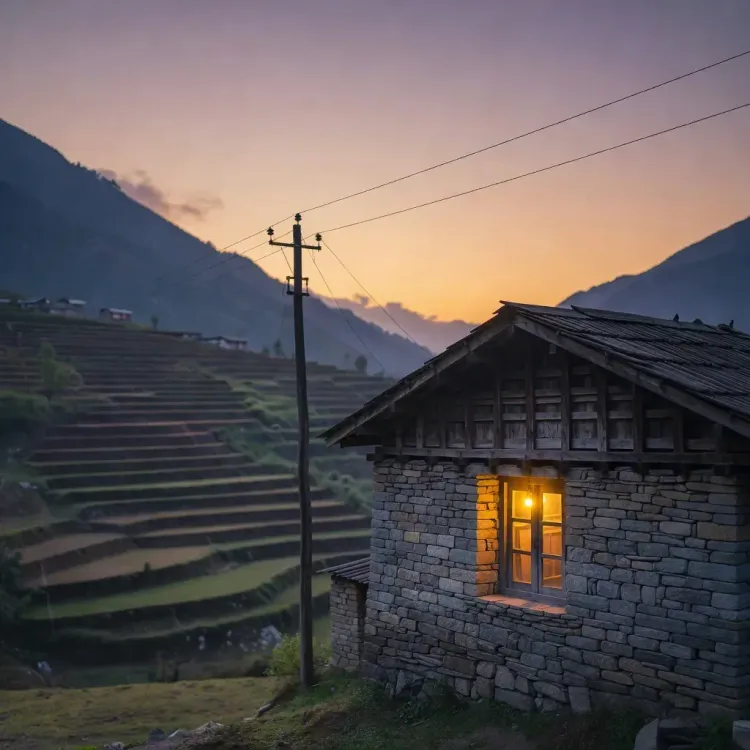
Himachal Pradesh's mountainous terrain makes last-mile electricity distribution a distinct and ongoing infrastructure challenge.
Key indicators to watch include state power department announcements on distribution lines, transformer upgrades, and new household connection targets.
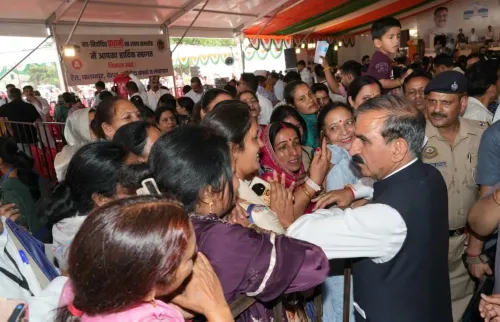
The Chief Minister's Office of Himachal Pradesh reaffirmed on Thursday, 9 July 2026 the state government's commitment to universal household electrification, stating that improved power supply will create a conducive environment for students, ease the work of farmers and small traders, and make daily life more comfortable for every family in the region.
The post, shared on the official CMO Himachal Pradesh X account, declared in Hindi: 'हमारी सरकार का प्रयास है कि हर घर तक बिजली की सुविधा पहुँचे' — 'Our government's endeavour is that electricity reaches every home.'
Context
The statement positions reliable electricity access as a multi-sectoral priority, directly naming students, farmers, and small traders as the primary beneficiaries. Better power supply, the CMO noted, will give students a suitable environment for study, allow agricultural and commercial activity to run more smoothly, and improve the everyday convenience of households across the state.
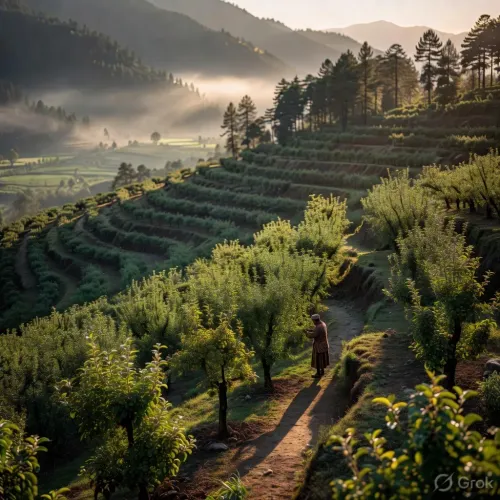
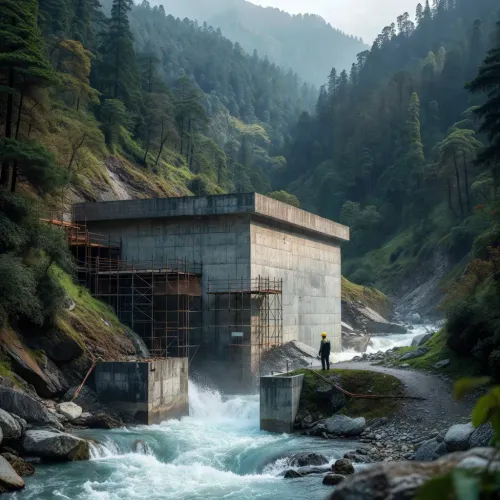
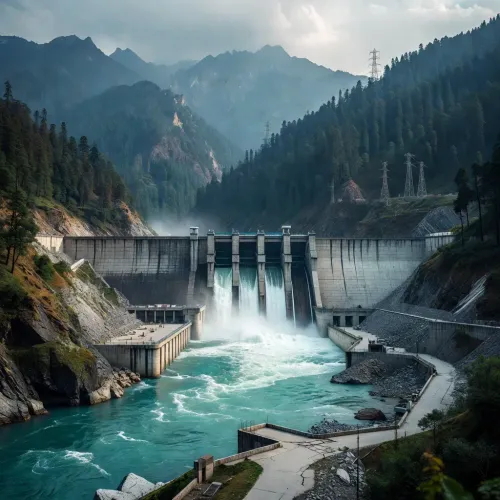
Himachal Pradesh is a northern Himalayan state with significant hydropower generation capacity, yet the rugged terrain has historically made last-mile electricity distribution a persistent challenge, particularly in remote hill villages.
Policy Backdrop
The state's push aligns with the central government's Saubhagya scheme — formally the Pradhan Mantri Sahaj Bijli Har Ghar Yojana — launched in September 2017 to achieve universal household electrification across India. The scheme targeted last-mile connectivity for all remaining unelectrified homes, with states responsible for implementing distribution infrastructure on the ground.
Himachal Pradesh has continued to complement such central programmes by investing in distribution network upgrades, transformer capacity, and feeder-level improvements suited to its hilly geography. The broader national goal of 24x7 reliable power in rural and hilly areas remains the guiding framework for such state-level announcements.
Stakeholders and Impact
The CMO's statement explicitly identifies four categories of beneficiaries. Students stand to gain uninterrupted lighting for evening study hours — a concern acute in areas where power cuts coincide with school homework time. Farmers depend on electricity for irrigation pump sets, cold storage access, and post-harvest processing, making supply reliability directly tied to agricultural income.
Small traders and micro-enterprises — a significant share of Himachal Pradesh's economy, which includes tourism-linked businesses, handicrafts, and roadside commerce — require stable power to operate equipment, maintain refrigeration, and run digital payment systems. For rural households broadly, consistent electricity underpins health, safety, and connectivity.
What's Next
Observers will watch for concrete follow-through in the form of state power department announcements on new distribution lines, transformer upgrades, and fresh household connection targets in the current fiscal year. Budget allocations for the power sector and district-level electrification progress reports will be key indicators of how the government translates this commitment into measurable outcomes.
Similar patterns of terrain-specific last-mile investment are visible across other Himalayan and north-eastern states, suggesting that Himachal Pradesh's approach may inform a broader regional model for electricity access in geographically challenging areas.
Point of View
Budget figure, or deadline. It signals that electricity access remains a politically salient issue in Himachal Pradesh, where terrain-driven power cuts affect daily life for a large share of the electorate. By naming students, farmers, and small traders in a single breath, the government is deliberately broadening the coalition of stakeholders who see themselves as direct beneficiaries of infrastructure investment. The real test will be whether district-level data on new connections and supply hours improves in the months following such public pledges.
NationPress
8 Oct 2026
Frequently Asked Questions
What did the Himachal Pradesh CM Office say about electricity supply?
The Chief Minister's Office of Himachal Pradesh stated on 9 July 2026 that better electricity supply will benefit students, farmers, and small traders, and that the government's goal is to ensure power reaches every household in the state.
What is the Saubhagya scheme and how does it relate to Himachal Pradesh?
The Saubhagya scheme — Pradhan Mantri Sahaj Bijli Har Ghar Yojana — is a central government programme launched in September 2017 to provide last-mile electricity connections to all unelectrified households in India. Himachal Pradesh's state-level electrification efforts complement this scheme.
Why is electricity access a challenge in Himachal Pradesh?
Himachal Pradesh's mountainous and rugged terrain makes building and maintaining distribution infrastructure difficult, leading to persistent last-mile connectivity gaps in remote hill villages despite the state's significant hydropower generation capacity.
Who benefits from improved electricity supply in Himachal Pradesh?
According to the CMO's statement, the primary beneficiaries are students who need reliable lighting for study, farmers who depend on power for irrigation and processing, small traders who require stable electricity for business operations, and rural households broadly.
What should we watch for next on Himachal Pradesh power supply?
Key developments to follow include state power department reports on new distribution lines, transformer capacity upgrades, fresh household connection targets, and budget allocations for the power sector in the current fiscal year.