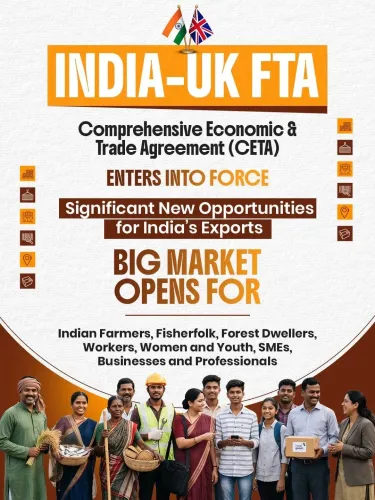
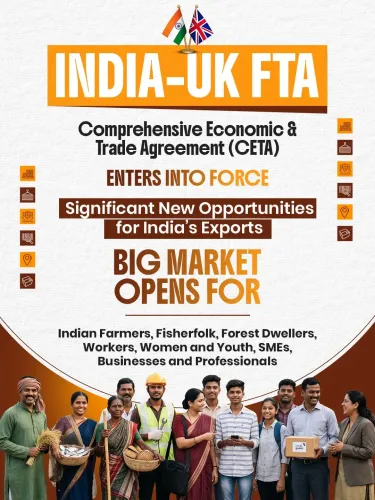
Gadkari hails India-UK FTA, cites zero-duty access for 99% exports
Synopsis
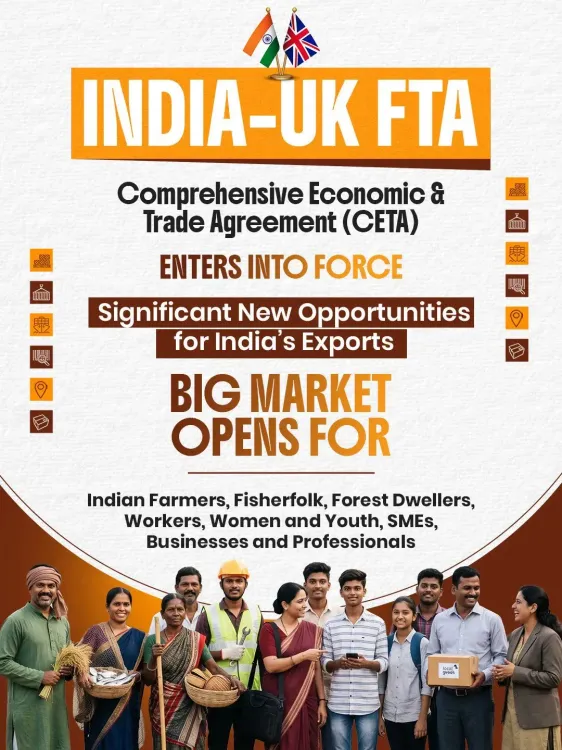
Union Minister Nitin Gadkari has welcomed the India–UK Free Trade Agreement entering into force, saying it grants zero-duty access to 99 percent of Indian exports and will boost textiles, leather, pharma, MSMEs and Indian professionals in the UK — part of India's broader push for selective trade liberalisation with Western economies.
Key Takeaways
The India–UK Free Trade Agreement has come into force, as welcomed by Union Minister Nitin Gadkari on 15 July 2026 .
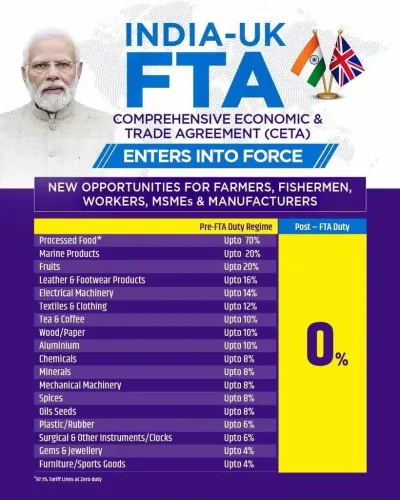
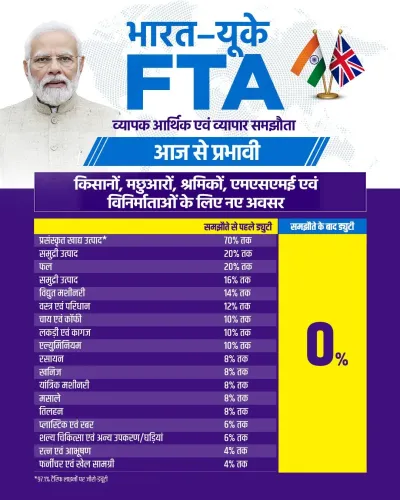
The pact grants zero-duty access for 99 percent of Indian exports to the United Kingdom .
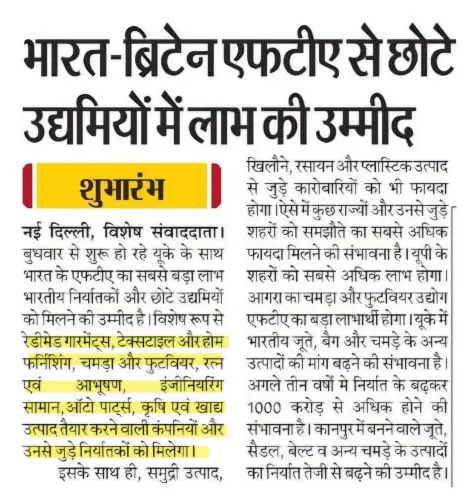
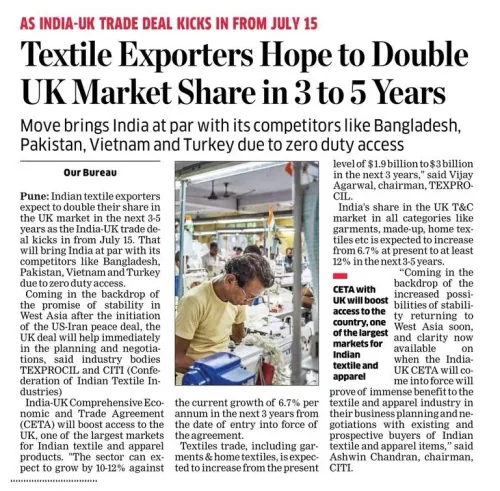
Key beneficiary sectors include textiles, leather, engineering goods, food processing, pharmaceuticals and MSMEs .
Indian professionals based in or seeking to work in the UK are cited as additional beneficiaries of the agreement.
Negotiations were relaunched in January 2022 and form part of India's broader post-2021 bilateral trade liberalisation drive, which also includes deals with the UAE and Australia .
Phased tariff schedules and rules-of-origin notifications are awaited to clarify the full operational scope of the agreement.
Union Road Transport and Highways Minister Nitin Gadkari on Wednesday, 15 July 2026, welcomed the coming into force of the India–United Kingdom Free Trade Agreement, calling it a 'transformative milestone' in India's growth journey and crediting the pact to the leadership of Prime Minister Narendra Modi. The minister highlighted that the agreement provides zero-duty access for 99 percent of Indian exports to the UK, opening new avenues for labour-intensive industries and MSMEs.
Context
Gadkari stated that the agreement 'will unlock new opportunities for labour-intensive sectors such as textiles, leather, engineering goods, food processing, pharmaceuticals and MSMEs, boosting exports, investment and job creation.' He also noted that the pact 'delivers meaningful benefits for Indian professionals in the UK,' signalling that mobility provisions for skilled workers form part of the deal's architecture.
The minister described the agreement as 'a reflection of India's people-centric and forward-looking diplomacy,' framing it within the broader foreign-policy posture of the Modi government rather than as a narrowly trade-focused instrument.
Policy Backdrop
Negotiations for the India–UK Free Trade Agreement were formally relaunched in January 2022 following a virtual summit between Prime Minister Modi and then-UK Prime Minister Boris Johnson. The talks traversed multiple rounds and several changes of government in London before reaching conclusion, making the agreement one of the more protracted bilateral trade negotiations India has undertaken in recent years.
The India–UK FTA fits into a wider pattern of selective trade liberalisation pursued by New Delhi since 2021, which has included agreements with the UAE and Australia. These pacts are designed to integrate India's labour-intensive manufacturing and services sectors into global supply chains while managing domestic sensitivities around agriculture and dairy.
Stakeholders and Impact
The sectors named by Gadkari — textiles, leather, engineering goods, food processing and pharmaceuticals — are among India's largest employment generators and export earners. MSMEs, which account for a significant share of India's manufacturing workforce, stand to benefit from preferential market access that was previously unavailable under standard World Trade Organisation tariff schedules.
Indian professionals working in or seeking to work in the United Kingdom are also flagged as direct beneficiaries, though the precise nature of any new professional-mobility or visa provisions will become clearer once the agreement's full text and phased tariff schedules are notified in the official gazette.
What's Next
Attention will now turn to the phased implementation of tariff reductions, rules-of-origin notifications, and any early-review mechanisms built into the agreement. Industry bodies representing textiles, pharmaceuticals and engineering goods are expected to map sector-specific gains as the operational details emerge.
The India–UK FTA also sets a precedent as India continues to negotiate trade frameworks with other Western economies, and its rollout will be closely watched as a test case for how quickly Indian exporters can capitalise on preferential access in a major developed market.
Point of View
Broadening their political resonance beyond commerce ministries. The agreement's emphasis on labour-intensive sectors and MSMEs is strategically significant — these constituencies are central to the ruling party's electoral coalition and to India's stated goal of expanding formal employment. Coming after deals with the UAE and Australia, the UK pact reinforces a deliberate pivot toward Western market access, signalling that India is willing to offer meaningful tariff concessions in exchange for professional mobility and investment commitments. How quickly exporters actually utilise the preferential access will determine whether the FTA becomes a durable policy win or remains a headline achievement.
NationPress
15 Jul 2026
Frequently Asked Questions
What is the India–UK Free Trade Agreement?
The India–UK Free Trade Agreement is a bilateral pact that grants zero-duty access to 99 percent of Indian exports to the United Kingdom. It covers sectors including textiles, leather, engineering goods, food processing, pharmaceuticals and MSMEs, and includes provisions benefiting Indian professionals in the UK.
When did India–UK FTA negotiations begin?
Negotiations for the India–UK Free Trade Agreement were formally relaunched in January 2022 following a virtual summit between Prime Minister Narendra Modi and then-UK Prime Minister Boris Johnson, though the broader framework had been under discussion for several years before that.
Which Indian sectors benefit most from the India–UK FTA?
The sectors expected to benefit most are textiles, leather, engineering goods, food processing, pharmaceuticals and MSMEs, all of which will gain preferential zero-duty or reduced-duty access to the UK market under the agreement.
What did Nitin Gadkari say about the India–UK FTA?
Union Minister Nitin Gadkari called the agreement a 'transformative milestone' in India's growth journey, crediting Prime Minister Modi's leadership and saying the pact will boost exports, investment and job creation while delivering benefits for Indian professionals in the UK.
How does the India–UK FTA compare to India's other recent trade deals?
The India–UK FTA follows a similar pattern to India's agreements with the UAE and Australia, which were also signed after 2021 as part of a push to diversify export markets and integrate labour-intensive sectors into global supply chains while managing domestic sensitivities on agriculture and dairy.