PM Modi Hails Cabinet Nod for Railway Multitracking in Odisha, Jharkhand
Synopsis
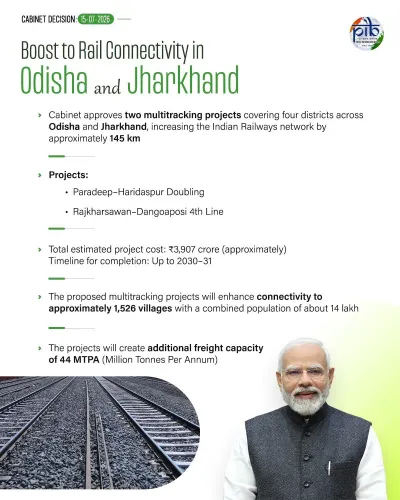
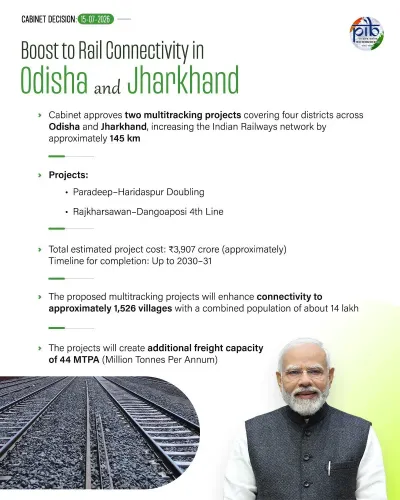
The Union Cabinet has approved doubling of the Paradeep-Haridaspur railway line in Odisha and a fourth line on the Rajkharsawan-Dangoaposi section in Jharkhand, boosting freight capacity on key mineral corridors. PM Modi welcomed the decisions as a major connectivity and economic growth push for both states.
Key Takeaways
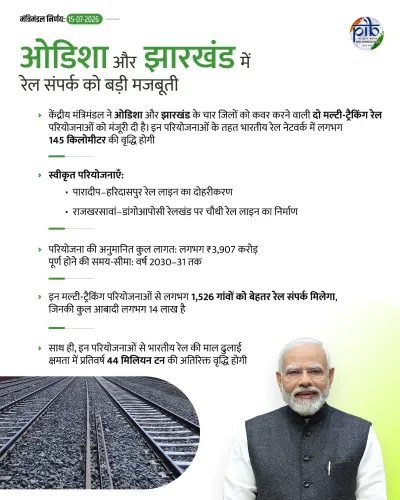
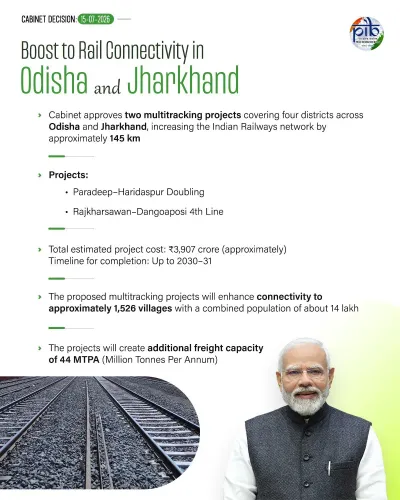
The Union Cabinet approved two railway multitracking projects on 15 July 2026 .
The Paradeep–Haridaspur line in Odisha will be doubled, enhancing capacity at one of India's largest deep-water ports.
A fourth line will be added on the Rajkharsawan–Dangoaposi section in Jharkhand , serving iron-ore mines and steel plants.
Both projects align with the PM Gati Shakti National Master Plan for multimodal logistics integration.
Key beneficiaries include mineral exporters, steel manufacturers and freight operators across eastern India.
Final cost estimates and completion timelines are yet to be detailed in official communications.
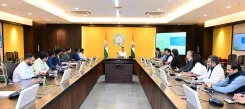
Prime Minister Narendra Modi on Wednesday, 15 July 2026 welcomed the Union Cabinet's approval of two railway multitracking projects aimed at strengthening freight and passenger connectivity in Odisha and Jharkhand, calling them 'a major boost to connectivity and economic growth' in the two states.
Context
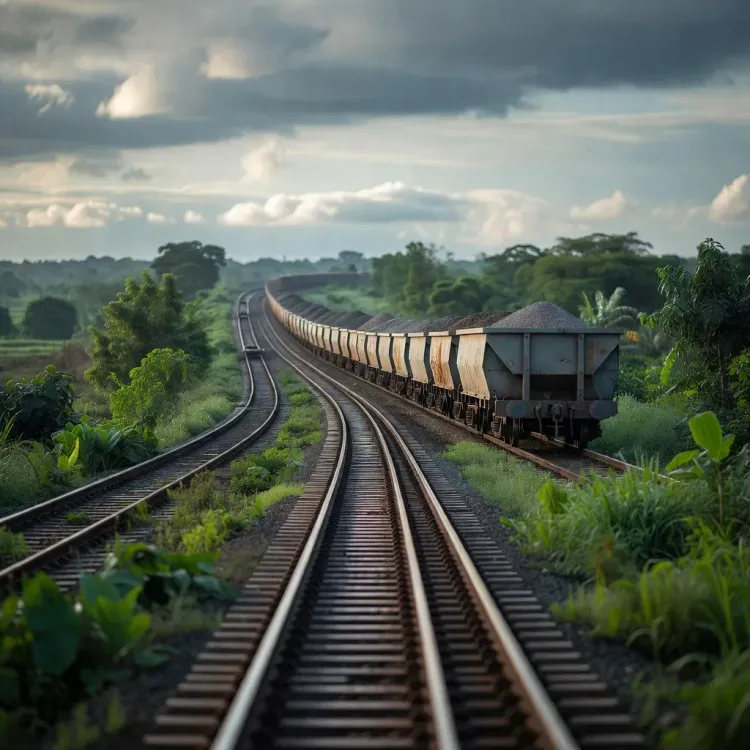
The Cabinet has cleared the doubling of the Paradeep–Haridaspur railway line in Odisha and the addition of a fourth line on the Rajkharsawan–Dangoaposi section in Jharkhand. Both corridors are critical arteries in eastern India's mineral and industrial logistics network, carrying bulk traffic between mines, steel plants and ports.
Paradeep is one of India's largest deep-water ports, handling iron ore, coal and steel exports. The Haridaspur line is its primary rail link to the national network, and its doubling is expected to significantly raise throughput capacity for commodity exporters dependent on this route.
Policy Backdrop
The approvals sit within a broader push by Indian Railways to convert single-line and double-line sections into multi-track corridors across the eastern mineral belt. The PM Gati Shakti National Master Plan, launched in 2021, specifically integrated such railway projects with port and industrial cluster development to create seamless multimodal logistics chains.
In FY 2022-23 and FY 2023-24, the Cabinet sanctioned more than 100 railway doubling and multi-tracking works with a pronounced focus on eastern and mineral routes. The two projects announced on 15 July continue that pattern, targeting sections where capacity constraints have historically slowed freight movement and raised logistics costs for the steel and mining sectors.
Stakeholders and Impact
The Rajkharsawan–Dangoaposi fourth-line project directly serves iron-ore mines and steel plants concentrated in Jharkhand's Singhbhum region. A fourth line on this section would allow freight and passenger trains to run with far less interference, reducing transit times and unlocking additional capacity for heavy-haul rakes.
Key beneficiaries include mineral exporters, steel manufacturers, freight logistics operators and the state governments of Odisha and Jharkhand, which have long sought enhanced rail capacity to support industrial growth. Improved connectivity is also expected to benefit passenger services on routes that currently share limited track space with freight trains.
What's Next
Detailed project timelines, land acquisition schedules and final cost estimates are expected to be outlined in subsequent railway and parliamentary communications. Completion of both projects would mark a significant step in raising the share of railways in India's overall freight movement — a long-standing national logistics objective — and in lowering per-unit transport costs for bulk commodities moving through eastern India's industrial corridors.
Point of View
Flagging these approvals personally on social media also reflects the political salience of infrastructure delivery in two states where industrial employment and freight logistics directly affect voter sentiment.
NationPress
15 Jul 2026
Frequently Asked Questions
What are the two railway projects approved by the Cabinet on 15 July 2026?
The Cabinet approved the doubling of the Paradeep–Haridaspur railway line in Odisha and the addition of a fourth line on the Rajkharsawan–Dangoaposi section in Jharkhand, both aimed at expanding freight and passenger capacity on key eastern corridors.
Why is the Paradeep–Haridaspur railway line important?
The Paradeep–Haridaspur line connects Paradeep, one of India's largest deep-water ports handling iron ore, coal and steel exports, to the broader national rail network. Doubling the line will significantly increase the volume of freight that can move through the port.
What is the Rajkharsawan–Dangoaposi railway section and why does it need a fourth line?
The Rajkharsawan–Dangoaposi section in Jharkhand serves iron-ore mines and steel plants in the Singhbhum region. Adding a fourth line will reduce conflicts between freight and passenger trains, lower transit times and unlock additional heavy-haul capacity.
How do these projects relate to PM Gati Shakti?
Both projects are aligned with the PM Gati Shakti National Master Plan launched in 2021, which integrates railway capacity expansion with port and industrial cluster development to build seamless multimodal logistics chains across India.
Who benefits from the Odisha and Jharkhand railway multitracking projects?
Key beneficiaries include mineral exporters, steel manufacturers, freight logistics operators and the state governments of Odisha and Jharkhand. Passenger rail services on these shared corridors are also expected to improve once additional tracks ease congestion.