AP Signs MoU With UN-Habitat for Inclusive Urban Growth
Synopsis
Andhra Pradesh signed an MoU with UN-Habitat on 15 July 2026, committing to a Centre of Excellence in Amaravati, poverty reduction, climate-resilient urban planning, digital governance, and a showcase at the 2028 World Urban Forum in Mexico.
Key Takeaways
Andhra Pradesh and UN-Habitat signed an MoU on 15 July 2026 for inclusive urban development across the state.
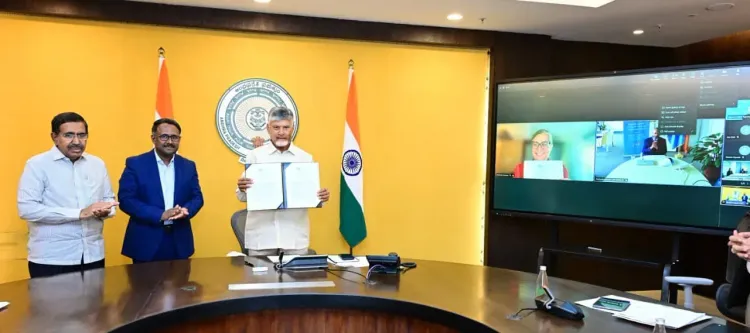
CM Nara Chandrababu Naidu attended in person; UN-Habitat Executive Director Anaclaudia Rosback joined virtually from Singapore .
A Centre of Excellence on Urban Affairs will be established in Amaravati under the Surge AP, Rise AP, and Uplift AP policy frameworks.
The MoU covers poverty eradication, urban livelihoods, climate-resilient infrastructure, digital governance, municipal finance, and SDG implementation .
Andhra Pradesh will present its urban development achievements at the 14th World Urban Forum in Mexico in 2028 .
Municipal Administration Minister P.
Narayana and Principal Secretary Suresh Kumar were present at the signing ceremony.
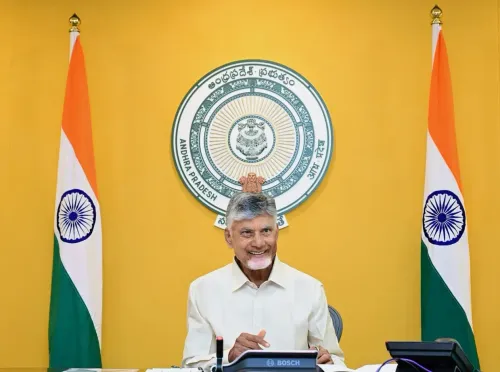
The Chief Minister's Office of Andhra Pradesh announced on Wednesday, 15 July 2026 that the Andhra Pradesh government has signed a Memorandum of Understanding with UN-Habitat, the United Nations programme for sustainable urbanisation, to advance inclusive urban development across the state. Chief Minister Nara Chandrababu Naidu participated in person while UN-Habitat Executive Director Anaclaudia Rosback joined virtually from Singapore for the signing ceremony.
Context
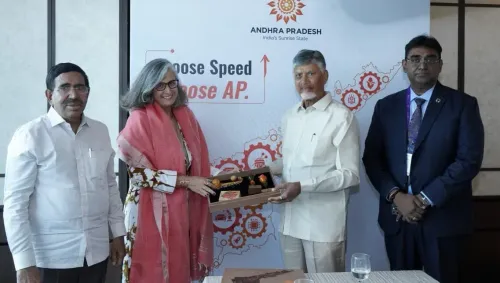
The MoU commits the Andhra Pradesh government and UN-Habitat to joint work on poverty eradication and improving the livelihoods of the urban poor. It also provides for the establishment of a Centre of Excellence on Urban Affairs in Amaravati, the state's planned greenfield capital, under the government's Surge AP, Rise AP, and Uplift AP policy frameworks. The agreement was formalised with Municipal Administration Minister P. Narayana and Principal Secretary Suresh Kumar in attendance alongside other senior officials.
Policy Backdrop
Andhra Pradesh has a documented history of international urban-planning partnerships, most notably its collaboration with Singapore from 2015 onward for the master planning of Amaravati following the bifurcation of the state. The state's approach aligns with UN Sustainable Development Goal 11 — making cities inclusive, safe, resilient, and sustainable — a goal that Indian states have increasingly sought to localise through formal cooperation with UN-Habitat. National urban schemes such as AMRUT and the Smart Cities Mission, both launched in 2015, created an enabling framework for such state-level international technical partnerships.
The current MoU extends that lineage by linking urban planning explicitly to climate-resilient infrastructure, digital governance, and municipal finance — areas where Andhra Pradesh has positioned itself as a reform-oriented state under CM Naidu's technology-first administrative approach.
Stakeholders and Impact
The agreement's most direct beneficiaries are Andhra Pradesh's urban poor, with the MoU explicitly targeting poverty reduction and livelihood improvement as core outcomes. Municipal bodies across the state stand to gain from the proposed technical collaboration on strategic urban planning and municipal finance reform. The proposed Centre of Excellence in Amaravati is intended to serve as a knowledge hub, potentially benefiting urban planners and administrators across the region.
The partnership also carries a reputational dimension: Andhra Pradesh has decided to showcase its urban development achievements on a global stage at the 14th World Urban Forum, scheduled to be held in Mexico in 2028. The forum is the world's premier convening platform on urban issues, hosted by UN-Habitat, and state-level participation signals AP's ambition to position itself as a model for urbanisation in the Global South.
What's Next
The immediate priority will be the operationalisation of the Centre of Excellence on Urban Affairs in Amaravati, which will serve as the institutional anchor for all joint activities under the MoU. Progress on integrating the agreement's objectives — climate resilience, digital governance, municipal finance, and SDG alignment — into ongoing state urban programmes will be closely watched. As 2028 approaches, preparatory events and documentation of AP's urban development record are expected to build toward the state's formal presentation at the World Urban Forum in Mexico, giving the partnership a clear four-year deliverable horizon.
Point of View
Lending international legitimacy to his administration's flagship Surge AP, Rise AP, and Uplift AP programmes at a time when Amaravati's revival as a capital city needs both optics and institutional momentum. By embedding poverty reduction and climate resilience alongside digital governance, the agreement reflects a broader Indian state-level trend of localising SDG 11 through UN partnerships rather than relying solely on central government schemes. The decision to target the 2028 World Urban Forum as a showcase moment gives the partnership a concrete four-year deliverable, creating political accountability for measurable urban outcomes. Whether the Centre of Excellence in Amaravati becomes a substantive knowledge institution or remains a ceremonial milestone will be the real test of this agreement's depth.
NationPress
16 Jul 2026
Frequently Asked Questions
What is the Andhra Pradesh and UN-Habitat MoU about?
The MoU signed on 15 July 2026 commits Andhra Pradesh and UN-Habitat to joint work on inclusive urban development, covering poverty eradication, urban livelihoods, climate-resilient infrastructure, digital governance, municipal finance, and the establishment of a Centre of Excellence on Urban Affairs in Amaravati .
What is the Centre of Excellence in Amaravati?
The Centre of Excellence on Urban Affairs to be set up in Amaravati is a proposed knowledge and technical hub under the MoU, designed to support urban planning and policy implementation across Andhra Pradesh in partnership with UN-Habitat .
What are Surge AP, Rise AP, and Uplift AP?
Surge AP, Rise AP, and Uplift AP are policy frameworks of the Andhra Pradesh government under CM Chandrababu Naidu focused on economic growth, social upliftment, and development, under which the new MoU's urban initiatives will be implemented.
What is the World Urban Forum 2028 and what is AP's role?
The 14th World Urban Forum is a major global conference on sustainable urbanisation hosted by UN-Habitat , scheduled to be held in Mexico in 2028 . Andhra Pradesh has decided to present its urban development achievements at this forum as part of the new MoU.
Who signed the MoU between Andhra Pradesh and UN-Habitat?
Chief Minister Nara Chandrababu Naidu represented Andhra Pradesh in person, while UN-Habitat Executive Director Anaclaudia Rosback participated virtually from Singapore at the signing ceremony on 15 July 2026 .