Paradip–Haridaspur rail line doubling gets Cabinet nod; Odisha CM thanks Modi
Synopsis
The Union Cabinet has cleared two railway projects worth ₹3,907 crore that will add 145 km of track across Odisha and Jharkhand — including the long-pending Paradip–Haridaspur doubling that directly serves one of India's busiest ports. With 44 MTPA of additional freight capacity on the line, the approval signals a meaningful push to decongest Paradip Port and embed Odisha deeper into India's industrial logistics spine.
Key Takeaways
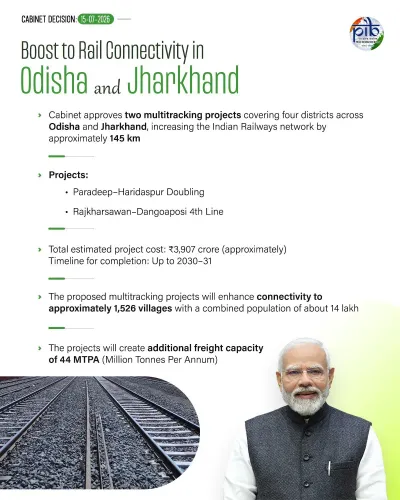
The CCEA approved two railway projects on 15 July 2025 at a combined cost of approximately ₹3,907 crore .
Projects include the Paradip–Haridaspur rail line doubling and a fourth line between Rajkharsawan and Dangoaposi .
The two corridors will add around 145 km to the Indian Railways network across four districts in Odisha and Jharkhand.
Rail access will improve for approximately 1,526 villages with a population of about 14 lakh .
Additional freight capacity of 44 MTPA is projected, covering coal, iron ore, and other bulk commodities.
Environmental benefits include a reduction of 6 crore litres in oil imports and a cut of 29 crore kg in CO2 emissions.
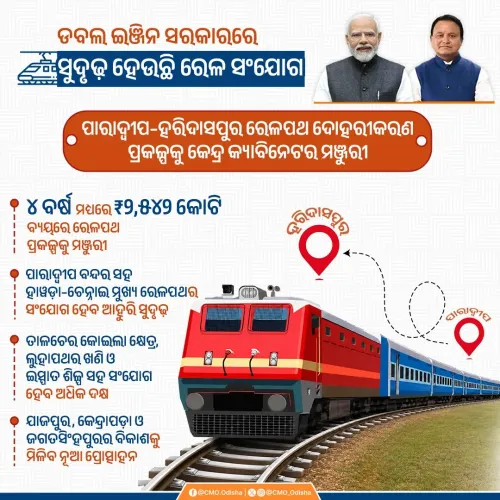
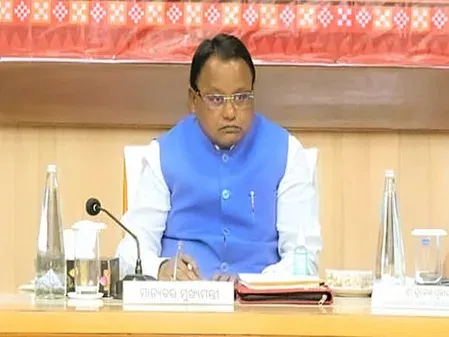
The Union Cabinet on 15 July 2025 approved the doubling of the Paradip–Haridaspur railway line, a project that will deepen rail connectivity to one of India's busiest ports and unlock freight capacity across Odisha and Jharkhand. Odisha Chief Minister Mohan Charan Majhi welcomed the decision, calling it a significant milestone in strengthening the state's railway infrastructure.
What the Cabinet Approved
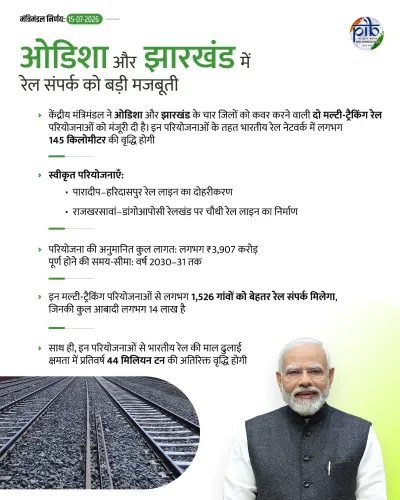
The Cabinet Committee on Economic Affairs (CCEA), chaired by Prime Minister Narendra Modi, cleared two railway projects under the Ministry of Railways on Wednesday — the doubling of the Paradip–Haridaspur rail line and the addition of a fourth rail line between Rajkharsawan and Dangoaposi. The combined estimated cost of both projects stands at approximately ₹3,907 crore.
Together, the two projects will add around 145 km to the existing Indian Railways network, spanning four districts across Odisha and Jharkhand.
Impact on Connectivity and Freight
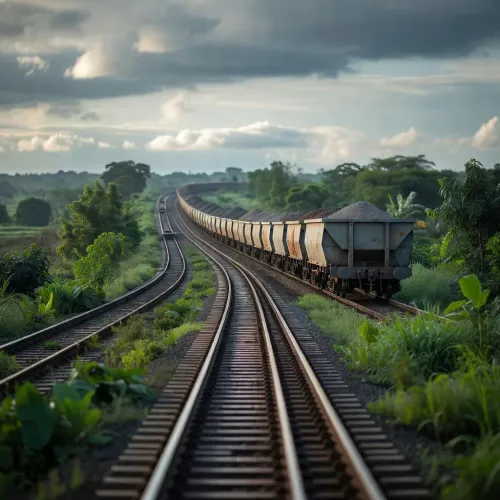
According to officials, the capacity enhancement is expected to improve rail access to approximately 1,526 villages with a combined population of about 14 lakh. The upgraded corridors are critical routes for bulk commodities including coal, iron ore, dolomite, limestone, and gypsum, and are projected to generate additional freight traffic of 44 MTPA (million tonnes per annum).
The Paradip–Haridaspur doubling, in particular, will ease congestion at Paradip Port and improve the movement of both passengers and goods — a bottleneck that has long constrained the port's throughput.
Tourism and Environmental Gains
The projects are also expected to enhance connectivity to several tourist destinations, including the Lalitgiri Buddhist Complex, Shree Baladevjew Temple, and Meghahatuburu Hills. Officials noted that the shift to rail will reduce oil imports by 6 crore litres and cut CO2 emissions by 29 crore kg — an environmental offset equivalent to planting 1 crore trees.
Odisha CM's Response
Chief Minister Majhi posted his response on X, stating: 'The Union Cabinet's approval of the Paradeep–Haridaspur railway line doubling project marks another significant milestone in strengthening Odisha's railway infrastructure, enhancing logistics efficiency, and accelerating the state's industrial and economic growth.'
He added that the project would further consolidate Odisha's position as a key logistics and industrial hub under the PM Gati Shakti National Master Plan, while generating new employment opportunities. Majhi also expressed gratitude to Railway Minister Ashwini Vaishnaw for the Centre's continued support.
With sectoral guidelines and project timelines expected to follow, the focus now shifts to execution — and whether the freight and connectivity targets translate into measurable economic outcomes for the region.
Point of View
Not a new idea — the corridor's congestion has been a known constraint on Paradip Port's throughput for years. The real question is execution speed: India's railway doubling projects have a history of cost overruns and timeline slippage, and a port-linked corridor with 44 MTPA freight ambitions leaves little room for delay. The Gati Shakti framing is politically useful, but the metric that matters is when the first additional freight rake actually moves. Until then, the ₹3,907 crore approval is a necessary but not sufficient step.
NationPress
14 Oct 2026
Frequently Asked Questions
What is the Paradip–Haridaspur railway line doubling project?
It is a capacity expansion project approved by the Union Cabinet on 15 July 2025, which involves laying a second track along the existing Paradip–Haridaspur rail corridor in Odisha. The project aims to ease congestion at Paradip Port and boost freight movement of bulk commodities such as coal and iron ore.
How much will the two railway projects cost?
The combined estimated cost of both projects — the Paradip–Haridaspur doubling and the Rajkharsawan–Dangoaposi fourth line — is approximately ₹3,907 crore, as approved by the CCEA chaired by Prime Minister Narendra Modi.
How many villages will benefit from these railway projects?
According to officials, the projects will improve rail connectivity to approximately 1,526 villages with a combined population of about 14 lakh across four districts in Odisha and Jharkhand.
What freight capacity will the projects add?
The capacity augmentation is projected to generate additional freight traffic of 44 MTPA (million tonnes per annum), primarily covering commodities such as coal, iron ore, dolomite, limestone, and gypsum.
What are the environmental benefits of these projects?
Officials stated that the shift to rail transport will reduce oil imports by 6 crore litres and lower CO2 emissions by 29 crore kg — an environmental offset equivalent to planting 1 crore trees.