CM Saini Hails Cabinet Nod to MPMS, Semiconductor 2.0 and NIPU-2026
Synopsis
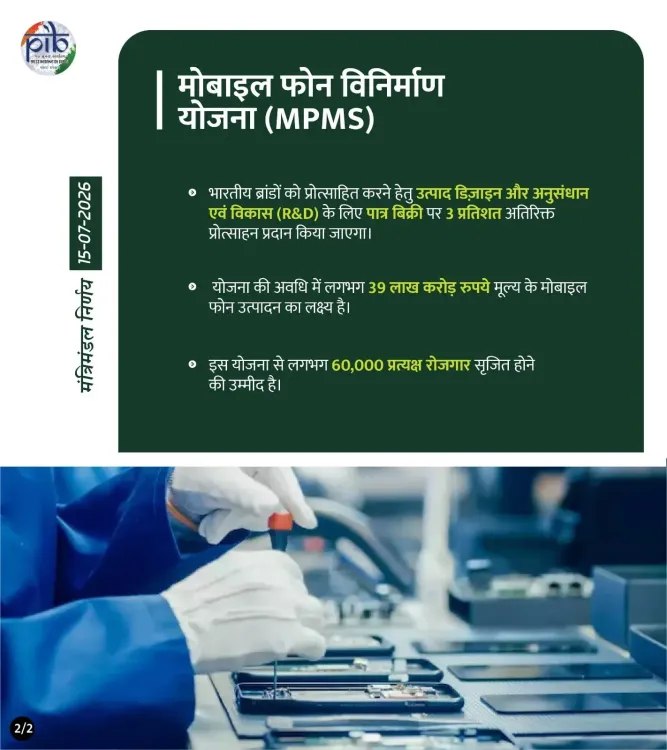
Haryana Chief Minister Nayab Singh Saini praised the Union Cabinet's approval of the Mobile Phone Manufacturing Promotion Scheme, Semiconductor 2.0 Mission and NIPU-2026 urea investment policy on 15 July 2026, calling the decisions historic milestones for India's self-reliance in manufacturing, electronics and fertilizers.
Key Takeaways
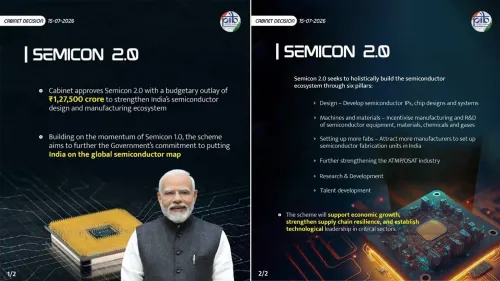
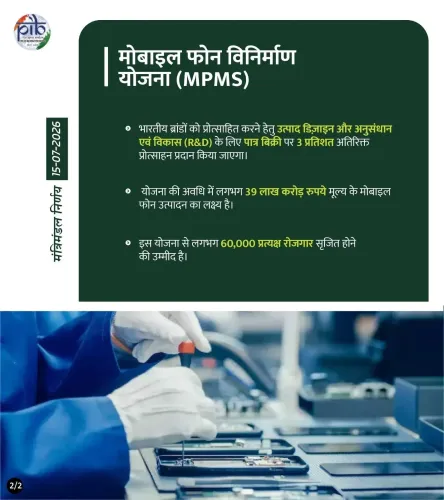
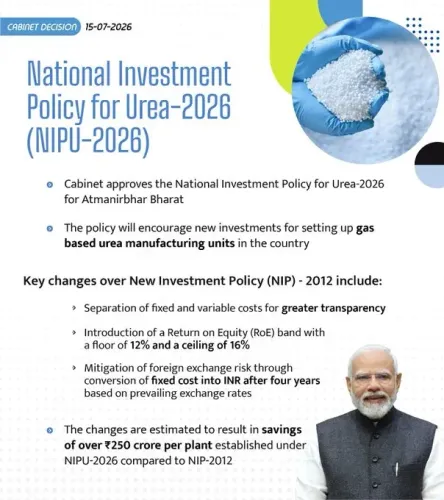
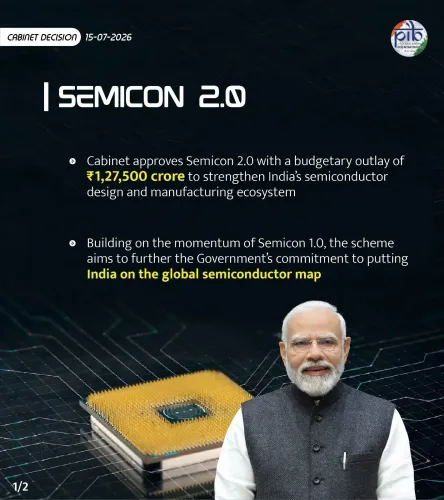
The Union Cabinet approved three major policy decisions on 15 July 2026 : the Mobile Phone Manufacturing Promotion Scheme (MPMS) , the Semiconductor 2.0 Mission and the Urea National Investment Policy 2026 (NIPU-2026) .
Haryana CM Nayab Singh Saini welcomed the decisions as historic steps under PM Narendra Modi's leadership toward making India a global manufacturing leader.
The moves extend the Atmanirbhar Bharat framework launched in 2020 , building on the earlier PLI scheme for mobiles and the India Semiconductor Mission backed by Rs 76,000 crore .
Key beneficiaries include electronics manufacturers , semiconductor companies and farmers who depend on domestically produced urea.
State-level investment announcements, particularly from Haryana , and rollout of scheme guidelines will be watched as early implementation signals.
Haryana Chief Minister Nayab Singh Saini on Wednesday, 15 July 2026 welcomed a set of cabinet decisions by the Union government aimed at strengthening domestic manufacturing across electronics, semiconductors and fertilizers, calling them historic steps toward making India self-reliant and a global leader in production.
Context
Posting on X, CM Saini described the decisions as taken under the leadership of Prime Minister Narendra Modi with the goal of making the country aatmanirbhar, takneeki roop se sashakt aur vinimaarn kshetra mein vaishvik agrani (self-reliant, technologically empowered and a global leader in manufacturing). He specifically cited approval of the Mobile Phone Manufacturing Promotion Scheme (MPMS), a fresh push to the Semiconductor 2.0 Mission, and the Urea National Investment Policy 2026 (NIPU-2026) as the three pillars of the cabinet's announcements.
Saini asserted that these decisions would generate new opportunities in manufacturing, investment, innovation and employment, boost India's global competitiveness in electronics and semiconductors, and give fresh direction to self-reliance in the fertilizer sector.
Policy Backdrop
The decisions build on a framework the central government has been layering since 2020 under the Atmanirbhar Bharat campaign. A Production Linked Incentive scheme for mobile manufacturing was introduced that year to attract investment and reduce import dependence. The India Semiconductor Mission followed in 2021 with an outlay of Rs 76,000 crore to develop fabrication and assembly capabilities inside the country.
On fertilizers, a New Urea Policy notified in 2015 had already sought to promote domestic production and cut import reliance. NIPU-2026 appears to be the next iteration of that policy thrust, extending the investment framework into the current decade. Together, the three decisions represent successive layers added to the Make in India framework to deepen global value-chain participation.
Stakeholders and Impact
Electronics manufacturers and semiconductor companies stand to benefit from clearer incentive structures and mission-backed support under MPMS and Semiconductor 2.0. Supply-chain vulnerabilities exposed during the pandemic had already accelerated government thinking on domestic chip and component production, making these announcements strategically significant for the sector.
For the agriculture community — particularly farmers across states like Haryana — NIPU-2026 carries direct relevance. Greater domestic urea production could stabilise fertilizer availability and moderate price volatility, which has been a persistent concern for cultivators dependent on subsidised inputs.
What's Next
Attention will now turn to the rollout of detailed scheme guidelines under each of the three policy decisions. State-level investment announcements — especially from Haryana, given CM Saini's vocal support — and any parliamentary discussion on the urea investment policy will be early indicators of implementation momentum. The pace at which semiconductor and mobile-manufacturing investments are attracted under the new frameworks will be a key measure of whether the cabinet's stated ambitions translate into on-ground outcomes.
Point of View
Semiconductors and urea into a single political communication reflects the government's strategy of presenting industrial and agrarian priorities as a unified self-reliance narrative. For Haryana, a state with growing electronics industry ambitions and a large farming constituency, Saini's enthusiasm is as much about local political signalling as national policy support. The real test will be whether scheme guidelines translate into verifiable investment and job numbers ahead of the next electoral cycle.
NationPress
14 Oct 2026
Frequently Asked Questions
What is the Mobile Phone Manufacturing Promotion Scheme (MPMS)?
The Mobile Phone Manufacturing Promotion Scheme (MPMS) is a Union Cabinet-approved initiative designed to incentivise domestic production of mobile phones in India, building on earlier PLI frameworks to attract investment and reduce import dependence in the electronics sector.
What is India's Semiconductor 2.0 Mission?
The Semiconductor 2.0 Mission is an extension of India's semiconductor development push, originally launched in 2021 with a Rs 76,000 crore outlay, aimed at building domestic fabrication and assembly capabilities to reduce reliance on imported chips.
What is NIPU-2026 or the Urea National Investment Policy 2026?
NIPU-2026 , or the Urea National Investment Policy 2026 , is a cabinet-approved policy framework intended to attract fresh investment into domestic urea production, reducing India's dependence on fertilizer imports and stabilising supply for farmers.
Why did Haryana CM Nayab Singh Saini comment on these cabinet decisions?
CM Nayab Singh Saini welcomed the decisions as they align with the Atmanirbhar Bharat agenda championed by PM Narendra Modi , and because the policies have direct relevance to Haryana's electronics industry ambitions and its large agricultural community dependent on urea.
What is Atmanirbhar Bharat and how do these decisions relate to it?
Atmanirbhar Bharat is the 'Self-Reliant India' campaign launched in 2020 to reduce import dependence through domestic production incentives. The MPMS , Semiconductor 2.0 Mission and NIPU-2026 are successive layers added to this framework across electronics and fertilizer sectors.