Mandaviya Highlights 12 Years of Modi Govt's Business Reforms
Synopsis
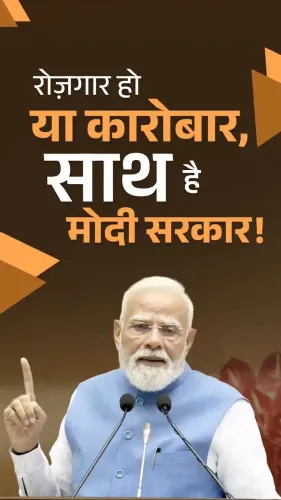
Union Minister Mansukh Mandaviya marked twelve years of the Modi government on June 9, 2026, crediting the administration with making India's business ecosystem stronger and more competitive through landmark reforms including GST, Make in India and four consolidated labour codes.
Key Takeaways
Union Minister Mansukh Mandaviya posted on June 9, 2026 marking 12 years of the Modi government under the hashtag #12YearsOfSeva .
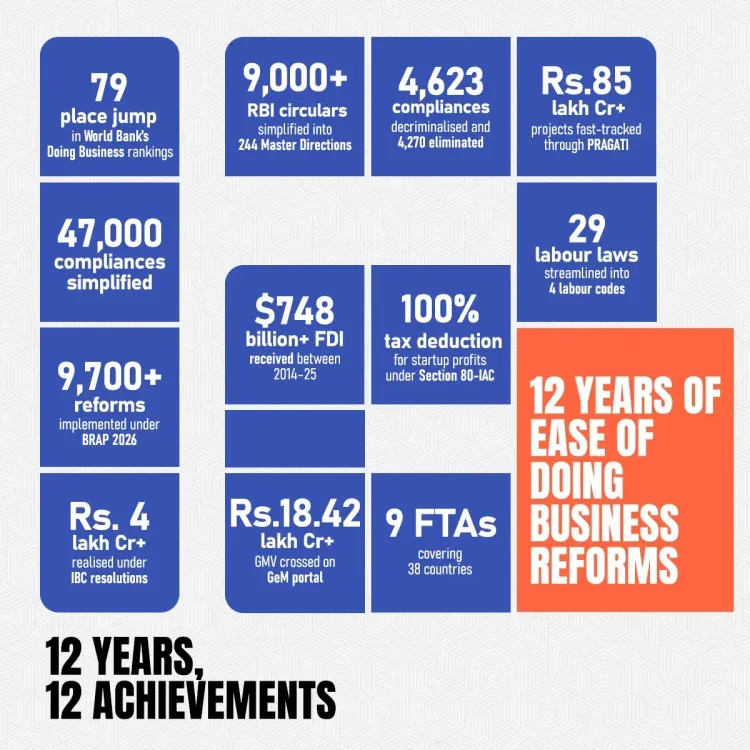
India's World Bank Ease of Doing Business ranking improved from 142nd in 2014 to 63rd in 2020 following sustained regulatory reforms.
Key reforms include Make in India (2014), Startup India (2016), the Insolvency and Bankruptcy Code (2016) and the Goods and Services Tax (2017).
Parliament passed four labour codes between 2019 and 2020 , consolidating 44 central labour laws to simplify business compliance.
The post is part of a broader BJP anniversary communications drive; upcoming FDI and industrial production data will test the claims of a stronger business ecosystem.
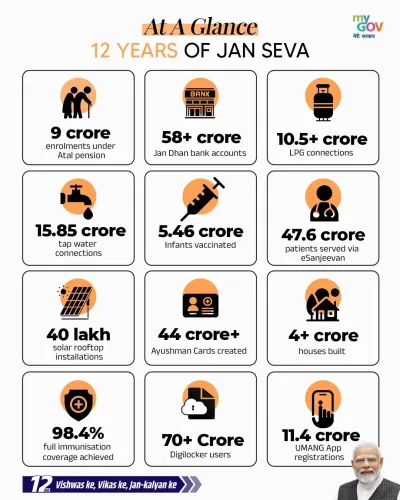
Union Labour and Sports Minister Mansukh Mandaviya on Tuesday, June 9, 2026, credited Prime Minister Narendra Modi's twelve-year tenure with transforming India's business ecosystem, calling it 'stronger and more competitive than ever' under the hashtag #12YearsOfSeva.
Context
The post marks the completion of twelve years of the Modi government, which assumed office in May 2014. Mandaviya's message frames the anniversary as a milestone of cumulative economic achievement, echoing a broader BJP communications drive to catalogue reforms since the party came to power. Such anniversary messaging typically coincides with data releases on foreign direct investment, manufacturing output and export performance.
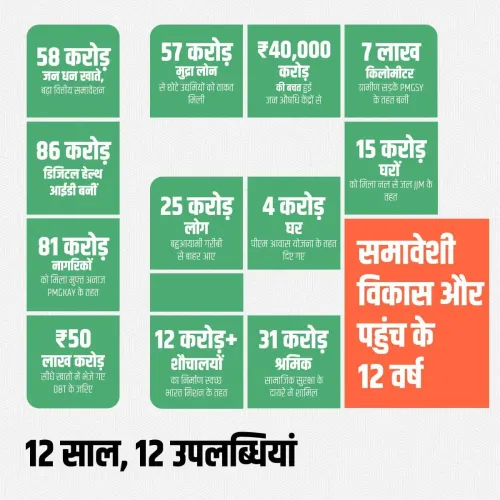
The minister described the period as one of '12 Monumental Achievements' for India's business environment, though the post does not enumerate the specific achievements individually.
Policy Backdrop
The twelve-year period has seen several landmark economic interventions. The Make in India initiative, launched in September 2014, sought to position India as a global manufacturing hub and attract foreign investment. The Goods and Services Tax, implemented in July 2017, replaced a fragmented web of central and state levies with a unified indirect tax regime, simplifying compliance for businesses across the country.
The Startup India programme, launched in January 2016, extended tax benefits and easier regulatory compliance to entrepreneurs, while the Insolvency and Bankruptcy Code, enacted in May 2016, expedited resolution of stressed assets and improved credit culture. Parliament also passed four labour codes between 2019 and 2020, consolidating 44 central labour laws to reduce the compliance burden on employers. India's ranking in the World Bank Ease of Doing Business index climbed from 142nd in 2014 to 63rd in 2020, reflecting the cumulative impact of these regulatory reforms.
Stakeholders and Impact
The reforms of the past twelve years have had the widest reach among Indian businesses, micro, small and medium enterprises (MSMEs), and foreign investors. Simplified tax structures and digital public infrastructure have lowered transaction costs, while the labour codes are intended to give employers greater flexibility alongside stronger worker protections. MSMEs in particular have been cited as beneficiaries of easier credit access and reduced regulatory friction.
Foreign investors have responded to the changed environment: India has consistently ranked among the top destinations for FDI in Asia over the past decade, with manufacturing, technology and infrastructure sectors drawing the bulk of inflows.
What's Next
Attention will now turn to the release of quarterly FDI and industrial production data in the coming months, which will provide a quantitative measure of the business ecosystem's current health. Follow-up notifications on the implementation of the four labour codes — whose rollout has been phased — are also expected, with states at varying stages of adoption. As the government enters its thirteenth year, sustaining the reform momentum while addressing employment generation and global supply-chain integration will be the defining test of the policy agenda Mandaviya's post celebrates.
Point of View
Designed to consolidate the narrative of economic transformation ahead of any political or electoral cycle. By invoking '12 monumental achievements' without itemising them, the messaging invites audiences to associate the full arc of Modi-era reforms — GST, IBC, Make in India — with a single celebratory frame. The Ease of Doing Business jump from 142nd to 63rd remains the government's most cited quantitative marker of reform credibility, and its repeated deployment signals that the administration views regulatory simplification as its strongest economic legacy. Whether the labour codes' phased state-level rollout and FDI trajectory sustain this narrative through the government's thirteenth year will be the real stress test.
NationPress
24 Oct 2026
Frequently Asked Questions
What is #12YearsOfSeva and why is it trending?
#12YearsOfSeva is a hashtag used by BJP leaders and ministers to mark twelve years of the Narendra Modi government, which came to power in May 2014. It trended on June 9, 2026, as senior ministers including Mansukh Mandaviya posted about key policy achievements of the past twelve years.
What economic reforms did the Modi government introduce in 12 years?
Major economic reforms over the twelve-year period include the Make in India initiative (2014), Startup India (2016), the Insolvency and Bankruptcy Code (2016), the Goods and Services Tax (2017) and four labour codes passed between 2019 and 2020 that consolidated 44 central labour laws.
How much did India's Ease of Doing Business ranking improve under Modi?
India's ranking in the World Bank Ease of Doing Business index improved from 142nd in 2014 to 63rd in 2020, a jump of 79 places, driven by regulatory simplification, digital infrastructure and faster business registration processes.
What is Mansukh Mandaviya's role in the Modi government?
Mansukh Mandaviya is the Union Minister of Labour and Employment and Youth Affairs and Sports in the Modi government, and is a senior leader of the Bharatiya Janata Party (BJP).
What is Make in India and what has it achieved?
Make in India is a flagship government initiative launched in September 2014 to boost domestic manufacturing, attract foreign direct investment and integrate India into global supply chains. It has contributed to India becoming one of the top FDI destinations in Asia over the past decade.