Mandaviya Credits Modi's Economic Policies for Empowering Middle Class
Synopsis
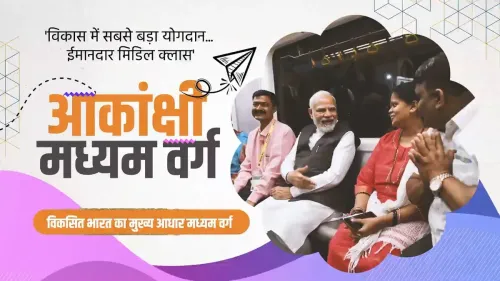
Union Minister Mansukh Mandaviya on June 15, 2026 credited PM Narendra Modi's economic leadership with empowering India's middle class, invoking the Atmanirbhar Bharat vision and GST reforms under the hashtag #12YearsOfSakshamMiddleClass.
Key Takeaways
Union Minister Mansukh Mandaviya posted on June 15, 2026 crediting PM Narendra Modi 's economic leadership with making India's middle class 'truly self-reliant.' The post was tagged #12YearsOfSakshamMiddleClass , part of a BJP social-media campaign marking twelve years of the current government's economic outreach.
The Goods and Services Tax (GST) , implemented in July 2017 , is cited as a key reform that formalised the economy and reduced the tax burden on middle-class households.
The Atmanirbhar Bharat Abhiyan , launched in May 2020 , forms the ideological backbone of the self-reliance narrative invoked in the post.
Middle-class metrics including formal employment data and income-growth figures are expected to feature prominently in the next Union Budget speech.
Union Labour and Sports Minister Mansukh Mandaviya on Monday, June 15, 2026, credited Prime Minister Narendra Modi's economic leadership with transforming middle-class aspirations into tangible achievements, saying a strong foundation of economic stability had made the middle class 'truly self-reliant' (sach'che arthon mein aatmanirbhar).
Context
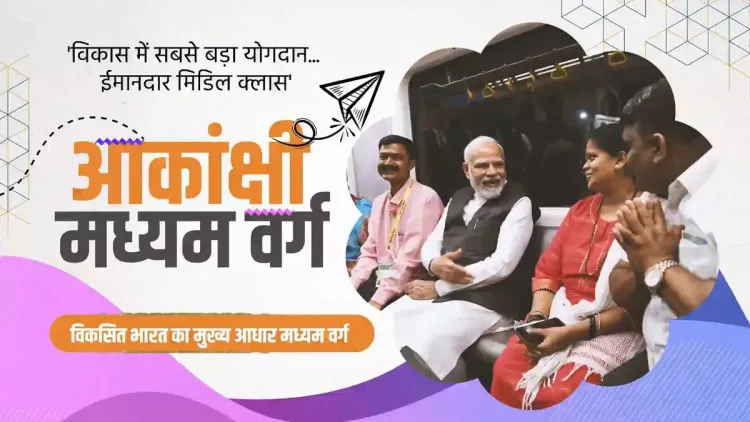
Posting under the hashtag #12YearsOfSakshamMiddleClass, Mandaviya wrote that under Modi's leadership, the journey 'from aspirations to achievements' had built a robust economic base for India's middle class. The post, which accompanied a video, was part of a broader social-media campaign marking what the ruling Bharatiya Janata Party (BJP) frames as twelve years of empowering the middle class under the current government.
The Hindi-language post reads in translation: 'From aspirations to achievements, the strong foundation of economic stability under the leadership of PM Shri Narendra Modi has truly made the middle class self-reliant.'
Policy Backdrop
The messaging draws on two landmark economic interventions of the Modi era. The Goods and Services Tax (GST), rolled out in July 2017, unified India's indirect tax regime and brought millions of transactions into the formal economy — a shift the government argues directly benefited salaried and self-employed middle-class households by reducing the cascading burden of multiple levies.
The Atmanirbhar Bharat Abhiyan, launched in May 2020 in response to pandemic-era economic stress, sought to promote domestic manufacturing and reduce import dependence. The scheme has since become a central plank in the BJP's narrative of economic self-reliance, a concept Mandaviya's post explicitly invokes with the word aatmanirbhar.
Beyond these flagship programmes, the government has pointed to a sustained push on digital payments, formalisation of employment, and targeted welfare transfers as measures that have collectively expanded the middle class's economic footprint over the past decade.
Stakeholders and Impact
Middle-class households and salaried taxpayers remain the primary constituency addressed by this messaging. This segment — broadly defined as urban and semi-urban earners in the formal and organised sector — has been both the beneficiary and the political audience of the government's economic outreach since 2014.
Analysts note that the middle class occupies a critical space in India's electoral arithmetic: large enough to swing urban constituencies, and increasingly vocal about issues such as income growth, job quality, and cost of living. Government campaigns that highlight economic stability and self-reliance are calibrated to reinforce loyalty within this demographic.
What's Next
The hashtag campaign signals that middle-class economic empowerment will remain a prominent theme in the BJP's political communication in the near term. Concrete metrics — including formal employment data, income-growth figures, and GST collection trends — are expected to feature in the next Union Budget speech as the government seeks to substantiate its narrative with measurable outcomes.
Parliamentary committee reports on income distribution and labour formalisation will also be closely watched by economists and opposition parties looking to assess whether the self-reliance narrative is matched by ground-level data on household incomes and job creation.
Point of View
' the minister links a welfare aspiration to a brand that the government has carefully cultivated across budgets, pandemic relief packages, and manufacturing drives. The timing of the campaign, marked by a twelve-year milestone frame, suggests the party is building a retrospective economic case ahead of future electoral cycles. Whether the narrative holds will depend on how credibly the government can pair this messaging with verifiable data on household incomes, job quality, and cost-of-living pressures that the middle class continues to flag.
NationPress
14 Sept 2026
Frequently Asked Questions
What did Mansukh Mandaviya say about the middle class on June 15 2026?
Mandaviya posted on X that under PM Narendra Modi's leadership, a strong foundation of economic stability has made the middle class 'truly self-reliant,' sharing the post under the hashtag #12YearsOfSakshamMiddleClass.
What is the #12YearsOfSakshamMiddleClass hashtag about?
It is a BJP social-media campaign framing twelve years of the Modi government's economic policies — including GST and Atmanirbhar Bharat — as having empowered and expanded India's middle class.
How has GST benefited the Indian middle class according to the government?
The government argues that the GST, rolled out in July 2017, unified indirect taxation, reduced the cascading effect of multiple levies, and formalised the economy, easing the financial burden on salaried and self-employed middle-class households.
What is Atmanirbhar Bharat and how does it relate to the middle class?
Atmanirbhar Bharat Abhiyan, launched in May 2020, promotes domestic manufacturing and economic self-reliance. The government links it to middle-class empowerment by arguing that a stronger domestic economy creates more formal jobs and income opportunities for this segment.
What economic data will indicate whether the middle class has actually become more self-reliant?
Formal employment figures, income-growth statistics, GST collection trends, and parliamentary committee reports on income distribution are the key metrics analysts will watch to assess the government's claims.