690 escaped Bangladesh prisoners still at large after 2024 uprising
Synopsis
Nearly a year after Bangladesh's July 2024 uprising tore open its prison system, 690 fugitives remain unaccounted for — including three suspected militants. With no trace of 166 escapees and a prison system described as a 'life of luxury' for the powerful and a 'living hell' for the poor, the IG's reform pledges face a credibility test.
Key Takeaways
690 prisoners who escaped during Bangladesh's July 2024 uprising are still at large as of 18 August .
Authorities have no records or traces of 166 of the fugitives, all from Narsingdi District Jail .
A total of 2,247 prisoners escaped in 2024 after multiple prisons were breached.
3 suspected militant prisoners remain at large; 6 of 9 who escaped have been recaptured.
Mymensingh District Jail has operated as a 'cashless' prison since 24 June as part of transparency reforms.
A June report described Bangladesh's 72 prisons as a 'deeply discriminatory' system shaped by wealth and political connections.
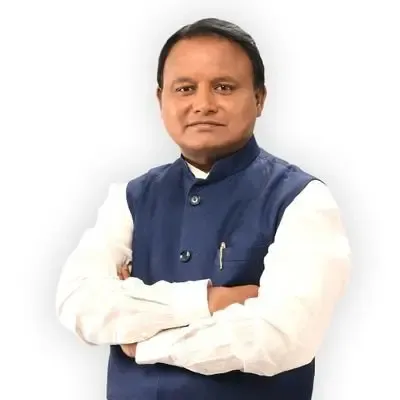
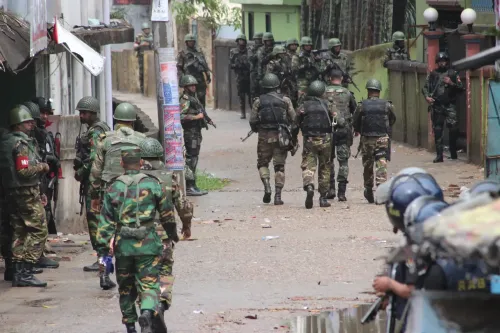
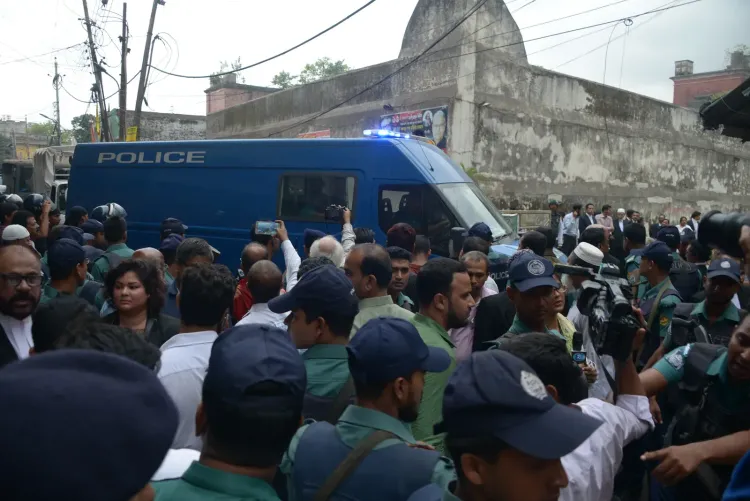
At least 690 prisoners who fled from various correctional facilities during Bangladesh's July 2024 uprising remain at large, Inspector General of Prisons Brigadier General Syed Mohammad Motaher Hossain disclosed on Tuesday, 18 August. The disclosure, cited by local media, underscores a persistent security gap nearly a year after mass prison breaks shook the country's penal system.
Scale of the Escapes
According to Brigadier General Motaher, a total of 2,247 prisoners escaped in 2024 after multiple prisons were breached during the civil unrest. Of the 690 still unaccounted for, authorities have no records or traces whatsoever of 166 individuals — all of whom escaped from Narsingdi District Jail alone, according to reports.
Militant Prisoners Among the Fugitives
Motaher confirmed that nine suspected militant prisoners escaped during the chaos, of whom six have since been recaptured. The remaining three are still at large. He acknowledged a structural vulnerability in the system, stating: 'Under the current circumstances, it is not possible to keep militant prisoners separately.' The admission has drawn scrutiny from security analysts who warn that even a small number of at-large militant detainees poses a disproportionate risk.
Reform Efforts and the 'Cashless' Prison Initiative
Despite the security shortfalls, Motaher outlined an ambitious reform agenda. He said the prison department's goal was not merely operational management but 'to lay the foundation for a modern correctional service where security, correction and rehabilitation of inmates, as well as the professional dignity, skills and welfare of prison officials and employees, receive equal importance.' In a concrete step toward transparency, Mymensingh District Jail has been operating as a 'cashless' prison since 24 June, a move officials say reduces corruption and improves accountability in day-to-day management.
Systemic Inequities Inside Bangladesh's 72 Prisons
The disclosures come against a backdrop of deepening concern over conditions across Bangladesh's 72 prisons. A report published in June described the system as having deteriorated into a 'deeply discriminatory state mechanism.' For inmates with wealth and political connections, incarceration reportedly translates into a 'life of pampered luxury,' while ordinary, poor citizens face what the report called a 'living hell.' Citing human rights activists and prison experts, international outlet Pressenza noted that while correctional facilities are nominally designed as 'controlled, rigorous, and egalitarian spaces of rehabilitation,' Bangladesh's prisons are in practice influenced by 'personal connections, political identity, and financial leverage' rather than institutional rules — directly contradicting the official slogan of 'not a jail, but a correction centre.'
What Comes Next
Authorities face a dual challenge: tracking down the remaining fugitives — including the three suspected militants — while simultaneously overhauling a prison system widely seen as inequitable. The cashless jail pilot at Mymensingh and the IG's reform rhetoric signal intent, but critics argue that structural change requires legislative backing and independent oversight, neither of which has been announced. The fate of the 166 prisoners with no traceable records remains the most immediate and unresolved concern.
Point of View
Centralised databases — that would make mass escapes recoverable. The three still-missing militant detainees are a security liability that the IG's reform rhetoric does not adequately address. Pledges of 'modern correctional service' ring hollow when the department cannot account for who it was holding in the first place. The cashless jail pilot is a genuine step, but it is incremental reform layered on a structurally broken foundation.
NationPress
3 Oct 2026
Frequently Asked Questions
How many prisoners escaped during Bangladesh's July 2024 uprising?
A total of 2,247 prisoners escaped in 2024 after several prisons were breached during the July uprising. As of 18 August, 690 of them remain at large.
Are any militant prisoners among those still missing?
Yes. Nine suspected militant prisoners escaped during the unrest, of whom six have been recaptured. Three suspected militants are still at large, according to Inspector General of Prisons Brigadier General Syed Mohammad Motaher Hossain.
Why can't authorities trace 166 of the escaped prisoners?
Prison authorities reportedly have no records or traces of 166 escapees, all of whom fled from Narsingdi District Jail. The IG's disclosure points to gaps in record-keeping and identification systems within the prison administration.
What reforms has Bangladesh announced for its prison system?
The IG outlined plans to build a modern correctional service focused on security, rehabilitation, and staff welfare. Mymensingh District Jail has been operating as a 'cashless' prison since 24 June 2025, aimed at improving transparency and reducing corruption.
What do reports say about conditions inside Bangladesh's prisons?
A June report described Bangladesh's 72 prisons as a deeply discriminatory system where wealthy and politically connected inmates live in relative comfort while poor prisoners face harsh conditions. Human rights experts cited by international outlet Pressenza noted that personal connections and financial leverage — rather than institutional rules — govern how inmates are treated.