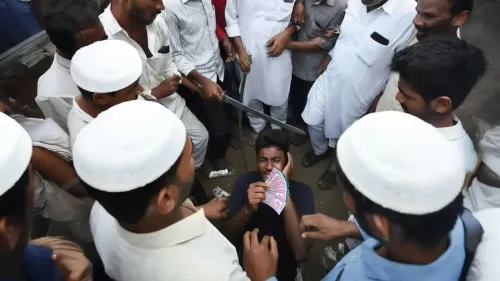
Bangladesh custodial deaths hit 132 in 2026, raising prison crisis alarm
Synopsis
At least 132 prisoners have died in Bangladesh's jails in just over eight months of 2026 — nearly one death every two days. With undertrial detainees accounting for a significant share of fatalities and rights groups demanding independent investigations, Bangladesh's prison system is facing one of its starkest accountability tests in years.
Key Takeaways
At least 132 prisoners died in Bangladesh jails in the first 8.5 months of 2026 .
Ain o Salish Kendra (ASK) documented 79 deaths from January to August, including 47 undertrial detainees and 32 convicted prisoners .
Dhaka division recorded the highest number of deaths at 44 .
At least 10 prisoners died from reported illnesses in the first 15 days of September alone.
Rights groups are calling for independent investigations into every custodial death, with scrutiny of medical care and prison authority conduct.
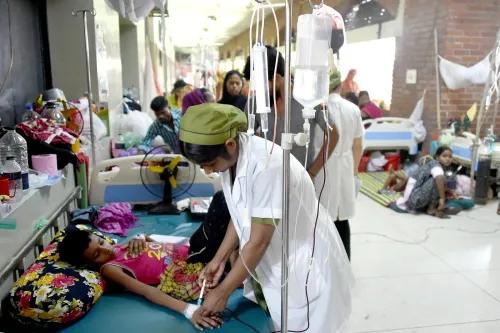
Experts attribute the crisis to overcrowding , inadequate healthcare , and poor food standards inside Bangladesh's prisons.
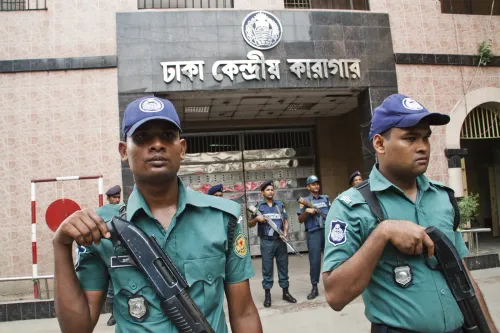
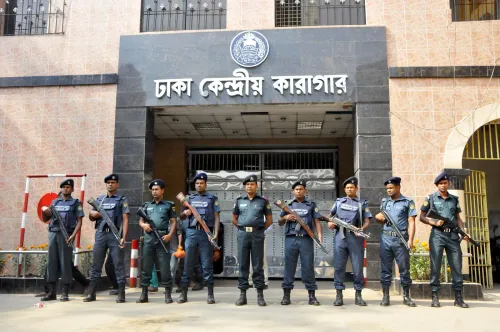
At least 132 prisoners have died in custody across Bangladesh in the first eight and a half months of 2026, according to a report drawing on official statements and human rights data, spotlighting a deepening crisis of overcrowded jails, inadequate healthcare, and weak official accountability.
Scale of the Crisis
Figures compiled by Dhaka-based human rights organisation Ain o Salish Kendra (ASK) documented 79 deaths between January and August 2026. Of those, 47 were detainees awaiting trial and 32 were convicted prisoners. Dhaka division recorded the highest toll at 44 deaths.
Referencing media reports, the data indicates that at least 10 prisoners died from reported illnesses in the first 15 days of September alone, bringing the cumulative figure for the year to at least 132. On some days, as many as four deaths were reported simultaneously across different parts of the country.
Recent Deaths Behind Bars
Among the most recently documented cases, 54-year-old Mohammad Rafiqul Islam and 60-year-old Abdur Rahim died at Dhaka Medical College Hospital on Monday. A day earlier, two inmates of Dhaka Central Jail — Abdul Barek and Abdul Mabud — also died, according to reports. The pattern of deaths at or en route to hospital has raised pointed questions about how quickly seriously ill prisoners receive treatment and whether families are informed in time.
What Rights Groups Are Saying
'Prisoners may lose their freedom, but they do not lose their human dignity and fundamental rights,' said Abu Ahmed Faizul Kabir, a senior coordinator at ASK. Kabir stressed that the state remains accountable for the life, health and safety of everyone held in custody — detainees and convicted inmates alike. He called for independent investigations into each death, with scrutiny of medical treatment, security arrangements and the role of prison authorities.
Human rights activists broadly argue that every death in custody must be thoroughly scrutinised, and that differing figures across sources reflect gaps in reporting and transparency rather than genuine uncertainty about the scale of the problem.
Systemic Failures Identified
Touhidul Haque, a criminologist and associate professor at the University of Dhaka's Institute of Social Welfare and Research, attributed the wider human rights concerns to overcrowding, inadequate healthcare and poor food standards inside Bangladesh's prisons. 'The issue of human rights is being ignored in all these areas,' Haque was quoted as saying.
This comes amid longstanding concerns about Bangladesh's prison infrastructure, which critics argue has been chronically under-resourced relative to its detainee population. Notably, nearly 36% of the documented deaths involved undertrial detainees — individuals who had not been convicted of any offence at the time of their death.
What Happens Next
Rights organisations are pressing Bangladeshi authorities to institute mandatory post-death inquiries and improve emergency medical protocols within prison facilities. Whether the government responds with structural reform or treats the rising toll as a statistical anomaly will determine the trajectory of one of South Asia's most persistent custodial rights challenges.
Point of View
People the state had not yet convicted of anything. That transforms a prison-management failure into a due-process crisis. Bangladesh's authorities have historically responded to custodial death data with administrative reassurances rather than structural reform; the pattern of near-daily deaths in 2026 suggests those responses have not worked. The absence of a mandatory, independent post-death inquiry mechanism is the clearest institutional gap, and without it, accountability will continue to depend on the capacity of underfunded civil society groups like ASK to count the dead.
NationPress
24 Sept 2026
Frequently Asked Questions
How many prisoners have died in Bangladesh jails in 2026?
At least 132 prisoners died in Bangladesh's jails in the first eight and a half months of 2026, according to reports citing official statements and data from the human rights organisation Ain o Salish Kendra. The figure includes deaths documented through mid-September 2026.
What does Ain o Salish Kendra's data show about custodial deaths in Bangladesh?
Ain o Salish Kendra (ASK) documented 79 custodial deaths between January and August 2026, of which 47 were undertrial detainees and 32 were convicted prisoners. Dhaka division recorded the highest share at 44 deaths.
Why are prisoners dying in Bangladesh's jails?
Experts and rights groups attribute the deaths to overcrowding, inadequate healthcare, poor food standards, and delayed emergency medical treatment. Criminologist Touhidul Haque stated that human rights concerns are being ignored across all these areas.
Who is calling for accountability over Bangladesh's custodial deaths?
Human rights organisation Ain o Salish Kendra and its senior coordinator Abu Ahmed Faizul Kabir have called for independent investigations into every custodial death, with scrutiny of medical treatment, security arrangements and prison authority conduct.
What is the significance of undertrial detainees dying in custody?
Undertrial detainees are individuals who have not been convicted of any offence; their deaths in custody raise due-process concerns beyond standard prison-condition failures. ASK's data shows they accounted for 47 of the 79 deaths documented through August 2026 — roughly 60% of the total.