Trump says China respects US again after tariff reset and Xi talks
Synopsis
At a White House Cabinet meeting, Trump declared that China 'respects' the US again — crediting tariffs, a proposed $1.5 trillion defence budget, and an energy dominance push. It is a bold reset claim, but structural US-China imbalances remain, and Beijing's posture shift has yet to be tested by concrete policy outcomes.
Key Takeaways
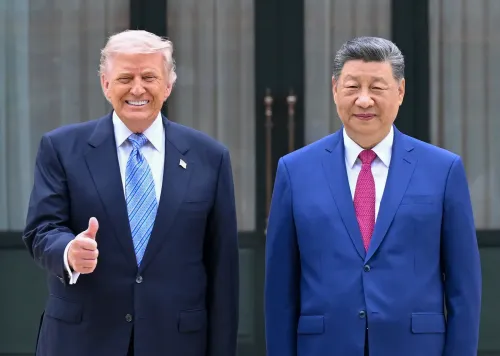
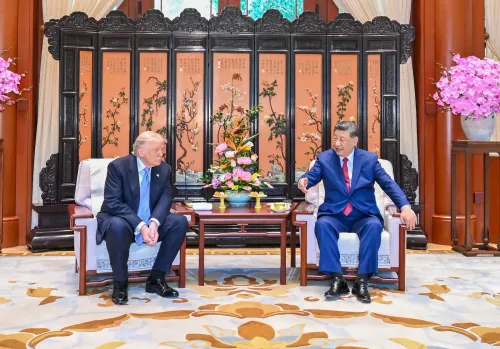
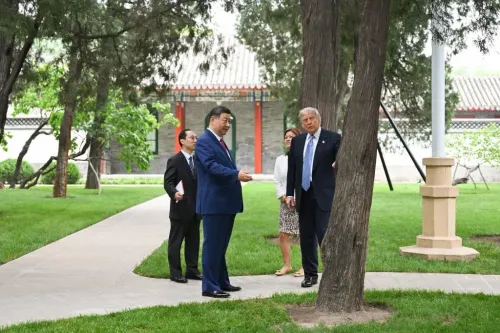
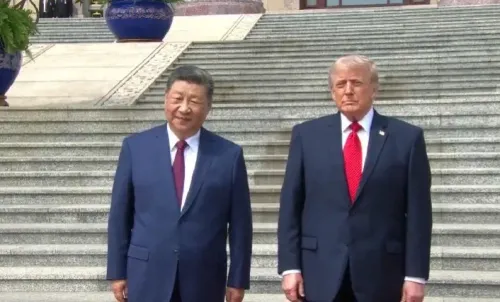
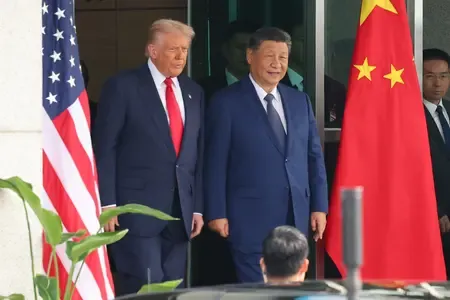
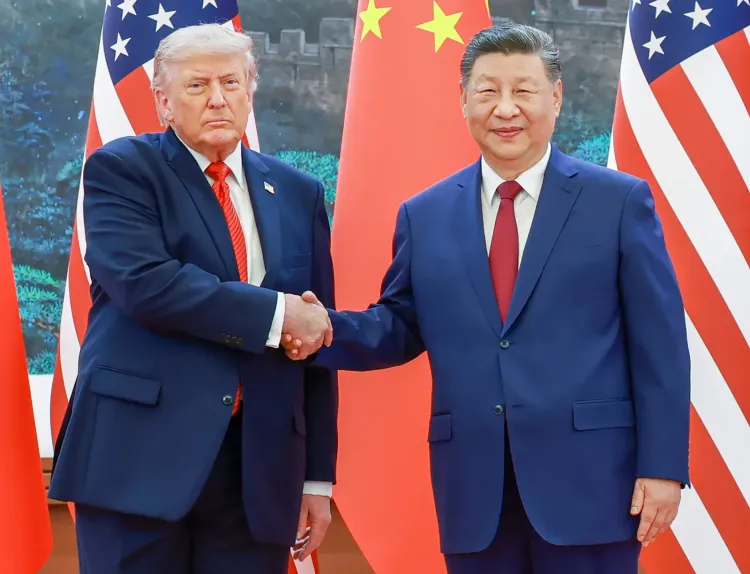
President Donald Trump declared on 27 May that China now respects the United States again, citing tariff pressure and his meeting with President Xi Jinping .
Trump claimed the US-China trading relationship is now 'very profitable' and no longer one-sided.
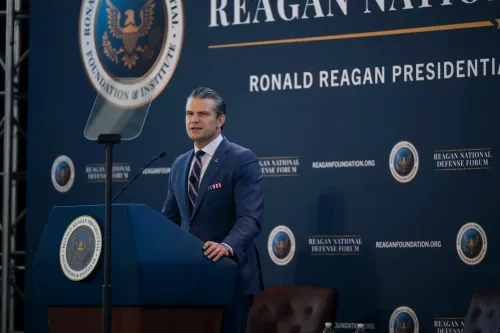
Secretary of War Pete Hegseth cited a proposed $1.5 trillion defence budget and 'historic recruitment rates' for a second straight year.
Treasury Secretary Scott Bessent described the US economy as 'strong, secure and resilient', pointing to rising factory construction and capital expenditure.
Trump claimed the US is now producing more oil than Russia and Saudi Arabia combined as part of an 'energy dominance strategy'.
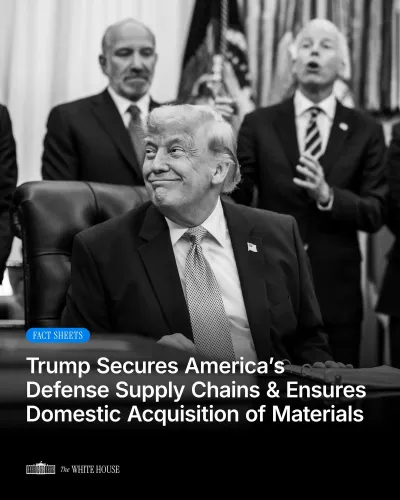
President Donald Trump on Wednesday, 27 May declared that the United States had fundamentally reset its relationship with China, asserting that Beijing now viewed Washington with renewed respect — a shift he attributed to his administration's tariff pressure, military expansion, and energy dominance strategy. The remarks came during a Cabinet meeting at the White House.
Trump on the US-China Reset
Trump described his recent meeting with Chinese President Xi Jinping as having gone 'amazingly', claiming the bilateral relationship had been fundamentally transformed since previous administrations. 'The relationship is very good,' Trump said. 'We're doing a lot of business with China now, but it's not where they were ripping us off for years and years.'
Trump argued that his administration's tariffs and economic policies had compelled China to adopt what he characterised as a more balanced trading arrangement. 'It's now a very profitable business that we do with China, and they respect our country again,' he said. The claim comes amid ongoing scrutiny over the long-term durability of the trade truce, with analysts noting that structural imbalances between the two economies remain largely unresolved.
Military Build-Up and Indo-Pacific Strategy
Secretary of War Pete Hegseth told the Cabinet that the administration was investing heavily in new military systems, including drones, missile defence, and advanced aircraft production. 'We're going to lead the world in drones,' Hegseth said, while endorsing Trump's proposed $1.5 trillion defence budget. He also reported 'historic recruitment rates' for the second consecutive year and said private defence manufacturers were committing billions of dollars to new production facilities, citing administration policies as the catalyst.
Trump repeatedly linked his economic strategy to broader Indo-Pacific geopolitical objectives, framing expanded defence spending and military modernisation as central to restoring American influence globally. Notably, China was referenced only briefly during the session itself, with officials largely framing the discussion around US capability-building rather than direct confrontation.
Economy, Investment, and Energy Dominance
Treasury Secretary Scott Bessent described the US economy as 'strong, secure and resilient' despite global tensions involving Iran and energy markets. Bessent pointed to a sharp rise in business investment during Trump's second term, citing increased factory construction, manufacturing jobs, and growth in capital expenditures. 'The stock market lives in the future,' Bessent said. 'It is seeing on the other side of this conflict.'
Trump also highlighted what he called America's 'energy dominance strategy', claiming that expanded oil and gas production had strengthened the US position in global geopolitics. He claimed the United States was now producing more oil than 'Russia and Saudi Arabia combined' — a claim that could not be independently verified from the Cabinet session alone and should be assessed against current production data.
What to Watch
The administration's framing of a 'reset' with China will be tested against upcoming trade data, tariff enforcement actions, and the trajectory of US-China negotiations on technology and supply chains. Whether the claimed shift in Beijing's posture translates into durable policy changes — rather than a tactical pause — remains the central question for analysts tracking the relationship.
Point of View
Yet the structural fault lines — technology decoupling, Taiwan, South China Sea — are untouched. Bessent's bullish economy read also sidesteps the inflationary drag that tariffs have imposed on American consumers. The $1.5 trillion defence budget, if enacted, would be a generational shift in US military spending, but Congress has yet to sign off. The Cabinet session reads more as a victory lap than a strategic briefing — and the gap between the two matters.
NationPress
15 Sept 2026
Frequently Asked Questions
What did Trump say about China at the White House Cabinet meeting?
Trump said China now 'respects' the United States again, attributing the shift to his administration's tariff policies and his recent meeting with President Xi Jinping. He described the bilateral trading relationship as 'very profitable' and no longer one-sided.
What is the $1.5 trillion defence budget Trump is proposing?
Secretary of War Pete Hegseth referenced a proposed $1.5 trillion defence budget during the Cabinet meeting, framing it as central to US military modernisation efforts including drones, missile defence, and advanced aircraft. The budget has not yet been enacted by Congress.
What did Trump claim about US oil production?
Trump claimed the United States is now producing more oil than Russia and Saudi Arabia combined as part of what he called an 'energy dominance strategy'. The claim was not independently verified during the Cabinet session.
What did Treasury Secretary Bessent say about the US economy?
Scott Bessent described the US economy as 'strong, secure and resilient', pointing to rising business investment, factory construction, manufacturing jobs, and growth in capital expenditures during Trump's second term.
How does the US-China relationship stand after Trump's tariff push?
According to Trump, the relationship has reset positively following tariff pressure and his meeting with Xi Jinping. However, analysts note that core structural disputes — including technology, Taiwan, and supply chains — remain unresolved, leaving the durability of any reset uncertain.