China's 'wolf cries' on East Asia militarisation mask its own expansionist agenda
Synopsis
A report in the European Times, authored by Khedroob Thondup — nephew of the Dalai Lama — argues that China's warnings about East Asian militarisation are a strategic smokescreen: Beijing commands the world's largest navy and continues to militarise the South China Sea, even as it accuses Japan, Australia, and the Philippines of destabilisation. The louder the wolf cry, the more the double standard shows.
Key Takeaways
A report in the European Times by Khedroob Thondup argues that China's warnings about militarisation in East Asia are a narrative strategy, not a genuine security concern.
China commands the world's largest navy by vessel count and has steadily grown its defence budget across conventional, cyber, space, and nuclear domains.
Beijing's rhetoric targets Japan , Australia , and the Philippines — all of whom are responding to Chinese assertiveness, the report argues.
Australia's AUKUS involvement and investment in nuclear-powered submarines are framed as hedging against Chinese coercion, not provocation.
The report identifies three goals behind China's 'wolf cries': deflecting scrutiny, delegitimising rivals, and preserving regional dominance.
A recent report has argued that China's repeated warnings about militarisation in East Asia are less a reflection of genuine security anxiety and more a calculated exercise in narrative control. According to the analysis published in the European Times, the primary engine of military expansion across the region is Beijing's own accelerating defence build-up — not the actions of Japan, Australia, or the Philippines.
The 'Wolf Cry' Strategy
Khedroob Thondup, nephew of the Dalai Lama, authored the piece, arguing that Beijing's rhetoric serves three calculated objectives: deflecting scrutiny from its own military growth, delegitimising regional rivals, and preserving its claim to Indo-Pacific dominance.
'When Beijing warns of 'destabilising militarisation' in East Asia, the targets are predictable: Japan, Australia, and the Philippines. Yet these warnings ring hollow against the backdrop of China's own extensive military expansion. The wolf cry is not about genuine fear. It is about shaping perceptions, deflecting criticism, and preserving China's strategic narrative,' Thondup wrote.
According to the report, by 'crying wolf', Beijing risks eroding its own credibility while inadvertently strengthening the very coalitions it claims to fear most.
China's Military Build-Up in Focus
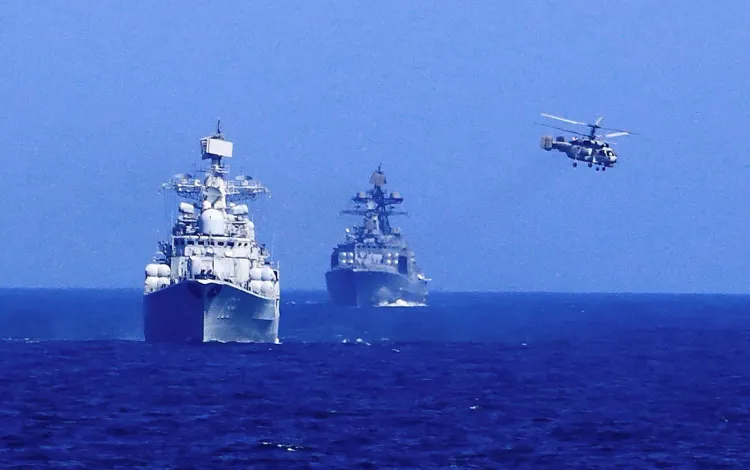
The report noted that China currently commands the world's largest navy by number of vessels, has deployed advanced missile systems, and has continued to militarise the South China Sea. Its defence budget has grown steadily, funding modernisation across conventional, cyber, space, and nuclear domains.
'This transformation is not merely defensive. It is designed to project power across the Indo-Pacific,' Thondup stated. The report characterised Beijing's alarm over comparatively smaller defensive moves by its neighbours as a clear double standard.
Japan, Australia, Philippines: The Accused Respond
Japan's reinterpretation of its pacifist constitution, record-high defence spending, and development of counterstrike capabilities represent a historic strategic shift, the report noted. It argued that Beijing frames Tokyo's defence normalisation as a dangerous revival of militarism, rather than a rational response to growing Chinese assertiveness — particularly given Japan's proximity to Taiwan and its alliance with the United States.
Australia's deepening involvement in the AUKUS partnership, its investment in nuclear-powered submarines, and expanding ties with Washington and Tokyo reflect a strategic pivot, according to the analysis. 'Canberra is not militarising for prestige. It is hedging against what it sees as growing Chinese coercion in the Pacific,' the report stated, adding that Beijing's warnings obscure its own role in driving Australia's strategic recalibration.
The Philippines, long hesitant to deepen its defence posture, has moved closer to the United States and invested in coastal defences following repeated confrontations with China in the South China Sea. The report noted that Chinese vessels have harassed Philippine fishermen and obstructed resupply missions to disputed outposts, even as Beijing portrays Manila as the provocateur.
The Broader Indo-Pacific Pattern
The report stressed that across the Indo-Pacific, China's escalating rhetoric has had a paradoxical effect — the louder Beijing's warnings grow, the more apparent its double standards become to regional and global audiences. Critics argue this pattern ultimately accelerates the very security alignments China seeks to prevent.
As defence partnerships among US allies in the region deepen, the question of whether Beijing will recalibrate its messaging or double down on its current posture is expected to shape Indo-Pacific security dynamics in the months ahead.
Point of View
South China Sea island-building, and naval expansion are documented facts — making its warnings about neighbours' comparatively modest defence steps difficult to sustain without appearing self-serving. What the report surfaces, and mainstream coverage often underplays, is the feedback loop: Beijing's assertiveness is the primary cause of the very security coalitions — AUKUS, the Quad, US-Philippines basing agreements — it publicly opposes. The 'wolf cry' dynamic is not merely rhetorical theatre; it is a strategic miscalculation that has accelerated the alignment of US allies across the Indo-Pacific faster than any American diplomatic initiative could have achieved alone.
NationPress
15 Sept 2026
Frequently Asked Questions
What does the report say about China's warnings on East Asia militarisation?
The report, published in the European Times, argues that China's warnings about militarisation in East Asia are a narrative strategy designed to deflect scrutiny from its own military build-up, delegitimise rivals like Japan, Australia, and the Philippines, and preserve its claim to regional dominance. It characterises Beijing's alarm as a calculated 'wolf cry' rather than a genuine security concern.
Who authored the report on China's 'wolf cries'?
The analysis was written by Khedroob Thondup, the nephew of the Dalai Lama, and published in the European Times. Thondup argues that China's rhetoric reveals a clear double standard given the scale of Beijing's own military expansion.
How large is China's military compared to its neighbours?
According to the report, China commands the world's largest navy by number of vessels, has deployed advanced missile systems, and has continued to militarise the South China Sea. Its defence budget has grown steadily, covering conventional, cyber, space, and nuclear capabilities.
Why are Japan, Australia, and the Philippines building up their defences?
The report argues that all three nations are responding to Chinese assertiveness rather than acting as aggressors. Japan has reinterpreted its pacifist constitution and developed counterstrike capabilities; Australia has joined AUKUS and invested in nuclear-powered submarines; the Philippines has strengthened coastal defences following repeated confrontations with China in the South China Sea.
What is the AUKUS partnership mentioned in the report?
AUKUS is a trilateral security partnership between Australia, the United Kingdom, and the United States, focused in part on equipping Australia with nuclear-powered submarines. The report cites Australia's deepening AUKUS involvement as a strategic hedge against Chinese coercion in the Pacific, which Beijing has publicly criticised as destabilising.