China's missile threat reshapes US homeland defence strategy in 2025
Synopsis
In one of the most direct public acknowledgements yet, senior Pentagon officials told the US Senate that China's missile arsenal — spanning hundreds to tens of thousands of systems — is now the primary driver of a new American homeland defence doctrine. The proposed 'Golden Dome' architecture signals a fundamental break from Cold War deterrence logic.
Key Takeaways
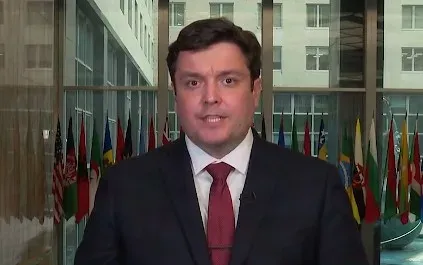
Assistant Secretary Marc Berkowitz told the US Senate on 28 April 2025 that China is America's "pacing competitor" in missile capability.
The Pentagon is developing a "Golden Dome" layered missile defence architecture to counter hypersonic missiles , cruise missiles , and unmanned aerial systems .
Forward-deployed defences include Aegis destroyers , THAAD systems, and Patriot batteries along the first island chain .
General Michael Guetlein warned that geographic distance no longer protects the US, with China's threat range spanning "several hundred to several tens of thousands" of systems.
Officials called for US allies to increase defence investment to strengthen collective security in the Indo-Pacific .
The new doctrine combines traditional nuclear deterrence with active missile defence — described as "both a sword and a shield."
Senior Pentagon officials told a US Senate panel on 28 April 2025 that China's rapidly expanding missile arsenal is the central strategic challenge driving a new generation of American homeland missile defence, including a proposed layered architecture known as the "Golden Dome." The testimony marks one of the most direct public acknowledgements by US defence officials of Beijing's role in reshaping Washington's defence posture.
China as the Pacing Competitor
Assistant Secretary Marc Berkowitz testified bluntly before the Senate panel: "China is our pacing competitor — we will deter China from a position of strength." He described Beijing's growing capabilities as part of a wider trend in which US rivals are "expanding, diversifying and increasing the sophistication of their arsenals of missiles and aerial weapons," integrating them into operations designed to threaten American territory and interests.
Berkowitz warned that these systems — whether nuclear or conventional — pose "truly grave threats to our homeland, to the American population, to our critical infrastructures, and to our second strike capability." This is among the starkest public characterisations of the China threat from a serving Pentagon official in recent years.
The Golden Dome: A New Layered Defence Architecture
The proposed "Golden Dome" architecture is designed to counter advanced threats, including hypersonic missiles, long-range cruise missiles, and unmanned aerial systems. Officials said the US response includes strengthening forward-deployed missile defence networks centred on Aegis destroyers, Terminal High Altitude Area Defense (THAAD) systems, and Patriot batteries.
Berkowitz described this as "a forward deployed, layered, integrated air and missile defence network" designed to operate along key strategic zones, including the first island chain in the Indo-Pacific — the arc of islands stretching from Japan through Taiwan to the Philippines — where US forces seek to counter Chinese military expansion and maintain regional deterrence.
Geographic Distance No Longer a Buffer
General Michael Guetlein told lawmakers that the nature of the threat has shifted significantly, warning that the United States can no longer rely on geographic distance as a buffer. "That distance has been quickly eroded by their technology," he said. He confirmed the new defence architecture would address both conventional and nuclear-capable threats, including cruise missiles, hypersonic weapons, and unmanned aerial systems.
When pressed by lawmakers on the scale of China's capabilities, Guetlein acknowledged that while specific figures remain classified, the range of threats spans "from several hundred to several tens of thousands," depending on the system — a figure that underscores the breadth of the challenge facing US planners.
Rethinking Cold War-Era Deterrence
Senator Angus King questioned whether traditional nuclear deterrence — which underpinned stability during the Cold War — remains sufficient against China. Berkowitz responded that the current environment differs fundamentally, with "multiple nuclear armed rivals" and increasingly sophisticated missile technologies requiring a combination of deterrence and active defence.
He said missile defence would complement the nuclear triad, providing "both a sword and a shield" to counter coercive threats and protect the homeland. This represents a notable doctrinal evolution: Cold War deterrence relied heavily on the threat of retaliation; the new framework explicitly adds active defence as a co-equal pillar.
Alliances and the Indo-Pacific Dimension
Officials also emphasised the role of alliances, noting that US partners must invest more in defence to strengthen collective security and interoperability, particularly in regions facing Chinese military pressure. China's advances in hypersonic weapons and integrated air defence systems have intensified competition in the Indo-Pacific, where the US seeks to maintain strategic balance and freedom of navigation.
This comes amid broader US efforts to deepen defence ties with allies including Japan, South Korea, Australia, and the Philippines — all of whom sit within the strategic perimeter that Chinese missile systems are now assessed to credibly threaten. The testimony signals that Washington's missile defence investments are set to accelerate in the months ahead.
Point of View
Which are designed to deny access and degrade America's second-strike capability. The scale figure Guetlein cited — 'several hundred to several tens of thousands' — is deliberately vague, but its breadth is itself a political signal to Congress to fund acceleration. The harder question, left unasked in the hearing, is whether a layered defence architecture can keep pace with hypersonic threat proliferation, or whether it becomes an expensive hedge against a problem that outgrows the solution.
NationPress
19 Sept 2026
Frequently Asked Questions
What is the 'Golden Dome' missile defence system?
The 'Golden Dome' is a proposed layered US homeland missile defence architecture designed to counter advanced threats including hypersonic missiles, long-range cruise missiles, and unmanned aerial systems. It builds on existing forward-deployed assets such as Aegis destroyers, THAAD systems, and Patriot batteries, with a focus on the Indo-Pacific's first island chain.
Why is China considered the primary driver of US missile defence planning?
Pentagon officials testified that China is the US's 'pacing competitor,' with a rapidly expanding and diversifying missile arsenal that now poses credible threats to American territory, critical infrastructure, and second-strike nuclear capability. China's integration of offensive and defensive missile systems is seen as a direct challenge to US access and deterrence in the Indo-Pacific.
What did General Guetlein say about the scale of China's missile threat?
General Michael Guetlein told lawmakers that while specific figures remain classified, China's missile threat spans 'from several hundred to several tens of thousands' of systems depending on the type. He also warned that geographic distance no longer protects the US, as Chinese technology has eroded that buffer.
How does the new US defence doctrine differ from Cold War deterrence?
Cold War deterrence relied primarily on the threat of nuclear retaliation to prevent conflict. The new US framework adds active missile defence as a co-equal pillar alongside the nuclear triad, providing what officials called 'both a sword and a shield' — a response to the reality of multiple nuclear-armed rivals and increasingly sophisticated missile technologies.
What role do US allies play in the new missile defence strategy?
Pentagon officials emphasised that US allies must increase their own defence investment to strengthen collective security and interoperability, particularly in the Indo-Pacific. Countries such as Japan, South Korea, Australia, and the Philippines are central to the forward-deployed defence network designed to counter Chinese military expansion.