US Golden Dome: $185 billion missile shield plan faces Senate scrutiny

Synopsis
US defence officials told the Senate that America currently has 'no defence against hypersonic weapons or cruise missiles' — and that closing that gap will cost roughly $185 billion through the 2030s. The Golden Dome programme is ambitious, but with a contentious funding route and a 2028 deadline, the bigger battle may be on Capitol Hill, not the battlefield.
Key Takeaways
Assistant Secretary Marc Berkowitz told the Senate the US has "no defence against hypersonic weapons or cruise missiles" as of now.
General Michael Guetlein said the Golden Dome programme aims to deliver operational capability by 2028 , with a near-term funding request of more than $17 billion .
The full projected cost of the programme is approximately $185 billion through the 2030s .
Senator Angus King called the use of a reconciliation funding mechanism "a huge mistake," warning it undermines congressional oversight.
The Guam defence system is on schedule at an estimated $3.5 billion , with officials describing the island as "an undisputable part of the homeland." Officials cited conflicts in Ukraine and the Middle East as evidence of escalating missile threat complexity.
Senior United States defence officials warned lawmakers on 28 April that the country faces an "unprecedented" missile threat environment, with existing homeland defences offering only limited protection against advanced weapons, including hypersonic and cruise missiles. The testimony, delivered before a Senate panel in Washington, came as officials pushed for congressional backing of the proposed Golden Dome missile defence programme — a layered shield projected to cost roughly $185 billion through the 2030s.
The Threat Assessment
Assistant Secretary Marc Berkowitz told the panel that US rivals are "expanding, diversifying and increasing the sophistication of their arsenals of missiles and aerial weapons," posing, in his words, "truly grave threats to our homeland, to the American population, to our critical infrastructures, and to our second strike capability." He acknowledged that the current system offers only "very limited capability" beyond defending against a small-scale intercontinental ballistic missile attack, and that the US presently has "no defence against hypersonic weapons or cruise missiles."
General Michael Guetlein was more direct: "Our nation's margin of safety has vanished," he said, adding that "the homeland is exposed and relatively undefended" against a new generation of threats that are "unprecedented in their speed, numbers and lethality."
What the Golden Dome Proposes
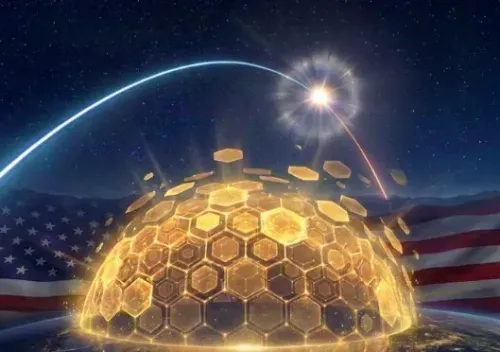
Guetlein described the programme as "a layered, integrated shield designed to defend the homeland against the full spectrum of advanced threats." The proposed system would integrate sensors and interceptors across land, sea, air and space, combining kinetic and non-kinetic responses. Officials said the architecture would also leverage artificial intelligence and next-generation processing to improve targeting and response times.
The goal, according to Guetlein, is to deliver an operational capability by 2028, supported by a near-term funding request of more than $17 billion. The full programme cost is estimated at approximately $185 billion through the 2030s.
Congressional Pushback on Cost and Oversight
Lawmakers raised pointed concerns over both the scale of expenditure and the proposed funding mechanism. Senator Angus King questioned the use of a reconciliation process outside the traditional appropriations route, calling it "a huge mistake" and warning that it reduces congressional oversight. King also pressed officials on whether the longstanding doctrine of nuclear deterrence remains sufficient in the current environment.
Berkowitz responded that today's strategic landscape is more complex than during the Cold War, noting the presence of "multiple nuclear armed rivals" with advanced missile capabilities. He argued that missile defence would complement deterrence, providing "both a sword and a shield" to strengthen security and protect civilians if deterrence fails.
Guam, Ukraine Lessons and Production Gaps
Officials described Guam as "an undisputable part of the homeland" and a critical hub in the Indo-Pacific. Lieutenant General Frank Lozano said the Guam defence system is progressing on schedule, with a projected cost of approximately $3.5 billion.
Military officials drew on lessons from recent conflicts in Ukraine and the Middle East, citing the growing complexity and volume of modern missile threats. Lieutenant General Heath Collins said the US has issued "hundreds of updates" to defence systems in response to real-time battlefield data. Officials also acknowledged challenges in scaling production and maintaining interceptor inventories, warning that sustained investment will be necessary to meet future demand.
With the Senate yet to approve the funding mechanism and cost estimates running into the hundreds of billions, the Golden Dome's path from proposal to operational shield will depend as much on political will as on technological readiness.
Point of View
But the more telling tension is between the Pentagon's urgency and Congress's scepticism over a funding route that sidesteps traditional appropriations oversight. If the doctrine of nuclear deterrence is no longer sufficient — as Berkowitz implied — that is a seismic shift in US strategic thinking, and one that carries enormous implications for allies and adversaries alike. The 2028 deadline is tight by any procurement standard; the risk is that political gridlock produces neither the shield nor a credible deterrence posture.
NationPress
19 Sept 2026
Frequently Asked Questions
What is the Golden Dome missile defence programme?
The Golden Dome is a proposed US homeland missile defence system described as a layered, integrated shield designed to counter the full spectrum of advanced threats, including hypersonic and cruise missiles. It would integrate sensors and interceptors across land, sea, air and space, and leverage artificial intelligence for targeting and response.
How much will the Golden Dome cost?
The full projected cost is approximately $185 billion through the 2030s. In the near term, officials have requested more than $17 billion in initial funding to begin building out the system.
Why does the US say it needs the Golden Dome now?
Senior defence officials testified that the US currently has no defence against hypersonic weapons or cruise missiles, and that rivals are rapidly expanding and sophisticating their missile arsenals. General Guetlein stated that 'the homeland is exposed and relatively undefended' against this new generation of threats.
What concerns have lawmakers raised about the programme?
Senator Angus King criticised the proposed use of a budget reconciliation process rather than traditional appropriations, calling it 'a huge mistake' that reduces congressional oversight. Lawmakers also questioned the programme's cost and whether nuclear deterrence alone remains an adequate strategic posture.
What is the status of the Guam missile defence system?
Lieutenant General Frank Lozano told the Senate panel that the Guam defence system is progressing on schedule, with a projected cost of approximately $3.5 billion. Officials described Guam as an integral part of the US homeland and a key hub in the Indo-Pacific region.