Rubio-Lavrov phone call covers Ukraine war, Iran amid Rubio's India visit
Synopsis
While on a diplomatic mission to India for the QUAD summit, US Secretary of State Marco Rubio took a call from Russian Foreign Minister Sergey Lavrov — covering Ukraine, bilateral ties, and Iran. The exchange, brief and undetailed, matters for one reason: Washington and Moscow are still talking, even as the war grinds on.
Key Takeaways
US Secretary of State Marco Rubio spoke with Russian FM Sergey Lavrov on 26 May , at Lavrov's request.
Topics covered: the Russia-Ukraine war , US-Russia bilateral relations , and the situation in Iran .
The State Department readout confirmed the call but gave no detail on sanctions, ceasefires, or negotiations.
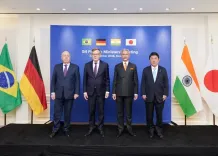
Rubio is on a four-day visit to India for the QUAD foreign ministers' meeting hosted by EAM S Jaishankar .
The call signals that Washington-Moscow communication channels remain open despite ongoing war tensions.
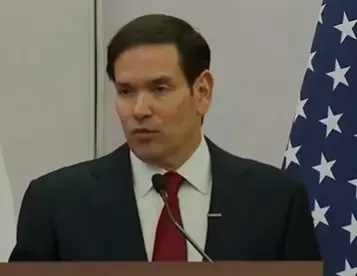
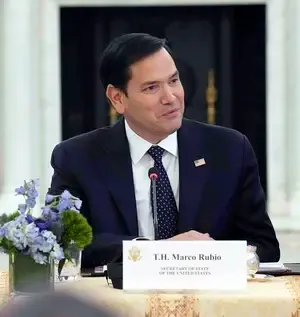
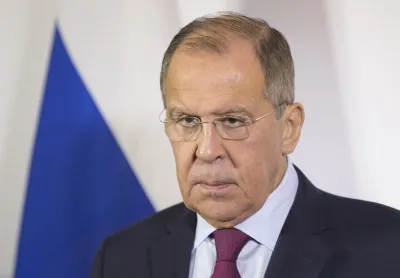
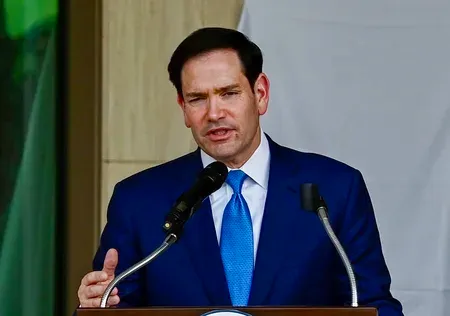
US Secretary of State Marco Rubio spoke with Russian Foreign Minister Sergey Lavrov by phone on 26 May, discussing the Russia-Ukraine war, bilateral relations between Washington and Moscow, and the situation in Iran. The call, which took place at Lavrov's request, comes as Rubio is midway through a four-day visit to India to attend the QUAD ministerial meeting in New Delhi.
What Was Discussed
State Department spokesperson Tommy Pigott confirmed the exchange in an official readout, stating: 'Secretary of State Marco Rubio spoke today with Russian Foreign Minister Sergey Lavrov at the Minister's request. The parties exchanged views on the Russia-Ukraine war, bilateral relations, and the situation in Iran.'
The readout did not indicate whether the two sides discussed sanctions, military assistance, ceasefire proposals, or possible negotiations related to Ukraine or Iran.
Significance of the Contact
The call is a notable signal that communication channels between Washington and Moscow remain open despite deep strains in bilateral relations since Russia's invasion of Ukraine in February 2022. This is not an isolated outreach — Rubio has been actively engaged in diplomatic contacts across several international crises in recent weeks.
Notably, the conversation unfolded while Rubio was on foreign soil, underscoring the urgency with which the Trump administration is pursuing parallel diplomatic tracks on Ukraine and the Middle East simultaneously.
The QUAD Context
Rubio is in New Delhi to attend the QUAD foreign ministers' meeting, hosted by External Affairs Minister S Jaishankar, alongside counterparts from India, Japan, and Australia. The convergence of the Lavrov call and the QUAD summit in the same trip highlights the breadth of the diplomatic agenda Rubio is managing.
Broader Stakes on Ukraine and Iran
The Russia-Ukraine conflict, now in its fourth year, has reshaped global security architecture and triggered sustained disruptions in energy and food markets worldwide. The Trump administration has repeatedly stated its intent to end the war through negotiations, while simultaneously maintaining pressure on Iran over its regional posture and nuclear programme.
How the Rubio-Lavrov exchange feeds into any formal negotiation track — or whether it remains a channel-maintenance call — is expected to become clearer in the days ahead.
Point of View
But its absence would have said something equally loud. The fact that Lavrov initiated contact while Rubio was on foreign soil — in India, of all places, for a QUAD meeting partly designed to counter Russian and Chinese influence — is a layered diplomatic signal. The Trump administration's stated desire to negotiate an end to the Ukraine war has yet to produce a visible framework, and calls like this risk becoming a substitute for strategy rather than a step toward one. The Iran dimension is equally underreported: linking Ukraine and Iran in a single bilateral exchange suggests Washington is beginning to treat these as connected leverage points, not separate files.
NationPress
23 Sept 2026
Frequently Asked Questions
What did Rubio and Lavrov discuss in their phone call?
US Secretary of State Marco Rubio and Russian Foreign Minister Sergey Lavrov discussed the Russia-Ukraine war, bilateral US-Russia relations, and the situation in Iran. The call took place on 26 May at Lavrov's request, according to the State Department.
Why did Lavrov request the call with Rubio?
The State Department readout did not specify Lavrov's reason for requesting the call. The exchange is seen as a signal that diplomatic communication between Washington and Moscow remains active despite the war in Ukraine.
Did the call produce any ceasefire or negotiation outcomes?
No. The State Department readout did not indicate that sanctions, military assistance, ceasefire proposals, or formal negotiations were discussed. The call appears to have been an exchange of views rather than a structured negotiation session.
Where was Rubio when the call took place?
Rubio was in India on a four-day diplomatic visit to attend the QUAD foreign ministers' meeting in New Delhi, hosted by External Affairs Minister S Jaishankar alongside counterparts from Japan and Australia.
What is the Trump administration's stated position on the Ukraine war?
The Trump administration has repeatedly said it wants to end the Russia-Ukraine war through negotiations. It has also maintained pressure on Iran over its regional posture and nuclear programme, both of which featured in the Rubio-Lavrov exchange.